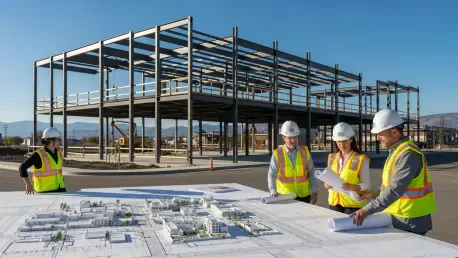

Idaho stands at a critical economic crossroads as the Idaho Economic Advisory Council recently recommended twenty-five specific communities for designation as federal Opportunity Zones. This bold proposal serves as the cornerstone of a comprehensive strategy aimed at utilizing federal tax incentives to redirect private capital toward regions that have traditionally been bypassed by major developers. By identifying these specific census tracts, the state is making a deliberate bet on the transformative power of private investment to modernize infrastructure and stimulate job growth in areas showing untapped potential. The selection process highlights a transition from reactive planning to a proactive market-driven approach that seeks to bridge the gap between thriving urban centers and stagnant rural districts. As the final list moves toward Governor Brad Little for official submission to the U.S. Department of the Treasury, the stakes for local municipalities remain high, with the promise of long-term economic stability hanging on the federal government’s final approval by the upcoming autumn deadline.
Selection CriteriDefining Strategic Objectives
Identifying High-Potential Census Tracts
The recommendation process was defined by its rigorous competitiveness, with the council meticulously evaluating thirty-six distinct applications submitted by various cities and counties throughout the Gem State. To ensure that the designated zones would effectively attract capital rather than simply being listed on paper, officials utilized sophisticated data from the Urban Institute to rank the likelihood of real-world investment success. This analytical framework allowed the council to look beyond mere economic distress and identify areas where a financial catalyst could spark immediate and sustainable development. By prioritizing tracts that already possess a foundational level of commercial viability, the state aims to maximize the return on these federal incentives. This data-driven approach was specifically designed to filter out locations that, while in significant need of support, lacked the requisite transportation links or zoning readiness to entice institutional investors who demand both stability and growth.
Defining the Three Pillars of Community Revitalization
Municipalities across the state identified three primary pillars to anchor their revitalization efforts: downtown renewal, housing expansion, and industrial growth. Smaller towns in particular are placing a heavy emphasis on restoring historic “Main Street” corridors to improve community identity and foster local commerce in the modern era. These efforts are not merely aesthetic; they represent a fundamental shift toward creating walkable, vibrant town centers that can retain young professionals and support small business owners. By leveraging Opportunity Zone funding for historic preservation and commercial infill, these rural areas hope to reverse decades of capital flight and build a self-sustaining local economy. The goal is to transform neglected storefronts into hubs of activity that draw in both residents and tourists, thereby broadening the local tax base. This revitalization strategy acknowledges that a thriving downtown is the heartbeat of any healthy regional economy and serves as a magnet for future commercial expansion.
Federal Policy Evolution: Transitioning to Opportunity Zones 2.0
The current iteration of the federal program, frequently referred to as “Opportunity Zones 2.0,” includes significant changes intended to address previous criticisms regarding urban bias and regional inequality. This updated version provides larger and more flexible tax incentives for investments in rural tracts compared to those in major metropolitan areas, ensuring that smaller communities are not overshadowed. This shift in policy reflects a growing understanding that rural economic development requires a more tailored approach to overcome geographic and logistical barriers. By offering enhanced benefits for projects in less populated areas, the federal government is incentivizing investors to look beyond the high-growth corridors of the Boise Valley. This is particularly important for Idaho’s agricultural and mining heartlands, which require modern capital to transition into more diverse economic models. The 2.0 framework represents a more equitable distribution of federal support for every region of the state.
Measurable Impacts: Accountability and Transparency Standards
Furthermore, strict reporting requirements have been implemented within the new framework to measure the actual impacts on job creation, local tax revenue, and housing availability. These transparency measures ensure that the program delivers measurable benefits to Idaho residents rather than simply serving as a tax haven for wealthy institutional investors. The updated rules require frequent disclosures regarding the type of projects being funded and the number of full-time positions created as a direct result of the investment. This data-driven oversight allows state and local officials to assess the effectiveness of the program in real-time and make necessary adjustments to their regional development strategies. By focusing on accountability, the 2.0 version of the program builds public trust and ensures that private capital is being used to meet the genuine needs of the community. This move toward transparency is a vital component in the long-term success of the initiative, providing a clear roadmap for how private-public partnerships can achieve shared social goals.
Regional Breakdown: Recommendations by District
Investment Hubs in the West: Treasure Valley Dynamics
Boise and the surrounding Treasure Valley dominate the top of the priority list, with the city’s urban core and the West Main Street area standing out as the premier recommendations for federal status. These specific zones are envisioned as anchors for future economic activity, with a particular focus on expanding the housing stock near major employment centers like the Boise Towne Square Mall. The intent is to create a more integrated urban environment where residents can live, work, and shop without the necessity of long, congested commutes. Additionally, tracts near Boise State University and Garden City are being targeted for significant infrastructure improvements and urban infill to accommodate the region’s rapid population influx. By focusing on these high-traffic areas, the state hopes to catalyze a wave of private development that will modernize the capital city’s skyline and provide a variety of residential options for a diverse and growing demographic of residents.
Expanding Commercial Frontiers: Canyon and Gem Counties
In Canyon and Gem counties, the strategic focus shifts toward adaptive reuse and the management of regional growth overflow that has spilled out from the Boise metropolitan area. The city of Caldwell is aggressively seeking to develop its Indian Creek Plaza area and surrounding mixed-use tracts to build on its recent successes in downtown revitalization and community engagement. At the same time, Nampa is aiming to convert underutilized or abandoned industrial properties into vibrant workforce housing and modern retail spaces that cater to the needs of its expanding population. Nearby Emmett is positioning itself as an attractive and affordable alternative for commercial and residential investors who have been increasingly priced out of the Ada County market. By leveraging new highway expansions and improved regional connectivity, Emmett is preparing to attract interest from developers who see the long-term value in Idaho’s suburban markets as the population continues to expand into the rural fringe.
Collaborative Growth: Northern and Southern Idaho Partnerships
Northern Idaho’s development strategy features an innovative collaboration between Kootenai County and the Coeur d’Alene Tribe, which submitted a joint application for vacant tribal land. This partnership is designed to diversify the regional economy and foster stronger, more productive ties between tribal interests and private developers in the Pacific Northwest. By opening up these lands for investment, the region can tap into new commercial opportunities that were previously restricted by a lack of coordinated planning. Simultaneously, Shoshone County is looking to transition its historic “Silver Valley” corridor from an area defined by environmental cleanup to one focused on tourism and new commercial ventures. In the city of Kellogg, the emphasis is on rebranding the region as an outdoor recreation hub, using tax incentives to attract hospitality developers and small-scale manufacturing firms that can capitalize on the area’s natural beauty and workforce to create a more resilient local economy.
Strategic Implementation: Future Growth and Integration Models
The successful identification of these twenty-five communities marked a pivotal moment in Idaho’s quest for balanced regional prosperity and sustainable development. State leaders established a clear precedent by prioritizing data-backed viability over political expediency, ensuring that every designated tract possessed the potential to yield significant social and financial returns. As these local governments prepared for the influx of private capital, the focus shifted toward integrating these zones into broader regional planning efforts that addressed transportation and workforce training. Municipalities that adopted proactive zoning reforms and streamlined their permitting processes were best positioned to capitalize on the federal incentives offered under the 2.0 framework. To maintain this momentum, regional planners must now transition from designation to implementation by establishing local oversight committees that track development milestones. This ensures that the collaboration between public and private sectors continues to drive the housing and industrial growth required for long-term stability.