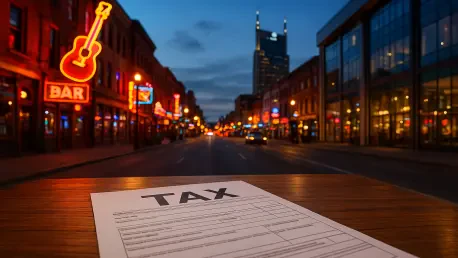

The emergence of global retail brands like the Apple Store on Broadway signals an encroaching homogenization that threatens to dilute Nashville’s unique musical heritage. This shift highlights a severe economic paradox where the city’s overwhelming commercial success now risks dismantling the very cultural foundations that built its global reputation. The historic Lower Broadway district, famed for its dense concentration of honky tonks and neon-lit venues, is currently grappling with massive spikes in property tax assessments that threaten to price out the local institutions that made the city a global destination. This fiscal crisis suggests that the lucrative “Music City” brand is being leveraged as a financial weapon against small business owners, creating a trap where local prosperity leads directly to cultural displacement. Beyond the immediate economic impact on Tennessee, the stakes involve the preservation of a distinctly American identity that provides continuity for millions of people across many generations.
The Crushing Weight of New Assessments
Recent data reveals a staggering disparity between the traditional profit margins of family-owned music venues and the aggressive new tax burdens being imposed by the metropolitan government. Iconic spots like Acme Feed & Seed and Kid Rock’s Honky Tonk are facing projected annual tax increases that reach several hundred thousand dollars, with some specific assessments jumping by as much as 500% within a single year. These figures represent a systemic threat that transcends normal market evolution, moving into a territory where the power to tax becomes the power to destroy the local economy. For long-term owners on the Broadway strip, these hikes are viewed as an existential threat capable of wiping out entire blocks of independent businesses. When a small venue’s tax bill climbs from five figures to nearly half a million dollars almost overnight, the business model ceases to be viable regardless of current popularity. This pressure forces a choice between closure or a total overhaul.
The financial strain is not limited to the largest venues; it trickles down to the smaller stages that serve as the proving grounds for aspiring songwriters and session musicians. As taxes rise, these establishments are forced to increase prices for food and beverages, potentially alienating the locals who have supported them for years. Moreover, the necessity to maximize revenue every minute of the day often leads to a shift in booking practices, where safe, high-volume cover bands are prioritized over the original artists who once defined the Nashville sound. This homogenization process creates a feedback loop where the unique atmosphere of the district is slowly replaced by a generic entertainment experience that could exist in any major metropolitan area. If the fiscal environment remains hostile to independent ownership, the diversity of the music scene will likely vanish, leaving behind a sterile corporate landscape that lacks the grit and authenticity that originally made the city a draw for tourists.
Market Value Versus Cultural Utility
A fundamental conflict has emerged between the raw real estate value of downtown Nashville and the cultural utility of its music scene. Because these honky tonks successfully transformed Lower Broadway into a world-class attraction, the surrounding land value has skyrocketed to levels usually reserved for luxury hotels. However, a local music hall does not operate with the same profit margins as a Fortune 500 retail chain, leading to a “trap” where success accelerates the owner’s eviction. The popularity that the local community built is now the primary factor driving financial instability. This encroaching homogenization is symbolized by the arrival of national lifestyle brands and high-end tech stores that lack a genuine connection to history. If the current trajectory continues, the unique neon landscape risks being replaced by a sterile corporate environment that prioritizes standardized retail over preservation. This shift effectively trades the city’s authentic soul for short-term revenue.
To address this crisis, policymakers initiated discussions on establishing cultural conservation districts that would freeze assessments for heritage venues. Implementing a tiered tax system based on cultural contribution rather than just square footage provided a necessary lifeline for independent owners. This legislative approach recognized that the value of a historic venue was not purely financial but also foundational to the city’s overall identity. State-level intervention eventually allowed for broader reform in how landmark properties were valued, ensuring that the neon lights of Broadway did not go dark for good. Moving forward, the focus shifted toward balancing urban growth with the protection of the artistic class that defined the region. Leaders recognized that the people and institutions that built Nashville were worth more than the inflated appraisals of the land they occupied. These solutions served as a blueprint for other cities facing similar gentrification challenges.