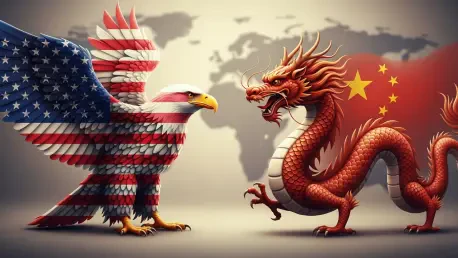

A fragile quiet has settled over the turbulent waters of U.S.-China relations, yet below the surface, powerful currents of distrust and strategic competition are pulling the two superpowers toward a collision course that many in Washington believe is inevitable. While public rhetoric has softened and the immediate threat of escalating tariffs has receded, a deep-seated and bipartisan conviction is taking hold on Capitol Hill: the current calm is merely a strategic pause, not a lasting peace. This analysis delves into the precarious nature of this truce, exploring why a supermajority of influential lawmakers foresee its collapse and identifying the specific flashpoints that could ignite a new phase of conflict by 2026. The consensus suggests that the foundational issues dividing the nations—from economic leverage to military ambition—have not been resolved, but merely deferred, setting the stage for a future confrontation.
The Calm Before the Storm: Why a Bipartisan Consensus in Washington Predicts a Coming Fracture
Despite a public de-escalation in the U.S.-China trade war, an overwhelming sentiment of skepticism pervades the halls of Congress. In private discussions, over 25 influential lawmakers from both sides of the aisle express a shared belief that the current stability is a temporary illusion, destined to shatter within the next two years. This consensus, cutting across party lines and ideological divides, is rooted in a profound distrust of Beijing’s strategic intentions and its commitment to recent agreements. Lawmakers on key committees, including the House Select Committee on China, view the present détente not as a sign of genuine rapprochement but as a tactical maneuver by Chinese President Xi Jinping to regroup and advance his long-term objectives.
This widespread pessimism stands in stark contrast to the more optimistic portrayal of the relationship emanating from the executive branch. The belief among these legislators is that the fundamental drivers of conflict—China’s economic practices, military expansion, and geopolitical ambitions—remain unchanged. They argue that a pause on tariffs and a handful of diplomatic gestures do little to alter the underlying trajectory of a rivalry that is structural and deeply embedded. The central question they pose is not if the truce will break, but when and how, with a clear expectation that simmering tensions will boil over, forcing a dramatic and potentially destabilizing shift in U.S. policy.
An Uneasy Armistice: Setting the Stage for Renewed Conflict
The current state of U.S.-China relations can best be described as an uneasy armistice. Following a high-stakes meeting between the American and Chinese presidents, both nations pulled back from the brink of an all-out economic war. This de-escalation involved a mutual pause on the implementation of new tit-for-tat tariffs and a relaxation of certain export restrictions that had hampered bilateral trade. Publicly, the Trump administration has highlighted this progress, attributing the newfound calm to the “close relationship” between the two leaders and emphasizing its ongoing monitoring of Beijing’s compliance with its commitments, particularly on curbing fentanyl precursors and increasing agricultural purchases.
However, this official narrative masks a deep and persistent instability. On Capitol Hill, the skepticism is palpable. The administration’s optimistic tone is met with a bipartisan conviction that Beijing is merely biding its time. Lawmakers point to a long list of unresolved, high-stakes issues that were conveniently set aside during recent negotiations but remain potent sources of future conflict. The contentious sale of TikTok, disputes over intellectual property, and unsettled deals concerning rare earth minerals have been left simmering just beneath the surface. This foundation of unresolved grievances creates a profoundly volatile environment, where any single issue could rapidly unravel the delicate truce and plunge the two powers back into open hostility.
The Four Fracture Points: Where the Truce is Most Likely to Break
The path toward 2026 is littered with potential landmines that could detonate the current truce. Lawmakers have identified four primary areas where the fragile peace is most likely to break, each representing a distinct vector of strategic competition and potential conflict.
1. The Soybean Spoiler: Agriculture as an Economic Weapon
One of the most immediate threats lies in the agricultural sector, where China has demonstrated a willingness to use trade as a tool of economic coercion. Beijing’s failure to meet its promised purchase of 12 million metric tons of U.S. soybeans directly harms American farmers in politically crucial states like Iowa, Illinois, and Nebraska. This failure to deliver on a high-profile commitment is seen not as a simple commercial shortfall but as a deliberate political signal. With a February 28 deadline looming for the completion of these purchases, China’s compliance is being closely watched. Any significant deviation from this agreement could serve as the trigger for a sharp, retaliatory reaction from the White House, which is highly sensitive to economic impacts on its core political constituencies.
2. The Taiwan Tinderbox: Military Aggression in the Indo-Pacific
A second, and potentially more dangerous, flashpoint is China’s escalating military pressure on Taiwan. Beijing has significantly ramped up its preparations for a potential invasion, a fact underscored by the recent debut of a new amphibious assault barge system designed specifically to overcome the logistical hurdles of a cross-strait attack. This military posturing is accompanied by a broader pattern of intimidation against U.S. allies throughout the Indo-Pacific. A recent incident in which Chinese fighter jets locked their targeting radar on Japanese aircraft in the East China Sea serves as a stark reminder of the risks. Such aggressive actions could easily miscalculate and cross a red line, forcing a direct American response to defend its regional partners and uphold its security commitments.
3. The Supply Chain Chokehold: Renewed Export Restrictions
The weaponization of global supply chains represents a third critical vulnerability. There is growing concern in Washington that Beijing will reimpose export curbs on rare earth minerals, which are indispensable for American technology and defense industries. China’s dominance in this market gives it powerful leverage. Beyond minerals, an even greater national security threat is emerging from U.S. dependency on China for approximately 80% of its active pharmaceutical ingredients (APIs). This reliance gives Beijing the theoretical ability to disrupt America’s medicine supply, creating a powerful chokehold that lawmakers fear could be exploited in a future crisis. The potential for China to turn off the spigot on essential medicines is a scenario that national security planners are taking with increasing seriousness.
4. The Military Power Play: A Direct Challenge to U.S. Primacy
Finally, the truce is threatened by the fundamental reality of China’s rapid military modernization. Its naval expansion has already produced the world’s largest fleet, and the commissioning of its third aircraft carrier, the Fujian, represents a major technological leap. Equipped with advanced electromagnetic catapults matching those on the newest U.S. carriers, the Fujian signals Beijing’s intent to project power far beyond its shores and directly challenge decades of American dominance in the Pacific. This military buildup is not viewed as a distant, future threat but as a present-day reality that is fundamentally incompatible with a long-term peaceful relationship. It reframes the U.S.-China dynamic as an inexorable strategic rivalry, making any truce inherently temporary.
Voices from the Hill: A Chorus of Congressional Concern
The gravity of the situation is underscored by the candid assessments of key lawmakers who are deeply involved in shaping U.S. policy toward China. Their words paint a picture of a Congress united in its wariness and prepared for renewed confrontation. On the fundamental issue of reliability, Senator Thom Tillis (R-N.C.) offered a blunt evaluation: “China can never be trusted. They’re always looking for an angle.” This sentiment reflects a core belief that Beijing’s commitments are tactical and subject to change based on its strategic calculus, rather than being rooted in good faith.
This distrust fuels the widespread rejection of the notion that the relationship has entered a more stable phase. “The idea that we’re in a period of stability with Beijing is simply not accurate,” asserted Senator Jeanne Shaheen (D-N.H.), who has long highlighted the national security risks posed by China. Concerns about economic leverage are equally pronounced. Representative André Carson (D-Ind.) identified a key vulnerability, stating, “At the center of the crack in the truce is China’s ability to levy export restrictions.” Ultimately, these individual concerns coalesce into a larger strategic picture of an emerging global competitor. As Representative Nathaniel Moran (R-Texas) concluded, “We know the long-term goal of China is really economic and diplomatic and military domination around the world.”
A Framework for the Future: Key Indicators to Watch Through 2026
Navigating the complexities of the U.S.-China relationship requires moving beyond diplomatic rhetoric and focusing on tangible metrics. To accurately assess the health of the current truce, several key indicators should be monitored closely through 2026. These metrics provide a practical framework for gauging whether the relationship is trending toward stabilization or fracture.
On the economic front, the most immediate indicator is Beijing’s compliance with its agricultural purchase agreements. Tracking the volume of U.S. soybean and other commodity purchases against its public commitments will be a critical barometer of its intentions. Simultaneously, any new Chinese export controls, particularly on critical materials like rare earths or pharmaceutical precursors, would signal a significant escalation and a return to economic coercion. These actions would provide clear evidence of Beijing’s willingness to weaponize its supply chain dominance.
Militarily, the focus must be on China’s posture in the Indo-Pacific. An increase in the frequency, scale, and intensity of military drills around Taiwan would be a deeply alarming sign. Likewise, the nature of encounters between Chinese forces and those of the U.S. and its allies, such as Japan and Australia, will be telling. A rise in aggressive maneuvers or near-miss incidents would indicate a higher tolerance for risk from Beijing. Technologically, the operational deployment of new military hardware, most notably the Fujian aircraft carrier and its J-35 stealth fighters, will mark a new phase in China’s power projection capabilities. The American response to these milestones will be a crucial indicator of how Washington intends to manage the shifting military balance.
The examination of the U.S.-China relationship revealed a stark disconnect between the public appearance of a truce and the private consensus among policymakers who saw it as profoundly fragile. The analysis identified four critical fracture points—agricultural trade, Taiwanese sovereignty, supply chain control, and military expansion—that threatened to shatter the peace by 2026. Ultimately, the evidence pointed not toward a lasting reconciliation but to a temporary pause in a deep-seated strategic rivalry, suggesting that the underlying drivers of conflict had remained firmly in place, awaiting the next inevitable catalyst.