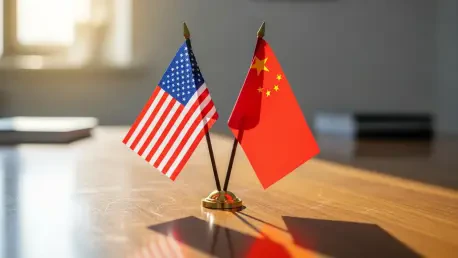

The commencement of high-stakes diplomatic maneuvering in the heart of Paris marks a critical juncture for international commerce as American and Chinese officials attempt to forge a durable framework for economic cooperation ahead of a pivotal presidential summit. This high-level dialogue follows a fragile five-month truce established in Busan, which succeeded in temporarily suspending a bruising trade war defined by triple-digit tariffs that had previously disrupted global supply chains. However, the atmosphere remains tense following a recent United States Department of Commerce initiative to launch investigations into sixteen different trading partners. This move, triggered by a Supreme Court ruling that invalidated several prior global tariff structures, has drawn sharp criticism from Beijing. Chinese leadership continues to express deep-seated skepticism regarding what they characterize as inconsistent and unpredictable shifts in American economic policy. Consequently, the Paris talks must now reconcile these domestic legal requirements with the broader objective of maintaining the precarious peace established earlier this year. Negotiators are tasked with finding common ground on market access and intellectual property protections while navigating a landscape where unilateral enforcement actions frequently threaten to upend multilateral progress. The success of these meetings will likely dictate whether the upcoming encounter between President Trump and President Xi Jinping results in a meaningful structural agreement or merely a continuation of tactical delays.
The Strategic Path: Navigating Energy and Economic Security
Beyond the immediate mechanics of trade, the discussions in Paris integrated broader geopolitical concerns, particularly regarding energy security in the Middle East and the escalating tensions surrounding Iran. President Trump explicitly advocated for a multinational coalition that included Chinese participation to safeguard the Strait of Hormuz, ensuring that vital oil supplies remained unhindered by regional instability. Lead negotiators Bessent and He, who had previously navigated complex dialogues in Geneva and London, worked to synchronize these security interests with economic imperatives. Moving forward, the establishment of a permanent bilateral crisis management cell was proposed to address sudden policy shifts before they escalated into full-scale trade conflicts. This institutionalized approach aimed to mitigate the volatility described by Foreign Minister Wang Yi during this foundational year for bilateral relations. To ensure lasting stability, both nations focused on creating transparent benchmarks for trade compliance that bypassed the need for judicial intervention. Experts suggested that a shared commitment to maritime security served as a necessary catalyst for broader economic trust. These negotiations effectively transitioned from reactive dispute resolution to a proactive strategy centered on mutual resource protection. By prioritizing the safety of global energy corridors, the delegates provided a blueprint for future cooperation that extended well beyond the limitations of traditional manufacturing quotas or agricultural purchases.