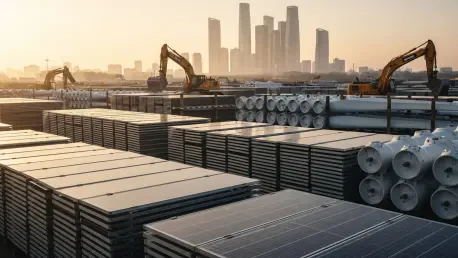

The massive scale of material throughput that once defined the industrial landscape of China is currently undergoing a sophisticated transformation into a closed-loop system that prioritizes value retention over simple consumption. This strategic redirection is codified in the 15th Five-Year Plan, a framework that moves beyond traditional recycling to embrace a comprehensive lifecycle-oriented economic model. As of 2026, the national agenda has successfully elevated circularity from a supplementary environmental policy to a primary engine for industrial modernization and resource security. This pivot reflects a broader recognition that decoupling economic expansion from resource depletion is not only an ecological necessity but a cornerstone of long-term global competitiveness in a world of increasing supply chain volatility.
Strategic planning for the current period from 2026 to 2030 emphasizes the integration of resource efficiency into the national “Double Carbon” strategy, linking emissions reductions directly to the way materials are sourced, used, and recovered. By focusing on the entire lifecycle of products, the government aims to mitigate the risks associated with raw material price fluctuations and external dependencies. This evolution is particularly visible in the heavy industrial sector, where the focus has transitioned from expanding capacity to maximizing the utility of every ton of steel, cement, and chemical feedstock. Consequently, the national manufacturing landscape is being reconfigured to support a resource-secure economy that can withstand global economic shifts while continuing to provide the foundation for high-quality development.
Major industrial players are now fundamental to this reshaping, as the 15th Five-Year Plan requires a fundamental realignment of manufacturing workflows. Large-scale enterprises are tasked with creating internal loops where waste from one process becomes the high-value input for another. This systemic approach is designed to foster an industrial ecosystem where resource productivity becomes a key metric of corporate performance. The transition is not merely about managing waste but about redefining the relationship between production and the environment, ensuring that the economic engine of the future operates within the planetary boundaries.
The Strategic Pivot: China’s Evolution Toward a Systemic Circular Model
The transition toward a systemic circular model represents a departure from the “take-make-dispose” pattern that fueled previous decades of rapid urbanization. In the current 15th Five-Year Plan, the focus has shifted toward the systemic integration of circularity into national resource security and the overarching carbon neutrality targets. This lifecycle-oriented framework acknowledges that environmental sustainability cannot be achieved through end-of-pipe solutions alone. Instead, it requires a fundamental redesign of industrial ecosystems to ensure that materials circulate within the economy for as long as possible, maintaining their highest value at every stage of the process.
Central to this pivot is the decoupling of economic growth from resource consumption, a feat that requires unprecedented coordination between policymakers and industrial leaders. The strategy emphasizes that resource security is synonymous with national security, particularly as global markets for critical minerals and raw materials become increasingly unpredictable. By internalizing the supply of secondary materials, the economy builds a buffer against external shocks. Moreover, the role of major industrial players has shifted from being mere consumers of resources to becoming orchestrators of material flows, where they are responsible for the circularity of their own products and the waste generated within their supply chains.
This systemic evolution also aligns with the national goal of achieving a more balanced manufacturing landscape. The emphasis is no longer solely on the volume of output but on the intelligence and efficiency of the production process. High-tech manufacturing sectors are leading the way by adopting modular designs and using advanced analytics to track material usage. This approach ensures that the “Double Carbon” strategy is not just a target for 2030 and 2060, but a daily operational reality. As the economy matures, the transition to a circular model serves as the primary mechanism for maintaining growth while drastically reducing the environmental footprint of the world’s largest industrial base.
Quantifying the Transformation: Market Metrics and Emerging Industrial Shifts
The transition to a circular economy is increasingly defined by rigorous data and clear economic indicators that map out a path toward a more efficient future. Analysts are observing a profound structural change as the nation moves from traditional industrial metrics to those that prioritize resource productivity and carbon efficiency. This transformation is not just a theoretical shift but is backed by specific targets for the period from 2026 to 2030, which are designed to push every sector of the economy toward higher standards of material utilization.
Pivoting from Downstream Recovery to Upstream Preventive Design
The current industrial strategy marks a significant move away from managing waste at the end of its life toward “green product design” and cleaner production. Industries such as electronics, chemicals, and steel are undergoing a fundamental transformation where repairability, disassembly, and material efficiency are integrated into the initial research and development phases. By focusing on these preventive measures, manufacturers can significantly reduce the volume of waste that ever reaches the end of the pipe. This proactive design philosophy ensures that products are not only more durable but also easier to reintegrate into the manufacturing cycle once they are eventually decommissioned.
Furthermore, this shift is forcing a reevaluation of material selection, with a growing emphasis on non-toxic and easily recyclable components. In the electronics sector, for instance, the move toward modularity allows consumers to replace individual parts rather than discarding entire devices, thereby extending the product lifecycle and reducing the demand for virgin minerals. In the chemical and steel industries, cleaner production techniques are being deployed to minimize the intake of raw materials and energy while eliminating hazardous byproducts. These changes are not just technical but reflect an evolving consumer behavior that favors sustainable lifestyles as a structural necessity for a modern society.
This transition to upstream design also requires a new level of collaboration across the entire value chain. Designers, engineers, and waste management experts must work together to ensure that the materials chosen at the start of a product’s life can be recovered efficiently at its end. This collaborative approach is dismantling the silos that previously hindered circularity, creating a more integrated industrial landscape. Consequently, the focus on preventive design is becoming a competitive advantage for companies that can demonstrate high levels of material efficiency and low environmental impact, appealing to both domestic and international markets that are increasingly sensitive to sustainability.
Driving Growth Toward an 8 Trillion Yuan Circular Market
The economic potential of the circular economy is being realized through ambitious growth targets, with the resource recycling industry projected to reach a staggering valuation of 8 trillion yuan, or approximately $1.1 trillion USD, by the end of the current planning period. This massive market expansion is driven by a projected 16% increase in resource productivity and a 10% reduction in energy intensity across the board. These metrics highlight the government’s commitment to making circularity a primary pillar of the national economy, transforming what was once a niche environmental concern into a major driver of GDP growth and job creation.
Achieving these targets requires a significant scaling up of the infrastructure for resource recovery and processing. The investment in advanced recycling facilities and secondary material markets is creating new opportunities for innovation and entrepreneurship. As the demand for high-quality recycled materials grows, the industry is seeing a move toward the professionalization and consolidation of recycling networks. This industrial shift ensures that secondary resources can compete with primary materials in terms of both quality and cost, making the circular economy a viable and attractive alternative for mainstream manufacturers.
Moreover, the drive toward an 8 trillion yuan market is fostering a new generation of high-tech companies specialized in the recovery of rare and precious materials. These firms are utilizing cutting-edge technologies to extract value from waste streams that were previously considered too complex or costly to process. By establishing circularity as a core economic pillar, the nation is not only addressing environmental challenges but also securing its position as a global leader in the green technologies of the future. The ripple effects of this growth are being felt across the entire economy, from traditional manufacturing to the emerging digital and green energy sectors.
Navigating the Obstacles to a Fully Integrated Resource Loop
Despite the clear strategic direction, scaling circularity to a national level involves overcoming significant structural and technological challenges. One of the primary obstacles is the fragmentation of the recycling industry, which has historically been dominated by small-scale, informal operations that lack the capacity for high-value processing. This fragmentation makes it difficult to achieve the economies of scale necessary to drive down costs and ensure a consistent supply of high-quality secondary materials. Furthermore, the lack of standardized metrics for material quality often leads to “information asymmetry,” where manufacturers are hesitant to use recycled content due to uncertainty about its performance and safety compared to virgin materials.
Addressing these challenges requires a concerted effort to modernize the recycling infrastructure through technological innovation. Intelligent sorting systems, powered by artificial intelligence and computer vision, are becoming essential for managing the increasing complexity of waste streams. These technologies allow for the precision separation of different materials, which is crucial for maintaining the purity and value of secondary resources. However, the high initial cost of these technologies can be a barrier for many smaller players, necessitating government support and new financing models to facilitate the widespread adoption of advanced dismantling and sorting tools.
Economic factors also play a critical role in navigating the path to a fully integrated resource loop. The price of secondary materials is often highly volatile and sensitive to the fluctuations of primary commodity markets. When the price of raw materials drops, the economic incentive to use recycled content can diminish, making it difficult for circular business models to remain competitive. To counter this, policies are being developed to stabilize the market for secondary materials and provide financial incentives that reflect the environmental benefits of circularity. Overcoming these economic and technological barriers is essential for ensuring that the transition to a circular economy is both sustainable and resilient in the long term.
The Regulatory Architecture: Deepening Responsibility and Market Standards
The 15th Five-Year Plan introduces a more robust regulatory framework designed to institutionalize circular practices through the expansion of the Extended Producer Responsibility (EPR) system. This policy mandates that manufacturers take full responsibility for the entire lifecycle of their products, from design and production to end-of-life recovery. By internalizing the costs of waste management, the EPR system incentivizes companies to design products that are more durable and easier to recycle. This shift in accountability is a cornerstone of the national strategy, ensuring that the burden of waste management is shared more equitably across the value chain and that producers have a direct stake in the circularity of their products.
In tandem with EPR, the implementation of digital traceability and market standards is providing the transparency needed to build trust in secondary material markets. Blockchain and other distributed ledger technologies are being deployed to track the flow of materials from the point of collection to their reintegration into new products. This digital footprint ensures that manufacturers and consumers can verify the origin and quality of recycled content, mitigating the risks associated with “greenwashing” and substandard materials. Standardized evaluation criteria for remanufactured goods are also being established, allowing these products to compete on a level playing field with new equipment in the marketplace.
Fiscal and tax policies are being refined to support the economic viability of circular business models. The introduction of “reverse invoicing” is a significant development, as it simplifies the tax process for recycling companies and reduces the administrative friction that has previously hampered the growth of the sector. Furthermore, the integration of circular activities into the national voluntary carbon reduction mechanisms allows companies to earn credits for the emissions they avoid through resource efficiency. These financial incentives are crucial for aligning corporate interests with national sustainability goals, creating a regulatory environment where circularity is not just a legal requirement but a profitable business strategy.
The Horizon of Circularity: High-Tech “Urban Mining” and Green Energy Lifecycles
The future of the circular economy is increasingly defined by the ability to recover high-value materials from the complex waste streams of the modern digital and green energy sectors. “Urban mining” is emerging as a critical strategic activity, focusing on the extraction of rare earth elements, precious metals, and high-purity plastics from decommissioned electronics and industrial equipment. This approach views the city as a vast deposit of resources that can be harvested to ensure supply chain resilience against global volatility. By developing advanced technologies for precision dismantling and chemical recovery, the economy can tap into these “mines” to provide a sustainable source of materials for high-tech manufacturing.
A particularly urgent challenge on the horizon is the management of the retirement wave of renewable energy infrastructure and electric vehicle (EV) batteries. As the first generation of wind turbines and solar panels reaches the end of its functional life, the need for specialized recycling facilities becomes paramount. The 15th Five-Year Plan prioritizes the development of a nationwide network for the collection and high-value recovery of these materials, ensuring that the green energy transition does not result in a new environmental crisis. For EV batteries, the focus is on a “cascading use” model, where batteries that are no longer suitable for vehicles are repurposed for stationary energy storage before being finally recycled for their raw minerals.
The role of artificial intelligence and robotics in this high-tech circularity cannot be overstated. AI-driven sorting facilities are now capable of identifying and separating complex materials with a speed and accuracy that far exceeds human capabilities. This automation is essential for making the recovery of small and complex components economically viable. Moreover, the integration of precision dismantling robots allows for the safe and efficient processing of hazardous or difficult-to-handle waste, such as lithium-ion batteries and electronic circuit boards. As these technologies continue to mature, they will provide the foundation for a more sophisticated and efficient resource recovery industry that can meet the demands of a high-tech, low-carbon economy.
Securing Industrial Resilience: A Roadmap for a Resource-Efficient Future
The strategic shift toward a circular economy has transformed the industrial landscape, positioning resource efficiency as the core of national economic resilience. The 15th Five-Year Plan successfully moved the needle from a focus on waste disposal to a comprehensive system of material stewardship that spans the entire production and consumption cycle. Throughout the current period, the integration of digital traceability and expanded producer responsibility provided the necessary structure for a transparent and high-functioning secondary materials market. This transition allowed the manufacturing sector to reduce its reliance on volatile global commodity markets, creating a more stable and predictable environment for long-term industrial growth and innovation.
The rapid expansion of the recycling industry toward its 8 trillion yuan target demonstrated that environmental sustainability and economic prosperity were not mutually exclusive but were, in fact, mutually reinforcing. High-tech “urban mining” and the lifecycle management of green energy infrastructure provided a blueprint for how a modern economy could handle the complexities of technological waste. By prioritizing the recovery of critical minerals and the remanufacturing of industrial components, the nation secured a strategic advantage in the global supply chain. These efforts were supported by fiscal policies that incentivized circularity, making it easier for businesses of all sizes to adopt low-carbon and resource-efficient business models.
Stakeholders across the economy recognized that the transition to a circular model was a long-term journey that required continuous innovation and adaptive policy. The progress made during this period laid the groundwork for a future where every product is designed with its next life in mind, and every waste stream is viewed as a potential resource. Moving forward, the focus remained on refining the technologies of sorting and recovery while deepening the cultural shift toward green consumption. By leveraging the power of data and the incentives of a carbon-constrained market, the industrial base achieved a level of resilience that was previously thought impossible, ensuring a sustainable and prosperous future in a resource-constrained world.