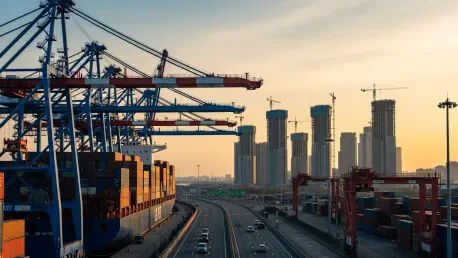

The divergence between China’s soaring high-tech exports and its remarkably sluggish domestic market has created a complex economic landscape that defies traditional recovery models. While global demand for electric vehicles, renewable energy infrastructure, and specialized semiconductors continues to provide a robust lifeline for the industrial sector, the expected spillover into the broader economy has largely failed to materialize. This internal stagnation is not merely a statistical anomaly but a reflection of a deeper structural fatigue that threatens to undermine long-term stability. As the national growth rate slips below the benchmarks seen in previous quarters, the disconnect between factory output and household spending has become the central focus of economic debate. Navigating this divide requires a delicate balance between maintaining industrial dominance and addressing the fundamental lack of confidence that prevents citizens from engaging with the market. The result is an economy that appears powerful on paper but feels increasingly hollow to the people living within it.
Drivers of the Economic Divide
The Growing Gap Between Exports and Internal Consumption
The current growth paradox is characterized by a record trade surplus that conceals a significant lack of momentum within the domestic retail and service sectors. High-tech manufacturing has become the primary driver of GDP, yet the capital generated by these exports remains concentrated in large-scale enterprises rather than circulating through the general population. This concentration has led to a “two-story” economy where the success of global trade fails to improve the purchasing power of the average household. Furthermore, the heavy reliance on foreign markets leaves the nation vulnerable to shifting trade policies and the implementation of new tariffs by major trading partners. Without a corresponding rise in internal demand, the industrial boom acts as a fragile buffer against broader economic decline. The inability to transition from an export-led model to a consumption-driven one highlights the limitations of current industrial policy in fostering a resilient and self-sustaining national economy.
The Impact of Real Estate Devaluation on Consumer Behavior
The persistent downturn in the property sector has played a decisive role in cooling consumer enthusiasm, as real estate once represented the primary store of value for the middle class. As property valuations continue to stagnate or decline, the negative wealth effect has taken a firm hold, leading many families to adopt a much more conservative approach to their finances. Instead of spending discretionary income on travel, luxury goods, or services, households are prioritizing the accumulation of savings to hedge against further financial uncertainty. This shift in behavior has effectively neutralized the potential benefits of the manufacturing surge, as the psychological impact of losing equity in their most significant asset outweighs any marginal gains in wages. The evaporation of speculative wealth has forced a generational shift in spending habits, where the emphasis has moved from aspirational consumption to strict financial preservation. Consequently, the retail sector faces a prolonged period of underperformance that is directly tied to the health of the housing market.
Structural Challenges and Future Risks
Labor Market Pressures and the New Social Contract
Pressure within the labor market has introduced a new set of challenges, particularly for young professionals who find that the current economic structure offers fewer opportunities for upward mobility. While the high-tech sector remains highly profitable, it is increasingly automated and capital-intensive, meaning it does not generate the volume of high-quality jobs required to absorb the millions of graduates entering the workforce. This mismatch between education and employment availability has led to a growing sense of disillusionment among the youth, prompting the government to begin reframing the national social contract. The emphasis has shifted away from the promise of rapid wealth accumulation toward a more tempered narrative of social stability and contribution. By adjusting expectations for the next generation, authorities hope to manage potential social friction, yet the underlying issue of job scarcity remains a significant hurdle. The transition to a more modest economic reality requires a profound cultural adjustment that is still in its early stages of development.
Fiscal Policy Limitations and Global Externalities
Beijing historically avoided the implementation of massive stimulus packages, preferring instead to manage the national debt while pursuing a trajectory of moderate growth. This calculated restraint was intended to prevent the return of the hyper-leveraged bubbles of the past, but it also left the domestic market without the necessary spark for a rapid recovery. Analysts observed that the reliance on industrial strength provided a temporary shield, yet the lack of direct support for consumers meant that the recovery remained lopsided. To move forward, it became clear that future strategies would need to prioritize direct social safety net enhancements to reduce the necessity for excessive precautionary savings. Policymakers recognized that addressing external vulnerabilities, such as the volatility of global energy markets and geopolitical tensions, was secondary to stabilizing the internal demand cycle. The path toward a balanced economy ultimately required a shift in focus from infrastructure and exports to the fundamental strengthening of household income and consumer confidence across all sectors.