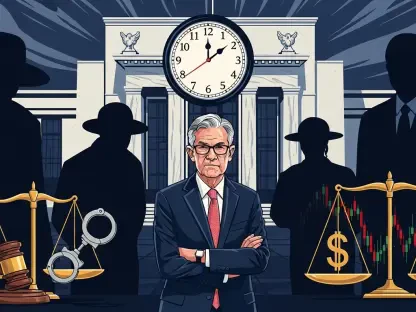

With us today is Donald Gainsborough, a political savant and leader in policy and legislation at the helm of Government Curated. We’re delving into a story that has shaken the foundations of corporate Americthe Delaware Supreme Court’s stunning reversal on Elon Musk’s $56 billion pay package. This interview will explore the profound legal ripples of that decision, including why major tech companies are now fleeing Delaware for states like Texas. We’ll unpack the new, formidable barriers being erected against shareholder activism and examine the astronomical new compensation plan Tesla has put in place, all while considering what this high-stakes legal drama means for the future of corporate governance.
The lower court called the $56bn package “unfathomable.” What legal arguments likely convinced the Delaware Supreme Court to overturn that ruling, and what does this specific reversal signal about the state’s stance on high-stakes executive compensation moving forward?
The lower court was clearly shocked, calling the $56 billion deal “unfathomable” because it felt Tesla’s directors were conflicted and that key facts were hidden from shareholders during the approval process. However, the Supreme Court’s reversal sends a powerful message about priorities. They likely gave more weight to the fact that shareholders did approve the deal and that Musk delivered on his side, transforming Tesla from a struggling startup into one of the world’s most valuable companies. You have to see this as Delaware doing critical damage control. The initial ruling prompted a furious backlash and seriously damaged its business-friendly reputation, so this reversal is a strategic recalibration to reassure the corporate world that Delaware remains a predictable and stable place to do business.
Following Musk’s backlash, companies like Dropbox and Roblox reincorporated in other states. Beyond the headlines, what are the tangible legal or financial benefits these companies gain by moving to Texas or Nevada, and what specific vulnerabilities in Delaware did this case highlight for them?
When companies like Dropbox and Roblox saw a single judge invalidate a massive, shareholder-approved package, it created a chilling effect across boardrooms. The primary vulnerability this case exposed in Delaware was a perception of judicial activism that was becoming hostile to visionary, if unconventional, tech founders. The most tangible benefit of moving to a state like Texas is gaining a powerful legal shield. By reincorporating there, Tesla can now implement rules that make it incredibly difficult to sue the board over compensation or strategy. This move is all about seeking legal certainty and insulating leadership from what they view as disruptive, costly lawsuits that can derail long-term, high-risk ventures.
The original lawsuit was brought by an investor with only nine shares. Now in Texas, Tesla can require a suing investor to own a 3% stake. Can you walk me through the pros and cons of this high barrier for shareholder activism and corporate accountability?
It’s a classic battle between corporate stability and shareholder accountability. On one hand, requiring a suing investor to own a 3% stake—a position worth a staggering $30 billion—is a powerful defense for a company. It prevents an individual with just nine shares, like the original plaintiff, from tying up the company in years of litigation and potentially overturning a decision supported by the vast majority of owners. The downside, however, is a monumental blow to corporate governance. This rule effectively silences not just small retail investors but almost every institutional investor out there, as Musk is the only individual with a stake that large. It creates a fortress around the board where their decisions are virtually unchallengeable in court.
Shareholders approved a new package potentially worth $878bn tied to ambitious goals like a robotaxi network. What key performance metrics define this new plan, and what steps has Tesla taken to protect this even larger deal from being tied up in court like the 2018 package?
The new plan is almost breathtaking in its ambition and scale, potentially worth $878 billion if all targets are met. Unlike the 2018 package, which was tied to more traditional market cap and operational milestones, this one is built on achieving truly futuristic goals. We’re talking about creating a functioning robotaxi network, rolling out mass-market self-driving vehicles, and successfully selling humanoid robots into the market. To protect this even larger deal, Tesla made the critical strategic move of reincorporating in Texas. This allows them to erect that formidable legal wall we discussed—the 3% ownership requirement for lawsuits—making it nearly impossible for a shareholder to launch the kind of legal challenge that ensnared the 2018 package for years.
What is your forecast for the future of shareholder lawsuits against massive, performance-based executive pay packages?
My forecast is for a more fractured and strategic legal landscape. We are absolutely going to continue seeing these massive, moonshot pay packages, as boards try to lock in visionary founders. However, the battleground itself is shifting. Instead of these fights playing out primarily in Delaware’s well-established courts, we will see a divergence. Some companies will remain in Delaware and continue to face that judicial scrutiny. But I predict a growing number of founder-led, high-growth companies will follow Tesla’s playbook, engaging in what you could call “jurisdictional arbitrage” by moving to states like Texas to create firewalls against shareholder litigation. The future isn’t fewer massive pay deals; it’s companies actively choosing their legal homes to ensure those deals can’t be challenged.