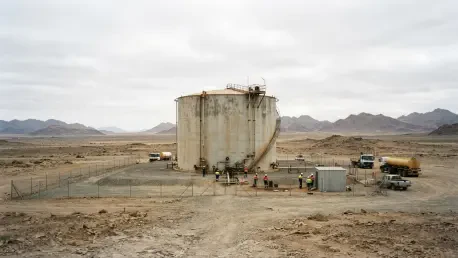

Regional trends across Africa indicate a shift toward integrated ownership structures where host governments maintain a foothold in private-led industrial developments. The current economic discourse in Namibia is dominated by the N$41 billion investment from Nigerian industrialist Aliko Dangote, a massive undertaking that promises to redefine the country’s energy landscape. While the project is set to construct a 600-million-liter fuel storage facility and an extensive pipeline network, the discovery that the Namibian state holds no equity has sparked intense scrutiny. This investment represents a pivotal moment for the administration, which seeks to position the nation as a logistical hub for the Southern African region. However, the reliance on a purely foreign-owned model for such critical infrastructure raises questions about long-term autonomy. Without a direct stake, the nation risks missing the dividend flows that usually accompany such high-value assets.
The Legislative Push: Local Participation and Governance
The introduction of the Namibia Investment Promotion and Facilitation Bill marks a significant attempt by the government to formalize the rules governing international capital. Minister of Industries, Mines, and Energy, Modestus Amutse, has championed this legislation to move beyond outdated frameworks and establish clear expectations for global investors. At its core, the bill aims to streamline approval processes and provide robust investor protections while simultaneously institutionalizing local participation. The Dangote deal serves as a high-stakes test case for these new regulations, highlighting the friction between the urgent need for infrastructure and the desire for national ownership. By codifying local participation requirements, the government intends to ensure that large-scale projects contribute more than just temporary construction jobs or utility fees. Instead, the goal is to create a structure where the domestic economy retains a meaningful share of the wealth.
Historically, Namibia has prioritized attracting physical infrastructure to stimulate immediate economic growth, yet the consensus among modern policymakers is shifting toward a more nuanced approach. There is a growing realization that infrastructure without equity can lead to extractive economic patterns, where the primary profits are sent to foreign shareholders while the host nation receives only secondary benefits. To prevent this, the new legislative framework seeks to define how local entities can participate in projects without deterring foreign capital. This requires a delicate balance of maintaining a predictable investment environment while asserting national interests. The debate is no longer about whether foreign investment is welcome, but rather about the terms under which it operates. If the country successfully integrates local equity requirements into its legal fabric, it can transform its role from a mere recipient of investment into a sophisticated player in the global market.
Regional Lessons: Lessons From Kenya and Ethiopia
A comparative analysis of recent industrial deals across the continent provides a compelling roadmap for how the state might restructure its approach to foreign investment. In Kenya, a sophisticated reciprocal ownership model has emerged, where the Dangote Group acquired a significant stake in the Kenya Pipeline Company while the Kenyan government concurrently pursued equity in a proposed refinery. This arrangement ensures that the state remains a central participant in the energy supply chain, gaining both operational insight and a share of the profits. Similarly, Ethiopia has utilized a joint venture model for its massive industrial complexes, often securing a 40% equity stake through state-run investment holdings. These examples demonstrate that global investors are often willing to accept significant state participation if the rules are clear and the partnership provides operational stability. For Namibia, these regional precedents serve as evidence that demanding equity is a standard practice.
The success of such equity-driven models depends heavily on the capacity of domestic institutions to manage and fund their participation. In the Namibian context, organizations like the National Petroleum Corporation of Namibia and the Government Institutions Pension Fund are identified as the primary vehicles for this mission. These institutions possess the technical expertise and deep capital reserves necessary to negotiate on equal footing with multi-billion-dollar conglomerates. By leveraging these entities, the state can move beyond tax collection and become a true stakeholder that earns dividends and influences strategic decisions. This requires institutional investors to take a more proactive role during the early stages of project negotiations, rather than attempting to secure equity after terms are finalized. Ensuring that local participation adds tangible value makes the partnership more attractive to foreign entities like the Dangote Group, creating a sustainable scenario for all parties.
Strategic Outcomes: Future Economic Sovereignty
The path forward for Namibia requires a strategic departure from passive hosting toward a robust, equity-based partnership model that protects sovereign interests. While the Dangote project provided the essential infrastructure needed for regional energy security, it also functioned as a catalyst for legislative reform. Policymakers ultimately recognized that long-term prosperity depended on codifying local participation before capital was committed, ensuring a stable and predictable environment for all parties. By integrating institutional investors into the negotiation process, the government was able to secure a future where dividends remained within the borders to fund national development projects. The transition from a landlord state to an active equity partner proved vital in avoiding the pitfalls of economic extraction seen in previous decades. This shift empowered the nation to maintain control over its energy corridors while continuing to attract the world’s most ambitious industrial projects.