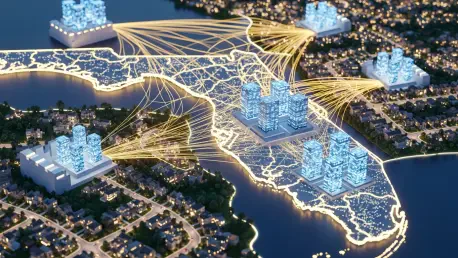

Florida’s electrical landscape is currently undergoing a monumental transformation as utility providers scramble to meet the insatiable energy demands of the burgeoning data center industry. These massive facilities, which function as the physical backbone of the digital economy, often consume as much electricity as medium-sized cities, necessitating the most significant infrastructure build-out in the history of the state. While this expansion promises technological prestige and economic modernization, it simultaneously introduces a complex web of financial risks that could fall squarely on the shoulders of residential ratepayers. Current regulatory frameworks permit a level of secrecy that obscures the true cost of these projects, raising concerns about whether the public is inadvertently subsidizing the explosive growth of private tech giants through their monthly utility bills. This tension highlights a critical juncture where the state must choose between unchecked corporate acceleration and the long-term financial stability of its citizens.
The Mechanics of Financial Opacity
Confidential Agreements and Rate Basing: The Shield of Secrecy
A primary obstacle to ensuring public accountability resides in the contractual secrecy surrounding agreements between utility companies and data center developers. These billion-dollar deals are frequently classified as proprietary information, a designation that prevents independent experts and the general public from reviewing the underlying financial terms or project justifications. Such a lack of transparency often results in regulatory fast-tracking, where massive infrastructure deals are approved in quick succession by state commissions without a comprehensive accounting of how costs are distributed among different classes of users. When the specific details of a power purchase agreement are shielded from view, it becomes nearly impossible to verify if a major tech firm is paying a fair share of the costs or if the utility is providing preferential treatment to attract high-profile clients. This systemic opacity creates a fertile ground for financial imbalances that favor corporate entities over the average household.
The financial impact of massive infrastructure projects is frequently obscured through a regulatory mechanism known as rate basing, which integrates construction costs into a utility’s permanent capital investment. Instead of appearing as immediate or separate charges on a monthly statement, the expenses associated with building high-voltage transmission lines, specialized substations, and dedicated power plants are blended into the overall asset base. Utilities are legally permitted to earn a guaranteed rate of return on these investments, which typically have an operational lifespan spanning thirty to forty years. This arrangement ensures that the utility remains profitable while recouping the costs of development, but it also means that residential customers are effectively locked into paying for this specialized infrastructure for decades to come. Because these costs are amortized over such a long duration, the immediate shock to the consumer is minimized, yet the total amount paid by the public over time often exceeds the initial investment.
Speculative Development and Affiliate Transactions: Systemic Risks
Beyond the opacity of contracts, a significant risk involves speculative development projects and the exploitation of internal corporate loopholes. Data center developers often file multiple connection requests with various utilities to scout for the best deals, creating a pipeline of phantom projects that may never be built. When a utility constructs expensive infrastructure for a facility that is eventually abandoned, those costs are still integrated into the rate base, forcing residents to pay for useless equipment. Furthermore, while laws regulate the direct price charged to data centers, they often fail to monitor the prices a utility pays to its own unregulated sister companies for power generation. Since these entities belong to the same parent corporation, they can potentially inflate internal prices to maximize shareholder profits at the expense of the average consumer. Without the authority to audit these affiliate transactions, regulatory protections are easily bypassed, allowing utilities to shift financial burdens onto the public.
To address these systemic disparities, the state moved to increase transparency and bolster the resources available for public legal advocacy. In the past, large corporations hired teams of attorneys to negotiate favorable deals, while underfunded public counsel struggled to represent millions of residential customers. To rectify this, new mandates required the disclosure of major utility contracts and implemented strict audits of all affiliate dealings to prevent unfair cost shifting. Policymakers also recognized that requiring large-scale industrial users to pay for their infrastructure up front was essential to protect local households from decades of rate increases. These actions ensured that the technological expansion of the power grid did not occur at the expense of residential financial security. By strengthening oversight and closing regulatory gaps, the state successfully created a more equitable energy market that balanced the needs of industrial growth with the fundamental right of citizens to affordable and transparent utility services.