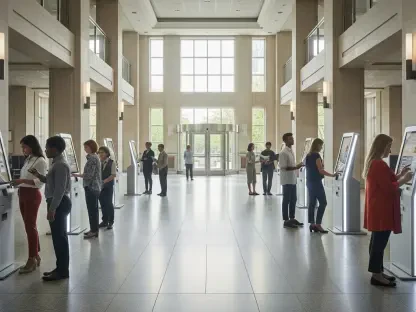

The sudden realization that essential financial documentation is missing during the height of tax season has left thousands of federal retirees in a state of profound uncertainty and frustration. This administrative failure centers on the Office of Personnel Management and its inability to distribute Form 1099-R to a significant portion of the civil service retiree population in a timely manner. Representatives James Walkinshaw and Frank Pallone, joined by several of their congressional colleagues, have formally challenged OPM Director Scott Kupor to provide a transparent account of these systemic delays. These forms are not merely paperwork; they are the primary mechanism for reporting pension distributions to the Internal Revenue Service, and their absence prevents retirees from fulfilling their legal obligations. While the agency has pivoted toward a digital delivery model, a substantial number of annuitants still depend on the physical mail service that was promised to arrive by the end of January.
Operational Failures: The Crisis within Retirement Services
The current backlog is not an isolated incident but rather the culmination of a deepening crisis within the OPM Retirement Services division, which has struggled to maintain basic operational standards. Advocacy groups, most notably the National Active and Retired Federal Employees Association, have reported being inundated with calls from retirees who find themselves unable to reach a human representative at the agency. These individuals describe a customer service infrastructure that is effectively paralyzed, with wait times stretching into hours or calls being disconnected before an agent ever answers. This functional breakdown was anticipated by the OPM Inspector General, who recently designated the management of retirement services as a top-tier challenge for the upcoming fiscal cycle. The lack of reliable communication channels has left the most vulnerable retirees, particularly those without stable internet access, feeling abandoned by the very system they served for decades.
Staffing concerns sit at the very heart of this logistical nightmare, as the agency grapples with the long-term consequences of hiring freezes and poorly executed retention strategies. A controversial “deferred resignation” program and a series of high-profile hiring cancellations have depleted the workforce of experienced claims processors and support staff. Without a sufficient number of personnel to handle the seasonal surge in document requests, the administrative burden has exceeded the agency’s remaining capacity. Lawmakers are now demanding a detailed breakdown of current staffing levels compared to authorized positions to determine if the delays are a result of pure negligence or a chronic lack of resources. The erosion of institutional knowledge caused by the departure of veteran employees has further complicated the transition to newer processing systems, creating a bottleneck that has delayed the printing and mailing of tax forms for hundreds of thousands of former federal workers.
Digital Modernization: Balancing Progress and Accessibility
The drive toward a digital-first government has inadvertently created a significant barrier for retirees who are either unable or unwilling to navigate complex online portals like Login.gov. OPM officials have defended their performance by highlighting the ease of downloading tax forms through their web-based retirement portal, yet this solution ignores the reality of many senior citizens. Significant portions of the retiree community live in areas with limited broadband access or lack the technical literacy required to manage multi-factor authentication systems. For these individuals, the agency’s policy of mailing paper documents by January 31 is not a secondary option but a vital necessity. The current situation suggests that the push for digital modernization was implemented without a sufficient safety net for those who remain dependent on traditional communication methods, leading to a widening gap in service equity across the federal retirement system.
In response to congressional scrutiny, agency leadership suggested that extreme winter weather in the Northeast may have contributed to the slowed distribution of paper forms. However, lawmakers have dismissed these environmental excuses as insufficient, noting that the delays appear to be nationwide and far more systemic than a temporary weather disruption would suggest. The formal inquiry directed at Director Kupor requests specific metrics, including the exact number of forms that remain unmailed and the average duration of call center inquiries over the last quarter. This oversight effort seeks to compel OPM to move beyond anecdotal explanations and provide a data-driven plan for remediating the current backlog. The goal is to ensure that the transition to a modernized digital infrastructure does not come at the expense of the agency’s legal and ethical obligation to provide accessible, timely service to the millions of people who rely on their federal benefits.
Strategic Remedies: Restoring Accountability and Service Standards
The resolution of this administrative crisis required an immediate shift toward a more resilient and redundant document distribution strategy that prioritized the needs of non-digital users. Congressional leaders advocated for the implementation of an automated “request and mail” hotline that bypassed the need for a live agent, allowing retirees to trigger a paper form delivery through a simple telephonic interface. Furthermore, the agency was encouraged to establish a permanent contingency fund specifically for seasonal surges, ensuring that temporary staff could be onboarded well before the tax deadline. By decoupling the tax document process from the primary retirement claims queue, the OPM could have mitigated the impact of staffing shortages on time-sensitive financial reporting. These proactive measures were designed to transform the agency’s reactive posture into a more anticipatory model that accounted for the diverse technological capabilities of its annuitant base.
Future efforts to modernize federal retirement services must be grounded in an inclusive design philosophy that integrates human-centric support alongside technological advancements. Moving forward, the OPM was tasked with conducting a comprehensive audit of its “deferred resignation” program to identify how it affected service delivery during peak periods. Lawmakers also suggested that the agency should partner with local federal executive boards to provide in-person assistance for retirees struggling with digital portals. This multi-layered approach aimed to rebuild the trust that was eroded during the recent tax season by demonstrating a commitment to reliable, multi-channel service. Ultimately, the lessons learned from these delays underscored the necessity of maintaining robust physical infrastructure even as the government pursued a more efficient digital future, ensuring that no retiree was left behind in the name of modernization.