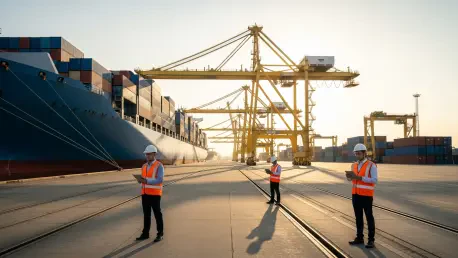

The traditional architecture of international trade, once defined by the fluid movement of goods across borders, has undergone a fundamental transformation as aggressive protectionist policies redefine the modern economic landscape. This shift signals a departure from the long-standing global free-trade consensus toward a domestic-first economic model that prioritizes national sovereignty over seamless cross-border integration. The current scope of the 2025 tariff landscape reveals a complex tax structure where the burden falls primarily on domestic importers rather than foreign exporters, fundamentally altering cost structures for American businesses. This paradigm shift seeks to dismantle the decades-old reliance on offshore manufacturing, attempting to correct perceived imbalances in the global market through the imposition of significant duties.
The Evolution of U.S. Protectionism and the New Trade Order
The philosophical push to revitalize the American industrial heartland is the cornerstone of this new trade order. For years, the narrative of economic decline in manufacturing centers served as a catalyst for political change, and the current administration has addressed this by erecting aggressive trade barriers. By making imported goods more expensive, the government aims to create a protective shell around domestic factories, hoping to spur a renaissance in local production. This strategy is not merely a fiscal adjustment but a complete reimagining of the American economic identity as a self-sufficient industrial powerhouse.
Primary market players across various sectors are now forced to navigate these new duty structures, with steel, automotive, and retail companies bearing the brunt of the impact. The steel industry, in particular, has seen a return to prominence as foreign competition is stifled by high entry costs. Similarly, the automotive sector faces a dual challenge of managing expensive imported components while trying to maintain competitive pricing for the middle class. Retail giants are also at the center of this transition, as they struggle to balance the need for low-cost consumer goods with the reality of rising import taxes that eat into their margins.
Driving Forces and Quantifying the Economic Impact
Emerging Market Drivers and the Shift Toward Domestic Sourcing
The global trade map is being redrawn as corporations seek to bypass high-tariff jurisdictions through a process of re-wiring supply routes. Manufacturing hubs in Southeast Asia and North America are experiencing a surge in activity as companies look for alternative sources that are not subject to the most punitive U.S. duties. However, this transition is not without friction, as shifting production from established centers to emerging markets requires significant capital investment and time. Many firms are now prioritizing proximity to the American market, leading to a rise in near-shoring initiatives that favor regional partners over distant suppliers.
Consumer behavior is simultaneously evolving as the reality of these tariffs manifests at checkout counters. Shoppers at major retailers like Walmart and Target are beginning to see price hikes on a wide range of goods, from household electronics to basic apparel. These price increases act as a silent pressure on the domestic economy, forcing households to re-evaluate their spending priorities. Amidst this pressure, domestic manufacturers have a unique opportunity to capture market share. If local producers can maintain lower costs than their tariff-burdened foreign counterparts, they may finally see the sustained growth that has eluded the American heartland for decades.
Key Performance Metrics and Global Growth Projections
Market data from the recent past shows a paradoxical four percent rise in U.S. imports despite the increased costs associated with new duties. This suggests that the American appetite for foreign goods remains resilient, or perhaps that domestic alternatives are not yet available at the scale required. Findings from Goldman Sachs and the Federal Reserve indicate that cost pass-through rates remain high, with businesses transferring a significant portion of the tariff burden to consumers. This has contributed to inflationary surges that the central bank is still working to contain, complicating the broader economic outlook.
Forward-looking projections from the International Monetary Fund suggest a cooling of global economic activity as trade tensions persist into the late 2020s. The volatility of the U.S. dollar has become a significant factor in international purchasing power, creating uncertainty in global stock markets. As the dollar fluctuates in response to trade news, international partners find it increasingly difficult to plan for long-term investments. This instability threatens to undermine the very economic growth that protectionist policies were intended to secure, creating a delicate balancing act for federal policymakers.
Navigating the Obstacles of a Fractured Global Supply Chain
Retaliatory trade measures from key partners like Canada, Brazil, and the European Union have added layers of complexity to an already fractured supply chain. These nations have responded with their own duties on American exports, creating a cycle of economic tit-for-tat that hampers growth on both sides of the Atlantic. In particular, the heavy duties on American agricultural and automotive exports have strained diplomatic relations and forced domestic exporters to find new markets. The resulting friction has made the global trade environment more unpredictable than at any point in the last fifty years.
External geopolitical factors, such as the conflict involving Iran, have further disrupted the supply of essential commodities like oil and fertilizer. These disruptions have increased the cost of domestic production, making it even harder for American companies to scale up and replace imports. While the administration encourages domestic growth, the lack of immediate infrastructure and the high cost of raw materials remain significant hurdles. Many corporations are now pursuing specific product exemptions or completely re-evaluating their sourcing logistics to mitigate these mounting costs and ensure their survival in a high-tariff era.
The Shifting Regulatory Landscape and Judicial Constraints
The 2026 Supreme Court ruling on the International Emergency Economic Powers Act significantly limited executive authority, marking a turning point in trade law. The court established that while the president has broad powers, they are not infinite, especially when duties are applied without clear congressional oversight. This ruling led to a massive refund process for companies that had been subjected to specific country-based taxes, injecting billions back into the private sector. Consequently, the administration transitioned its legal strategy, moving away from Section 122 and toward Section 301 of the Trade Act of 1974 as the primary framework for duties.
Legal challenges continue to emerge from state governments that question the use of forced labor claims as a pretext for trade barriers. These lawsuits argue that regulatory standards are being applied inconsistently to achieve political goals rather than humanitarian ones. Meanwhile, compliance departments are working overtime to navigate the maze of quotas and preferential rates. For example, the unique agreements governing British steel and spirits provide a glimpse into a world of bilateral deals that replace global standards. Companies must now possess a deep understanding of these specific regulatory nuances to maintain their competitive edge.
Future Projections for an Era of Economic Protectionism
The long-term outlook suggests a period of sustained de-globalization as traditional allies seek alternative trade partnerships that exclude the United States. This fragmentation could lead to the rise of new trade blocs that focus on regional cooperation and lower internal barriers. In response, American factories are increasingly turning to technological innovation and automation to offset higher labor costs. By integrating advanced robotics and artificial intelligence into the production line, domestic industries hope to overcome the competitive advantages previously held by low-wage foreign markets.
Sustainability remains the primary question for high-tariff policies in the face of persistent domestic inflation. If consumer pushback reaches a critical mass, the political will to maintain these barriers may erode. However, if domestic production can scale effectively and prices stabilize, the protectionist model may become a permanent fixture of the American economy. The emergence of market disruptors, including localized 3D printing and green energy manufacturing, could further alter the trade balance, potentially making traditional import-export models obsolete by the end of the decade.
Strategic Imperatives for a New Chapter in International Trade
The transformation of the global commerce landscape into a fragmented and regionalized environment offered a stark contrast to the era of hyper-globalization. This report found that the hollowing out of the American heartland showed early signs of reversal as localized production hubs gained significant traction. Investors who prioritized agility over traditional stability were better positioned to navigate the sudden shifts in duty structures and judicial rulings. The move toward economic nationalism created a new set of winners and losers, where success depended on the ability to bridge the gap between domestic production and global demand.
Agencies and corporations that successfully mitigated the impact of tariffs did so by diversifying their supply chains and investing heavily in domestic infrastructure. The era of economic protectionism demanded a more nuanced approach to international relations, where bilateral agreements replaced multilateral treaties. Moving forward, the critical areas for growth will likely center on industries that can leverage technological innovation to bypass traditional trade hurdles. The report concluded that while the path to economic self-sufficiency was fraught with inflationary risks, the foundational shift in trade policy forced a necessary re-evaluation of national economic resilience.