
The labyrinthine streets of Tehran hum with a quiet intensity that belies the crushing weight of the global financial restrictions that have sought to isolate the Iranian nation from the world stage for nearly a half-century. In the current year of 2026, the Islamic Republic stands not as a country on the verge of collapse, but as a complex, battle-hardened economy that has institutionalized survival. For decades, the nation has existed in a state of perpetual economic siege, transforming the domestic landscape into a living laboratory for sanction-evasion and survivalist policy. Rather than succumbing to the intended pressure, the state has adopted a sophisticated doctrine of resilience, treating international isolation as a permanent environmental condition to be mastered rather than a temporary hurdle to be cleared.
This defiance is signaled by a distinct transition from a defensive posturing to an offensive strategy focused on total self-reliance. While the Iranian rial has faced historic volatility, dropping to millions against the dollar, the leadership remains steadfast in its pursuit of economic autonomy. This shift is characterized by an aggressive domestication of supply chains and a strategic realignment of trade toward partners who are willing to bypass traditional Western-aligned financial institutions. The goal is no longer just to survive another year of restrictions, but to build an insulated system that operates entirely outside the orbit of the United States and its allies.
The High-Stakes Game of Economic Survival
The Iranian leadership now views economic management as a high-stakes strategic game involving long-term planning and deceptive maneuvers rather than purely reactive measures. By leveraging decades of experience in bypassing blockades, the government is focusing on domesticating every stage of the production cycle to ensure the state can function even if oil exports remain minimal. This approach is rooted in the belief that the global order is no longer dominated solely by a single power, allowing Tehran to find gaps in the enforcement of international penalties. The narrative within the halls of the Central Bank emphasizes enduring hardship as a form of national duty, framing every economic success as a victory on a modern battlefield.
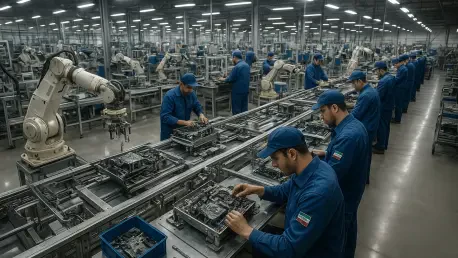
Economy Minister Ali Madanizadeh has frequently articulated a two-year planning cycle, specifically looking at the period from 2026 to 2028 as a window for achieving a new level of industrial independence. This timeframe is intended to consolidate the gains made in the tech and manufacturing sectors, where reverse-engineering has replaced traditional imports. The government is betting on the durability of its shadow banking networks and the loyalty of regional trade partners who see value in maintaining ties with a resource-rich nation. Despite the pressure, the state maintains a level of opacity regarding its true reserves, using this ambiguity as a tool to prevent speculative attacks on its remaining assets.
Why the “Resistance Economy” Matters in a Shifting Global Order
The Iranian model of a resistance economy is more than a local survival tactic; it represents a fundamental challenge to the hegemony of the Western financial system. As Tehran bets on a multipolar world where international partners may eventually ignore Washington’s threats, the success or failure of their self-sufficiency mandate serves as a critical case study for other nations. This strategy is essential for grasping the real-world implications of modern economic warfare, where the lines between domestic policy and national security are permanently blurred. If Iran can maintain a functioning state despite near-total exclusion from the SWIFT system, it provides a blueprint for other sanctioned regimes to follow.
Furthermore, this economic stance is deeply intertwined with the country’s geopolitical ambitions. By proving that economic coercion has diminishing returns, Iran seeks to weaken the primary diplomatic leverage used by its adversaries. This has led to a significant increase in cooperation with the BRICS+ nations, which are increasingly interested in alternative payment systems that do not rely on the dollar. The Iranian experience suggests that while sanctions can cause immense pain and structural damage, they can also trigger a profound transformation in a nation’s industrial DNA, forcing a level of innovation that might never have occurred in a free-trade environment.
Pillars of the Iranian Self-Sufficiency Strategy
A core component of the survival mandate is the aggressive push for domestic production across all vital sectors. The government is currently prioritizing the agricultural sector, aiming to raise food self-sufficiency from 85 percent toward a goal of 100 percent. This initiative involves the intensive cultivation of high-yield crops and the subsidization of modern irrigation techniques to combat the inherent challenges of the region’s climate. However, this drive faces significant hurdles, including chronic water scarcity and the high costs of replacing maritime trade with overland routes through Russia and Central Asia. The trade-off between immediate food security and long-term environmental health remains a point of intense internal debate.
The pharmaceutical sector serves as a prime example of the gap between state goals and the lived reality of the citizens. While officials claim that nearly 97 percent of medicines are produced within Iran, the country still struggles with shortages of specialized drugs for complex conditions. The phasing out of subsidized currency rates has further increased the financial burden on the average family, reflecting a broader trend of the state withdrawing support for essential sectors due to dwindling reserves. To compensate, the government has encouraged the growth of a domestic biotech industry, which has shown remarkable progress in creating biosimilar versions of expensive international medications, though distribution remains uneven.
Perspectives on the Human and Structural Toll
Financial analysts and Central Bank officials acknowledge that while the state has successfully avoided a total systemic collapse, the cost of this persistence is rampant hyper-inflation. Monetary devaluation has decimated the purchasing power of the middle class, leading to a period of prolonged austerity where survival has replaced growth as the primary economic metric. The rial’s instability means that prices for basic goods fluctuate daily, creating a psychological climate of uncertainty that discourages long-term investment. Government spokespeople remain candid about the fact that the path to autonomy is paved with significant sacrifice, often calling for national patience in the face of these fiscal trials.
Infrastructure vulnerability has also become a critical concern as daily power blackouts and natural gas deficits become common occurrences. Despite being a resource-rich nation, Iran is grappling with the consequences of years of underinvestment in its utility infrastructure, exacerbated by the recent conflict and the resulting damage to refineries. Experts warn that the government is facing a paradox where it must raise fuel prices to sustain the aging system, yet doing so risks triggering the very social unrest the state is desperate to avoid. The energy crisis has forced many industrial plants to operate at half capacity, further straining the manufacturing revolution that the leadership has championed.
Practical Frameworks for Managing a Siege Economy
To navigate the trade-off between immediate food security and long-term environmental health, Iran is exploring ways to increase agricultural yields without further depleting its fragile water table. This includes prioritizing high-efficiency staples like wheat and maize while diversifying import routes through regional hubs such as the UAE and Saudi Arabia to stabilize food prices. The government has also turned toward digital agricultural monitoring to maximize the output of every acre of arable land. By integrating satellite data and localized soil sensors, the agricultural ministry sought to mitigate the impact of unpredictable weather patterns on the national food supply.
The state fostered a network of regional barter agreements that bypassed the need for hard currency reserves in the final months of the previous fiscal cycle. This transition established a new precedent for economic insulation, allowing for a gradual stabilization of internal markets despite the lack of traditional banking access. Policy analysts emphasized that the administration successfully launched a series of small-scale technological cooperatives that focused on reverse-engineering critical industrial components. These decentralized production hubs mitigated the impact of targeted strikes on central facilities and provided a robust blueprint for future manufacturing endeavors. The nation navigated the crisis by diversifying its technological base and prioritizing the digitalization of the rial to enhance monitoring and reduce the impact of external exchange rate manipulation.