
The vast, sun-drenched expanses of the Moroccan Sahara and the wind-swept Atlantic coastline are no longer just landscapes of natural beauty but have become the engines of a massive energy revolution. By launching the Sila Atlantik project, Morocco is signaling a definitive shift in how the African continent interacts with the global energy market, transitioning from a peripheral observer to a primary architect of the clean energy transition. This $30 billion initiative is designed to harness 15 gigawatts of renewable power, which will then travel across a groundbreaking 4,800-kilometer subsea cable to meet the growing demands of the German industrial heartland. This ambitious endeavor represents more than just a massive infrastructure plan; it is a calculated geopolitical move that aims to secure a stable and sustainable future for both nations while setting a new standard for transcontinental cooperation. As energy security becomes a paramount concern in the current decade, the corridor provides a tangible roadmap for decarbonization.
A Strategic Paradigm Shift: Industrial Partnership
This project reflects a significant evolution in Morocco’s national economic strategy, moving beyond the traditional model of extracting raw materials to becoming a high-tech energy hub. The government in Rabat has systematically increased its renewable capacity, with a clear objective to ensure that more than 52% of the country’s installed power comes from green sources by the end of the current decade. By integrating large-scale solar arrays like the Noor Ouarzazate Solar Complex with massive wind farms, the nation is creating a resilient and diversified energy portfolio. This domestic success serves as a proof of concept for international investors, demonstrating that Morocco possesses the technical proficiency and regulatory stability required to manage multi-billion-dollar undertakings. The shift toward becoming a sophisticated industrial partner for the European Union is intended to attract high-value investments in manufacturing and technology, ensuring that the benefits of the energy transition are felt locally.
Furthermore, the Sila Atlantik initiative is designed to create a symbiotic relationship where Germany receives green energy while Morocco gains access to advanced technological transfers and industrial development. This approach moves the conversation away from simple commodity trading and toward a long-term strategic alliance that encompasses green hydrogen production and the localization of supply chains. By fostering an environment where European firms can set up production facilities powered by local renewables, Morocco is positioning itself as a vital link in the global green value chain. International financial institutions have noted that this model provides a template for other developing nations to leverage their natural resources for broader economic modernization. The integration of power generation with local industrial clusters ensures that the project creates thousands of skilled jobs, thereby reducing economic volatility and providing a stable foundation for growth. This strategic positioning is essential for a competitive edge.
Engineering Feats: The Scale of Physical Infrastructure
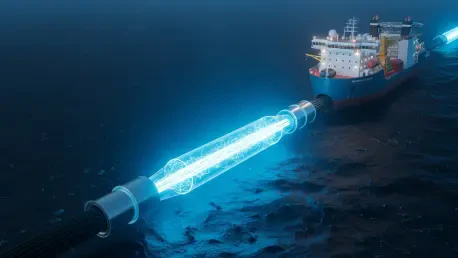
The technical specifications of the Sila Atlantik project are nothing short of monumental, pushing the boundaries of modern engineering and subsea transmission technology. A 15-gigawatt generation capacity is a staggering figure, dwarfing the total electrical output of many mid-sized nations and requiring a massive synchronization of solar and wind assets. To transport this immense volume of power, engineers are designing a 4,800-kilometer High-Voltage Direct Current (HVDC) cable that will traverse the Atlantic seabed to connect directly with the German grid. This cable will be one of the longest and most advanced ever constructed, utilizing state-of-the-art insulation and converter stations to minimize the energy loss that typically occurs over such vast distances. The sheer scale of the hardware involved requires a global supply chain effort, from specialized cable-laying vessels to the precision manufacturing of high-capacity transformers. Overcoming these physical challenges is a prerequisite for making the corridor a reality.
Beyond the physical construction of cables and turbines, the soft infrastructure—comprising the software and management systems—represents a significant technological hurdle that requires innovative solutions. Managing 15 gigawatts of intermittent energy across thousands of miles demands sophisticated grid-balancing algorithms and real-time monitoring to ensure stability on both ends of the connection. The project must also account for the diverse environmental conditions found along the undersea route, requiring extensive geological mapping and ecological impact assessments to ensure the longevity of the infrastructure. These technical considerations are coupled with the need for robust cybersecurity measures to protect the digital backbone of the energy corridor from potential disruptions. By addressing these complexities, the project developers are not only building a power line but are also creating a blueprint for high-tech energy transmission that can be replicated globally. The successful deployment of this technology will likely catalyze further undersea interconnections.
Enhancing Energy Security: The Role of Grid Resilience
For Germany, the establishment of this green energy corridor is a critical component of its broader strategy to ensure energy independence and reach climate neutrality by the mid-2040s. The recent volatility in global fossil fuel markets has accelerated the urgency to find reliable, carbon-free alternatives to natural gas and coal-fired power. As Germany transitions its heavy industry, including steel and chemical manufacturing, toward electrification, the projected demand for electricity is expected to surge far beyond domestic production capabilities. The Sila Atlantik project offers a continuous and scalable source of green power that complements Germany’s own renewable efforts, providing a buffer against the variability of local weather patterns. By tapping into the consistent solar and wind cycles of North Africa, German grid operators can ensure a more stable supply for both residential and industrial sectors. This diversification of energy sources is seen as a vital safeguard for the nation’s economic stability.
A unique aspect of the proposed corridor is its bidirectional design, which allows for the flow of electricity in both directions depending on seasonal demand and supply surpluses. This flexibility ensures that energy is never wasted; when Morocco experiences a surplus, it can export to Europe, and when German offshore wind production peaks, excess power can be sent back to the Maghreb. Such a dynamic exchange enhances the overall efficiency of both grids and creates a shared responsibility for energy management across borders. Moroccan authorities are emphasizing the importance of a formal intergovernmental treaty to underpin this relationship, providing the sovereign guarantees necessary to secure the massive private capital required. Unlike traditional private-sector contracts, a state-to-state agreement offers the long-term predictability that institutional investors demand for projects with multi-decade lifespans. This diplomatic framework is intended to foster a deeper sense of mutual trust, ensuring that the energy corridor remains a stable pillar of relations.
Financial Frameworks: Navigating Regulatory Landscapes
Securing the $30 billion needed for the Sila Atlantik project requires a sophisticated financial architecture that balances risk and return for a wide array of stakeholders. High-level discussions are currently focused on creating revenue mechanisms that protect investors from the inherent volatility of long-term energy pricing. One of the primary tools being explored is the use of long-term power purchase agreements that fix the price of electricity for several decades, providing a steady income stream to service the project’s debt. However, the sheer size of the investment means that no single entity can bear the burden alone; a consortium of international development banks, private equity firms, and sovereign wealth funds must be carefully coordinated. The complexity of these negotiations is compounded by the need to navigate the different regulatory environments of multiple transit countries and maritime zones. Establishing a clear and transparent legal framework is therefore just as critical as the engineering phase, as it provides the certainty required for commencement.
Lessons learned from previous attempts at large-scale transcontinental energy links have informed the current cautious and methodical approach taken by Moroccan and German officials. Past initiatives often struggled because they relied too heavily on private developer risk without sufficient government backing or clear financial guarantees. By observing these historical precedents, the architects of the Sila Atlantik project have prioritized the creation of bankable structures from the very beginning, ensuring that every phase of the project is financially viable. This involves deep coordination with the European Investment Bank and other multilateral organizations to provide de-risking instruments and low-interest financing. The objective is to create a model where public funds are used to leverage much larger volumes of private investment, creating a multiplier effect that accelerates the transition to green energy. Furthermore, the inclusion of local content requirements ensures that a portion of the financial benefits remains within Morocco, supporting regional economic development.
Regional Integration: Future Global Energy Leadership
The Sila Atlantik project is increasingly viewed as a catalyst for a broader regional transformation, where North Africa serves as a critical energy hub for the entire Mediterranean basin. Similar initiatives connecting Tunisia to Italy and Egypt to Greece are already paving the way for a truly integrated Euro-Mediterranean energy market. This regional integration not only enhances energy security for Europe but also provides North African nations with the capital and technology needed to modernize their own domestic grids. The massive influx of investment associated with these projects creates a high demand for a specialized local workforce, driving improvements in education and vocational training in the STEM fields. As these nations build out their renewable infrastructure, they are also developing the capacity to produce green hydrogen, a fuel that is expected to play a major role in the global shipping and aviation industries. By positioning themselves at the forefront of this technology, countries like Morocco are securing their place.
Successful implementation of this corridor established a precedent for how industrialized and developing nations cooperated to solve the urgent challenges of the climate crisis. The collaborative efforts between Rabat and Berlin demonstrated that cross-border energy projects could be mutually beneficial, provided that the financial and regulatory frameworks were transparent and robust. Policymakers and industry leaders recognized that the path forward required a commitment to shared infrastructure that transcended national borders and short-term political cycles. As the project moved into its operational phase, it offered a concrete solution for decarbonizing heavy industry while simultaneously promoting economic growth in emerging markets. Future considerations centered on expanding this network to include more transit points and incorporating more advanced battery storage technologies to further enhance reliability. The Sila Atlantik project ultimately proved that with the right combination of political will and prowess, the world was capable of sustainability.