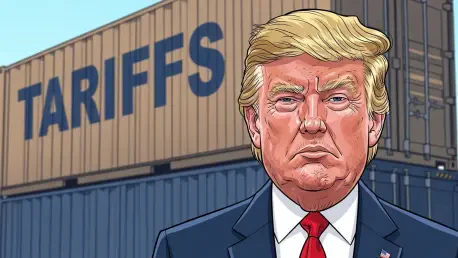

The Paradox of a Diluted Trade Policy
At the heart of the Trump administration’s aggressive trade war lies a profound contradiction between its hardline public messaging and the quiet reality of extensive, large-scale tariff exemptions. This research summary examines this central discrepancy, analyzing how a vast system of carveouts substantially weakened the intended impact, coherence, and underlying principles of the administration’s signature protectionist policy. While the tariffs were presented as an unyielding defense of American industry, the widespread granting of exclusions created a policy that was far more fragmented and politically reactive than its architects publicly admitted.
The core analysis addresses how these exemptions created a diluted and often inconsistent trade strategy. Instead of a comprehensive bulwark against unfair trade practices, the policy evolved into a patchwork of duties and exceptions. This investigation reveals that the need to manage domestic political pressure and secure targeted trade agreements frequently overrode the administration’s foundational protectionist arguments, ultimately undermining the trade war’s stated goals from within.
Context of a “National Emergency” Trade Strategy
The Trump administration invoked the International Emergency Economic Powers Act to justify its tariff strategy, framing the measures as a critical tool for protecting national security and correcting long-standing trade imbalances. This approach positioned the tariffs not merely as economic levers but as a necessary response to a national crisis. Consequently, this research is important because it dissects the evolution of this flagship policy from its ambitious inception to its compromised implementation.
By tracing the policy’s trajectory, this analysis reveals how internal pressures and political calculations forced significant retreats. The findings have broad relevance for understanding the practical limits of modern protectionist trade policy. The gap between the administration’s “national emergency” rhetoric and its flexible application of exemptions offers critical insights into the challenges governments face when implementing aggressive trade actions in a deeply interconnected global economy.
Research Methodology, Findings, and Implications
Methodology
This research is grounded in a qualitative analysis of diverse sources, including White House policy statements, official trade data detailing tariff exclusions, and independent investigative reports. Expert commentary from former trade officials provides additional context and interpretation. This multi-faceted approach allows for a direct comparison between the administration’s public rhetoric and the empirical evidence of its actions.
By cross-referencing official justifications with independent data, the methodology uncovers the significant disconnect between the stated intent of the tariff policy and its actual execution. This method moves beyond surface-level political messaging to provide a more nuanced understanding of how the trade war functioned in practice, highlighting the factors that drove the widespread use of exemptions.
Findings
The administration granted exemptions for hundreds of billions of dollars in annual imports, signaling what one former trade official described as a “big retreat in principle.” Key findings show that these exclusions included nearly $280 billion for industrial materials and another $252 billion for agricultural goods. This policy shift implicitly acknowledged that tariffs raise costs for American consumers, a direct contradiction of the administration’s persistent claim that they function as a tax on foreign nations.
Official justifications for the exemptions, which were often described as “nuanced and nimble” or “very small,” were inconsistent with the available data. While the administration claimed the carveouts were primarily used to secure new trade agreements, an independent analysis found that most were granted for other reasons. The scale of these exemptions demonstrates a significant departure from the original, more rigid tariff strategy.
Implications
The findings reveal that the tariff policy was less a rigid, principled strategy and more a flexible tool used to manage domestic political fallout and secure targeted trade concessions. This inconsistency undermined the policy’s overall effectiveness and credibility, creating an unpredictable trade environment for American businesses and international partners alike. The extensive use of exemptions suggests that the administration’s primary goal often shifted from broad-based protectionism to ad hoc political and economic management.
Practically, this inconsistent approach necessitated reactive measures to mitigate the negative consequences of the administration’s own actions. A prime example is the $12 billion aid package for farmers, which was implemented to offset the harm caused by retaliatory tariffs from other countries. This move highlights how the administration was forced to counteract the domestic damage of a trade war that was simultaneously being weakened by internal exemptions.
Reflection and Future Directions
Reflection
A key challenge in this analysis was reconciling the administration’s often-contradictory public messaging with the complex and evolving data on tariff exemptions. Overcoming this hurdle involved a meticulous process of cross-referencing official statements with independent data analysis to identify and quantify the disconnect between rhetoric and reality.
While the research successfully documents the qualitative impact of the exemptions, it could have been expanded by quantifying the precise economic benefit of these carveouts to specific industries versus the overall cost of the remaining tariffs. Such an analysis would offer an even clearer picture of the net economic effects of this fragmented protectionist policy.
Future Directions
Future research should explore the long-term impact of this inconsistent tariff policy on U.S. supply chains and international trade relationships. The unpredictable nature of the exemptions may have prompted lasting shifts in how American companies source materials and where they choose to invest, effects that will continue to unfold.
Furthermore, unanswered questions remain regarding the primary drivers behind the exemptions. Further studies could analyze the extent to which these carveouts were influenced by targeted lobbying efforts from powerful industries versus their use as strategic bargaining chips in trade negotiations. Investigating whether this model of “managed protectionism” sets a precedent for future U.S. trade policy is another critical area for exploration.
A Trade War Undermined from Within
In summary, the Trump administration’s aggressive trade war was substantially diluted by a vast and complex system of exemptions. These carveouts were not minor adjustments but fundamental alterations to the policy, driven by political expediency, negotiation tactics, and the urgent need to manage domestic economic harm. The widespread use of these exclusions created a trade strategy that was far less comprehensive and principled than the “national emergency” rhetoric used to justify it. Ultimately, the findings confirmed that internal contradictions and reactive adjustments weakened the administration’s signature trade initiative from the inside.