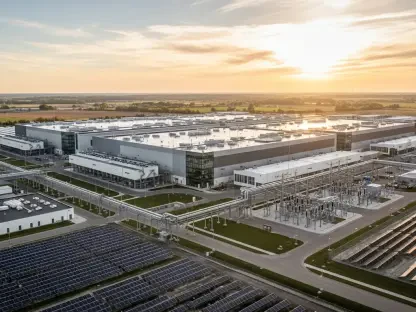
What happens when the battlefield of global supremacy moves from silicon chips to steel limbs? In 2025, the Trump administration is betting big on robotics as the next critical front in the technological showdown with China, a move that could reshape industries, national security, and the very fabric of the American workforce. This isn’t just about building better machines; it’s about defining the future of power in a world where automation could be the ultimate game-changer.
Why Robotics Emerges as the Core of U.S.-China Tech Rivalry
The stakes couldn’t be higher in this escalating tech race. Robotics, once a niche field of clunky industrial arms, has evolved into a domain where artificial intelligence meets physical action, creating machines capable of tasks once thought uniquely human. The Trump administration’s sharp pivot to this sector signals a recognition that dominance here could dictate economic and military might for decades. China’s staggering lead—with millions of robots already transforming its factories—has sounded an alarm in Washington, pushing policymakers to act with urgency.
This focus isn’t merely academic. Robotics represents the tangible extension of AI, moving beyond algorithms to impact real-world sectors like manufacturing and defense. For the U.S., trailing behind isn’t just a matter of market share; it’s a question of national resilience. The urgency stems from a fear that without swift action, American innovation could be outpaced, leaving the nation vulnerable in an increasingly automated global landscape.
The Strategic Urgency of Robotics in Global Competition
Delving deeper, the numbers paint a stark picture of the challenge ahead. According to the International Federation of Robotics, China operates over 1.8 million industrial robots, dwarfing the U.S. deployment by a wide margin. This gap isn’t just about quantity; it’s about strategic intent. Nations like Japan and Germany have long embraced national robotics frameworks, while China’s aggressive adoption fuels its manufacturing dominance. For the U.S., catching up means rethinking industrial policy at a fundamental level.
Beyond factory floors, robotics intersects with national security. Autonomous systems are poised to redefine warfare, logistics, and infrastructure protection. The Trump administration sees this as a dual-purpose race: bolster economic strength while safeguarding against geopolitical threats. Yet, this ambition collides with domestic concerns—automation’s potential to displace workers looms large, creating a tension that policymakers must navigate carefully.
Key Shifts and Challenges in U.S. Robotics Policy
Zooming in on concrete actions, the administration is laying groundwork for a robotics revolution. The Department of Transportation is gearing up to launch a dedicated working group this year, a step toward formalizing federal oversight. Meanwhile, Capitol Hill buzzes with bipartisan interest, though setbacks—like the rejection of a Republican amendment for a national robotics commission in recent defense legislation—highlight the rocky path ahead.
The disparity with global competitors remains glaring. Industry projections underscore the urgency: robotics funding is expected to reach $2.3 billion by 2027, while Goldman Sachs forecasts a $38 billion humanoid robot market by 2035. These figures signal immense opportunity, but also the scale of investment needed. With nations like Singapore already integrating robotics into their economic DNA, the U.S. risks being left behind without a cohesive strategy.
American companies aren’t standing still. Firms like Apptronik and Boston Dynamics are vocal in pushing for tax breaks, federal grants, and trade protections to counter China’s state-backed subsidies. Their argument is clear: a unified national approach to robotics isn’t optional—it’s essential for competitiveness across manufacturing, tech, and beyond. This corporate advocacy underscores a broader call for government partnership in an arena where stakes are nothing less than existential.
Expert Voices Weigh in on Robotics’ Dual Edge
Turning to those on the front lines, industry leaders offer a hopeful spin on automation’s role. Jeff Cardenas, CEO of Apptronik, champions robots as allies, not adversaries, emphasizing their potential to enhance human capabilities. Similarly, Jeff Burnstein of the Association for Advancing Automation argues that robotics can spark job growth by boosting productivity, allowing companies to scale operations in ways that demand more, not fewer, workers.
Yet, not all perspectives are so rosy. Research from the National Bureau of Economic Research casts a shadow, revealing that automation often slashes employment and wages for those in routine jobs. This contrast between optimism and caution paints a complex picture, where the promise of innovation must be weighed against real human costs. These insights from both industry and academia highlight a critical debate: can robotics be a tide that lifts all boats, or will it leave many stranded?
Balancing Innovation with Workforce Realities
Looking at practical solutions, a national robotics strategy emerges as a pressing need. Drawing inspiration from countries like Germany, the U.S. could integrate funding, education, and supply chain reforms to accelerate progress. Such a plan would not only close the gap with rivals but also position American innovation at the forefront of this transformative field. The time for piecemeal efforts has passed; coordinated action is the path forward.
Another avenue lies in redefining the human-robot dynamic in workplaces. Training programs that teach workers to design, operate, and maintain robotic systems could turn automation into a partnership. This approach reframes the narrative, focusing on new roles that emerge alongside machines—think technicians and programmers rather than assembly line losses. Pilot initiatives in manufacturing hubs could test this model, proving that collaboration trumps replacement.
Lastly, addressing job displacement head-on requires robust policy safeguards. Retraining programs and temporary support systems could ease the transition for workers impacted by automation. By investing in these measures, the government can ensure that technological leaps don’t widen inequality. The challenge is to align progress with protection, crafting a future where robotics strengthens the economy without fracturing its foundation—the American worker.
Reflecting on a Pivotal Moment
Looking back, the Trump administration’s turn to robotics stood as a defining chapter in the broader tech rivalry with China. The recognition of automation as a cornerstone of national strength marked a shift in how power was understood, blending economic might with cutting-edge innovation. Yet, the unresolved tension between job creation and displacement lingered as a reminder of the delicate balance required.
Moving forward, the path demanded bold steps: substantial investments, a unified national strategy, and a commitment to safeguarding the workforce. The lessons from this era pointed to a broader truth—technology’s value lay not just in its capabilities, but in how it served humanity. As the U.S. charted its course, the focus had to remain on ensuring that robotics became a bridge to prosperity, not a barrier. This moment in history called for vision and pragmatism in equal measure, a challenge that would shape the nation’s trajectory for years to come.