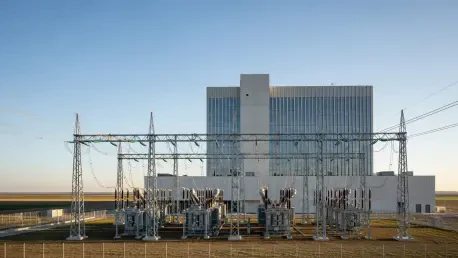

The massive, windowless concrete structures that now dominate rural landscapes and suburban industrial parks were once viewed as the shimmering beacons of a new digital gold rush, promising endless economic prosperity. For nearly a decade, state and local governments across the United States engaged in a high-stakes bidding war, desperate to attract the server farms that power the global internet. Officials rolled out the red carpet with a dizzying array of incentives, including multi-decade sales tax exemptions, property tax abatements, and heavily subsidized utility rates. The logic was simple: hosting the physical infrastructure of the 21st-century economy would secure a state’s place in the future. However, as these facilities have expanded to an unprecedented scale, consuming vast amounts of land and resources, that initial enthusiasm has curdled into a wave of legislative skepticism. Lawmakers are now grappling with a fundamental question of value, wondering if the billions of dollars in forfeited tax revenue and the strain on local power grids are worth the relatively few permanent jobs these “cloud” giants actually create. This shifting sentiment has triggered a bipartisan movement to demand fiscal accountability and a total reevaluation of the “incentive-first” approach that has defined the industry’s growth until now.
The Fiscal Reality: Balancing Budgets against Digital Growth
The sheer magnitude of tax revenue being bypassed by these incentive programs has reached a tipping point, forcing a difficult reckoning for budget-conscious officials. In Virginia, which serves as the premier global hub for data centers, the state recently reported a loss of approximately $1.6 billion in sales and use tax revenue in a single year alone. This figure represents a staggering increase that highlights the rapid scaling of these facilities as they transition to support intensive artificial intelligence workloads. Similarly, Georgia is navigating a predicament where projected losses from data center exemptions are expected to exceed $2.5 billion this year, a number that far surpasses the original estimates provided when the legislation was first enacted. These massive holes in state budgets are becoming impossible to ignore, especially as officials face increasing pressure to fund essential public services like schools, emergency response, and transportation infrastructure. The realization that these “hidden” costs are mounting exponentially has shifted the conversation from one of economic development to one of fiscal sustainability, as the public begins to question why the world’s wealthiest tech companies require such substantial taxpayer support.
Beyond the raw budgetary numbers, there is a growing concern regarding the actual return on investment for these public expenditures, particularly regarding labor markets. While the construction phase of a multi-billion-dollar data center provides a significant, albeit temporary, boost to local employment, the long-term reality is far less impressive. Once the servers are racked and the cooling systems are engaged, these massive facilities typically require only a skeleton crew of technicians, security personnel, and administrative staff to remain operational. Unlike a traditional manufacturing plant or a corporate headquarters that might support thousands of families within a community, a data center the size of several shopping malls may only provide a few dozen permanent positions. Economists have begun to point out that the political promise of job growth is often grossly exaggerated, creating a situation where states are effectively “buying” jobs at a cost of millions of dollars per employee. This disparity has led many to argue that the resources currently being diverted to subsidize data centers could be more effectively utilized in sectors that offer broader employment opportunities and more diverse economic benefits to the average resident.
Regional Strategies: From Incentives to Targeted Regulation
State legislatures are no longer content with providing blank checks to technology firms and are instead adopting a variety of sophisticated strategies to rein in the industry. In Maryland, the legislative mood has shifted toward a total repeal of sales tax exemptions after officials witnessed the cost of these programs jump from modest initial amounts to over $11 million in a single year, with projections suggesting even steeper climbs. Lawmakers there are arguing that the state can no longer afford to subsidize a sector that is already highly profitable and likely to build in the region regardless of tax breaks due to its proximity to existing fiber optic networks. Meanwhile, Virginia is pioneering a model where incentives are no longer guaranteed but are instead conditioned on strict environmental and operational performance. Proposed regulations in the state would require data center operators to meet high energy efficiency standards and significantly reduce their reliance on diesel backup generators just to maintain their tax-exempt status. This approach signals a transition from “growth at any cost” to a more disciplined regulatory framework that prioritizes the long-term health of the state’s environment and fiscal standing.
Other regions are taking even more drastic steps by implementing moratoriums to pause development while they assess the long-term impacts on local resources. Georgia, for instance, has moved toward a temporary suspension of new data center projects to allow for a comprehensive study of how these facilities affect the state’s landscape and natural resources. The goal is to ensure that the rapid pace of construction does not outstrip the state’s ability to provide water and electricity to its citizens. In Oklahoma, the focus has been on closing specific loopholes that allowed data center operators to qualify for property tax exemptions originally intended for traditional manufacturing industries. By tightening these definitions, leadership in Oklahoma is ensuring that the state collects a fairer share of revenue from the massive real estate holdings of tech companies. These regional shifts collectively represent a move toward public transparency, ending the era of secret deals negotiated behind closed doors with non-disclosure agreements. States are now demanding that the industry operate in the public eye, where its impacts can be debated and managed by the communities most affected by their presence.
Infrastructure Strain: The Hidden Cost of Power Consumption
The meteoric rise of generative artificial intelligence has fundamentally altered the energy profile of the modern data center, leading to significant concerns about the stability of the national electric grid. These new-generation facilities require immense amounts of electricity—not just to power the high-density server racks, but also to fuel the sophisticated liquid cooling systems necessary to prevent hardware failure. This surge in demand is forcing utility companies to upgrade their transmission lines and power generation capacity at a pace that was previously unimaginable. The primary concern for lawmakers is that the massive costs associated with these infrastructure upgrades are frequently passed on to residential consumers and small businesses through higher monthly utility bills. This creates a significant “fairness” issue that is becoming a major political liability for officials who must explain to their constituents why their electricity costs are rising to support the expansion of global tech giants. The strain on the grid is no longer a theoretical problem; it is a daily reality that is forcing a reevaluation of how much energy the digital economy can reasonably consume without compromising the reliability of the system for everyone else.
This unprecedented pressure on infrastructure has shifted the legislative philosophy from one of simple attraction to one of incentivizing responsible corporate behavior. There is a growing consensus among policy experts that if a technology company chooses a specific location because of its access to existing fiber optic corridors or robust power interconnects, a taxpayer-funded subsidy is likely unnecessary. Instead of providing handouts to companies that are already incentivized by geography and existing infrastructure, states are beginning to explore ways to mandate that data centers contribute directly to the stability of the grid. This might include requirements for onsite renewable energy generation, large-scale battery storage to peak-shave demand during high-load periods, or direct financial contributions to local utility funds. By shifting the burden of infrastructure costs back onto the developers, states are attempting to ensure that the expansion of the digital economy does not come at the expense of the financial and environmental health of the general public. This approach prioritizes the long-term integrity of communal resources over the immediate desire for corporate expansion, marking a significant departure from the development strategies of the past decade.
Industry Perspectives: Navigating a New Regulatory Landscape
The data center industry has responded to these legislative shifts with warnings that abrupt policy changes could create significant “market uncertainty” and potentially stifle the very innovation that drives the modern economy. Industry advocates and trade organizations argue that these facilities are the essential, invisible backbone of 21st-century life, providing the processing power necessary for everything from cloud-based healthcare records to the logistics networks that keep store shelves stocked. They contend that despite the sales tax exemptions, data centers contribute significantly to state-level GDP through massive capital investments and ongoing property tax payments that fund local school districts. Furthermore, the industry points to the thousands of high-paying construction and trade jobs created during the multi-year building phases of these projects. From their perspective, the sudden move to repeal incentives or implement moratoriums sends a “red flag” to global investors, suggesting that a state is no longer a stable or predictable partner for long-term technological investment.
The reality for the industry is that these projects involve multi-billion-dollar, long-term capital commitments that rely on a predictable tax environment to be viable. When states alter the rules mid-stream, it complicates the financial modeling that determines where a company will build its next “mega-site.” Industry leaders have cautioned that if the regulatory environment in the United States becomes too hostile or unpredictable, future development may shift to other regions or international markets that are more welcoming of digital infrastructure. While acknowledging the need for better communication and transparency, industry representatives argue against preemptive regulations that they believe could handicap a critical sector of the American economy. They suggest that instead of total repeals, states should work collaboratively with the industry to find a middle ground that encourages sustainable growth while addressing legitimate public concerns. The path forward will likely involve a more nuanced partnership, where the industry accepts greater responsibility for its resource consumption in exchange for the regulatory certainty required to continue building the infrastructure of the future.
The era of unconditional state support for data centers reached its peak as governments finally recognized the inherent imbalance in the previous incentive models. In response to the growing fiscal and environmental pressures, state legislatures moved decisively to implement more rigorous oversight and performance-based criteria for future projects. Policy experts recommended that states establish clear, non-negotiable standards for energy efficiency and grid contributions before any tax benefits are discussed. This transition marked a significant shift toward a more mature relationship between the public sector and the technology industry, where economic development was no longer measured solely by the size of a building, but by its holistic impact on the community. Moving forward, the most successful regions were those that integrated data centers into their broader infrastructure plans, ensuring that these facilities served as reliable partners in the transition to a more sustainable and equitable digital economy. The collective actions taken by lawmakers provided a necessary correction, ensuring that the growth of the digital world did not come at the expense of the physical one.