
Donald Gainsborough is a political savant and a leading figure at Government Curated, where he navigates the complex machinery of policy and legislation. With a career spent analyzing the ripple effects of Washington’s decisions on global markets, he offers a unique vantage point on the current friction between the White House and the Federal Reserve. His expertise is particularly vital now, as the nation grapples with an economic landscape that has shifted with an outlier in speed since the beginning of the year.
The conversation focuses on the volatility of inflation as it reaches a three-year high and the geopolitical shifts, such as the memorandum with Iran, that are driving energy prices. We examine the Federal Reserve’s hesitance to lower interest rates despite political pressure, the inflationary impact of the artificial intelligence boom, and the long-term outlook for the American economy amidst a landscape of high government debt and shifting labor markets.
With energy prices dropping following the recent memorandum of understanding with Iran, how will this shift in the oil market influence the Federal Reserve’s stance on interest rates?
While the memorandum of understanding with Iran has sent oil and gas prices plummeting from their recent heights almost as soon as the ink dried, the Federal Reserve remains notoriously cautious about the speed of this transition. The White House is optimistic that this drop will cause overall inflation to quickly follow suit, but the reality is that the market is already pricing in a much slower descent than the President would like to see. Central bankers are no longer simply looking through these supply shocks as they once did; they are intensely watching to see if these temporary disruptions have already bled into the costs of non-energy goods. Even with the Strait of Hormuz reopening and providing a sense of relief to global shipping, there is a palpable tension that inflation will stay north of the 3 to 3.3 percent range long enough to force the Fed’s hand toward a hike. It is a frustrating scenario for those who expected the market to react more quickly to the peace process, but the shift in the economic outlook has been so rapid that the market is still catching its breath.
The labor market has shown surprising resilience alongside an investment boom in artificial intelligence; what specific pressures does this create for policymakers trying to stabilize prices?
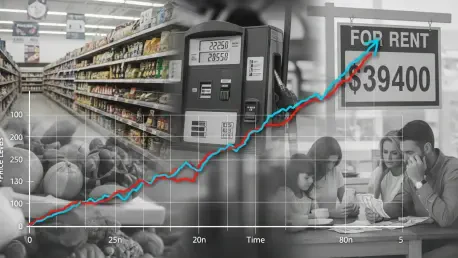
The labor market has rebounded with a vigor that essentially removes the justification for any immediate rate cuts, especially since the shaky footing we saw with tepid payroll growth just half a year ago has largely evaporated. This recovery is being supercharged by the AI investment boom, where the frantic demand for chips has reached such a fever pitch that Apple felt compelled to raise its prices just this past Thursday to manage the strain. When you combine this corporate appetite with a looming glut of government debt that is pushing up long-term yields, you create a sensory-rich environment of inflationary pressure that is very difficult to ignore. Some policymakers are now leaning toward raising rates by three-quarters of a percentage point by year-end just to prevent future spikes, a move that would feel like a cold shower to an economy currently intoxicated by technological expansion. It is a complex puzzle because while housing inflation had started to fade, these new drivers in the tech and labor sectors are keeping the Fed’s 2 percent target feeling like a very distant destination.
Considering the political stakes of the upcoming campaign, how does the possibility of a rate hike impact the administration’s core messaging on affordability and economic stability?
A rate hike at the height of a campaign would be a visceral and devastating blow to the GOP’s economic sales pitch, which has been meticulously built around the concept of restoring affordability to the American household. The President has spent an immense amount of political capital attacking former leadership and swearing that a new direction at the Fed would quickly deliver the lower borrowing costs central to his messaging on mortgage and credit card rates. If the Fed follows through with a hike of seventy-five basis points between now and the end of the year, it turns what was supposed to be a victory lap into a defensive struggle against a new wave of financial instability. This creates a situation where the administration is forced to defend its policies while voters are feeling the pinch of prices that haven’t fallen fast enough to offset the rising cost of debt. Only six months ago, it was reasonable to assume that we would be seeing a single quarter-point cut by 2026, but the war and its subsequent shocks have completely rewritten the political and economic playbook.
Given the rapid change in the economic outlook since the start of the year, what is your forecast for the economy as we head into the second half of next year?
My forecast for the second half of next year is that the economy will finally enter a period of stabilization as the aggressive supply shocks from the earlier conflict and trade policies begin to fully dissipate. While we are currently navigating the fallout of inflation hitting a three-year high, history suggests that when these external forces like the war with Iran abate, the underlying inflationary pressure tends to go away of its own accord. I believe that by late next year, we will see inflation migrate much closer to that elusive 2 percent target because the drivers we are seeing today—like the AI surge and temporary energy spikes—will have reached a point of saturation. We must remember that the effects of a rate hike don’t filter through to the broader economy for about a year, so many of the projections being discussed today might already be stale by the time they are implemented. If the traffic through the Strait of Hormuz remains steady and the labor market finds its equilibrium, the second half of next year should offer a much more benign environment for both consumers and policymakers.