
As the U.S. economy presents a complex picture of robust growth figures alongside rising public anxiety, we sit down with Donald Gainsborough, a renowned political savant and leader at Government Curated. With his deep expertise in policy and legislation, we aim to unravel the conflicting signals coming from the labor market. Today, we’ll explore the disconnect between strong official productivity and weakening worker confidence, delve into the factors driving a recent surge in layoffs, and examine how these economic undercurrents are shaping the political landscape for the current administration.
With planned job cuts recently surging past 108,000 and private sector hiring slowing to just 22,000, what specific factors are driving firms to reduce headcount? Could you provide a step-by-step example of how a company in a struggling sector, like retail or finance, makes these decisions?
What we’re seeing is a fundamental shift in corporate strategy, a move toward consolidation and efficiency. Firms are realizing they can do more with less. Take a company in the finance and insurance sector, for example. First, they see a substantial decline in new business opportunities and feel pressure to protect their profit margins. Their initial steps are defensive: they freeze hiring and cut discretionary spending. When that isn’t enough, they look at their existing workforce and see that new AI-driven tools can automate tasks that previously required a whole team. The final, painful decision to cut headcount comes only after those other options have been exhausted, but it’s a step they’re increasingly willing to take to stay lean.
We’re seeing strong official productivity, suggesting companies are getting more from their existing employees. How does this efficiency gain, potentially driven by AI, contrast with the widespread public anxiety about job security and wage growth? Please share some metrics that illustrate this growing disconnect.
This is the central paradox of our current economy. From a macroeconomic perspective, when a firm can generate more output with fewer workers, that’s a sign of a healthy, advancing economy. But that’s a cold comfort if you’re the worker being left behind. The public feels this intensely. You can see the disconnect clearly in the polling data. A recent survey from The Economist/YouGov found the president is 14 percentage points underwater on his handling of jobs and the economy. Meanwhile, a Federal Reserve Bank of New York survey shows that consumer expectations for wage growth and the ability to find a new job have significantly deteriorated. This contrast creates a volatile political environment where official good news just doesn’t resonate with the lived experience of many Americans.
The rate of workers voluntarily leaving their jobs remains below pre-pandemic levels. What specific signals does this send about employee confidence, and how might this subdued mobility impact wage negotiations and a company’s incentive to offer competitive benefits in the coming year?
The quits rate is one of the most honest indicators of worker confidence. When people are voluntarily leaving their jobs, it means they feel secure enough to find something better. The fact that this rate remains below pre-pandemic levels sends a clear, sobering signal: employees are feeling cautious and insecure. They’re clinging to the jobs they have because they don’t see a wealth of better opportunities out there. This subdued mobility directly weakens their bargaining power. If a company knows its employees are unlikely to leave, there’s less pressure to offer significant raises or enhance benefits packages to retain them. It creates a stagnant environment that can suppress wage growth across the board.
The administration points to strong GDP growth and dismisses some negative payroll figures as unofficial data. Can you explain the difference between these data sets and how economists weigh them? Please describe the process you use to synthesize these conflicting signals into a cohesive economic outlook.
The administration is right to point out there’s a difference, but dismissing the data entirely is a political move, not an economic one. The official Bureau of Labor Statistics (BLS) jobs report is the gold standard, a comprehensive survey of households and businesses. In contrast, reports from firms like ADP are based on their own payroll processing data, which can sometimes miss the mark on the full picture. However, economists don’t just ignore these “unofficial” releases; we use them as early indicators. My process is to look at the trend lines. When you see ADP report a meager 22,000 new jobs, and then Challenger, Gray & Christmas reports a doubling of layoff announcements, it creates a powerful directional signal. You weigh that against the strong 4.2 percent GDP growth estimate from the Atlanta Fed and understand that while the overall economy is expanding, the benefits aren’t being distributed through widespread job creation at this moment.
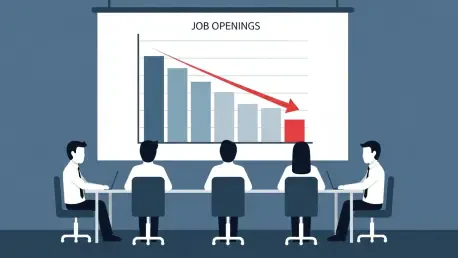
Job openings have declined substantially in professional services, retail, and finance, while the quits rate remains low. Given this environment, what are the most critical warning signs that suggest layoffs could accelerate significantly, and what leading indicators will you be monitoring most closely?
The combination of declining job openings in key white-collar and consumer-facing sectors and a low quits rate is a classic precursor to a weaker labor market. It shows that demand for new workers is falling while current employees are staying put out of fear. The most critical warning sign I’m watching for is a sustained, week-over-week increase in initial jobless claims. That tells us layoffs are moving from announcements to actual job losses. Additionally, I’ll be monitoring the temporary-help services sector. Companies often cut temp workers before they lay off permanent staff, making it a canary in the coal mine for the broader employment landscape. If we see both of those indicators flash red, it would suggest the recent pickup in layoff announcements is about to become a much larger trend.
What is your forecast for the U.S. labor market over the next six months?
Based on the current trajectory, I expect the labor market to continue to soften over the next six months. The low hiring environment and the subdued rate of workers voluntarily leaving their jobs create a precarious situation that risks pushing layoffs higher. While we haven’t yet seen a mass loss of employment that would signal a recession, the trend is concerning. We’ll likely see the unemployment rate tick up modestly and payroll growth remain tepid. The key variable will be whether firms, armed with AI and new efficiencies, can continue to grow without adding workers, or if slowing demand will force their hand into more significant and widespread headcount reductions.