
The Federal Reserve’s legacy of independence faces its most significant challenge in a generation, with the potential appointment of a new chairman tasked with navigating an unprecedented collision of political will and economic reality. As financial markets and policymakers closely watch the White House, a consensus is emerging among analysts that any new Federal Reserve leader, particularly a figure like Kevin Warsh, would step into a deeply fractured institution under immense pressure to deliver on President Donald Trump’s explicit calls for lower interest rates. This analysis synthesizes expert viewpoints on the monumental hurdles a Warsh chairmanship would face, from managing internal dissent to preserving the central bank’s credibility in an overtly political era.
The Crossroads of Politics and Policy: Setting the Stage for a High-Stakes Appointment
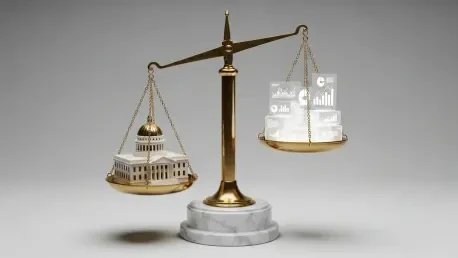
The friction between the executive branch’s policy goals and the Federal Reserve’s independence has become a defining feature of the current economic landscape. President Trump’s history of pointedly criticizing Fed chairs, including his past attacks on Jerome Powell, has established a tense precedent, intensifying concerns about the politicization of monetary policy. This environment creates what former Fed officials describe as a uniquely acute challenge for any new appointee, who would immediately be forced to prove their decisions are driven by economic data rather than political allegiance.
At stake is the very foundation of the central bank’s effectiveness: its autonomy. The ability to make unpopular decisions, such as raising interest rates to combat inflation, hinges on the public’s trust that the Fed is acting in the long-term interest of the economy, free from partisan influence. The potential appointment of a chair seen as carrying out a direct presidential mandate threatens to erode that trust, with significant consequences for economic stability and the value of the dollar on the global stage. Consequently, the central conflict for a new chair is clear: navigating profound internal divisions on policy while contending with intense external pressure to lower borrowing costs.
Navigating the Gauntlet: The Internal and External Hurdles for a Warsh Chairmanship
A Committee at Odds: The Challenge of Forging Consensus in a Fractured FOMC
A primary obstacle for any new leader is the historically fragmented state of the Federal Open Market Committee (FOMC). Economic analysts have described the current body as perhaps “the most highly divided committee” ever seen, a stark contrast to the broad unanimity that characterized past eras of Fed leadership. This deep-seated disunity means that building a majority for any significant policy shift is a formidable task, requiring more than just the chair’s directive.
This division is not theoretical; it is visible in the public dissents that have marked recent policy meetings. On one side, some Trump-appointed governors have advocated for immediate rate cuts, with figures like Stephen Miran consistently pushing for aggressive reductions. In direct opposition, more hawkish members, including regional presidents like Austan Goolsbee and Jeffrey Schmid, have voiced strong reservations, opposing rate reductions out of concern that the battle against inflation is not yet won. This ideological chasm places the committee at a stalemate, with competing views on whether a cooling economy or persistent inflation poses the greater threat to prosperity.
The Hawkish Dove: Unpacking Kevin Warsh’s Contradictory Policy Pivot
Adding another layer of complexity is the public record of Kevin Warsh himself. During his previous tenure as a Fed governor, he earned a reputation for being notoriously hawkish, consistently prioritizing higher interest rates to keep inflation under control. This historical stance stands in sharp contrast to his more recent commentary, which has echoed President Trump’s view that the central bank has been too slow to ease monetary policy. While the president has expressed confidence that Warsh “certainly wants to cut,” this pivot has sparked debate.
The core question surrounding Warsh’s potential nomination is whether this shift reflects a genuine evolution in his economic philosophy or a strategic alignment with the administration’s stated goals. This ambiguity could prove to be a significant liability in his efforts to lead the committee. For a body already rife with skepticism, a chair whose own policy convictions are perceived as flexible could struggle to establish the credibility needed to broker compromises and build a durable consensus, particularly among members wary of political interference.
The Persuader’s Gambit: Can Warsh’s Credentials Bridge the Ideological Divide
Despite the challenges, some observers argue that Warsh’s extensive experience could provide him with the influence necessary to unite the fractured committee. His background, which spans from Wall Street at Morgan Stanley to his service as a Fed governor during the 2008 financial crisis, grants him a level of institutional knowledge and credibility that few other candidates possess. Proponents, including former Fed presidents like Thomas Hoenig, suggest there is a natural tendency for board members to rally behind a new chairman, opening a path for persuasion.
However, this persuasive power would be immediately put to the test. While Warsh might find common ground with more dovish Democratic appointees on the need to support a cooling economy, he would face unyielding resistance from entrenched hawks. These members, convinced that the risk of resurgent inflation remains high, are unlikely to be swayed by credentials alone. Ultimately, his success would depend on his ability to forge a coalition, a task made exponentially more difficult when the committee is so deeply divided on the fundamental diagnosis of the economy’s health.
The White House Shadow: Executing a Mandate in an Era of Overt Political Influence
The most direct challenge for a Warsh-led Fed would be the shadow cast by the White House. The administration has already framed its desired policy path not as a political preference but as a “data-driven necessity.” By publicly stating that cooling inflation has made the economic environment “ripe for interest rate cuts,” the White House has effectively pre-defined success for the next Fed chair, tying it directly to their ability to deliver on this objective.
This external narrative creates an incredibly difficult operating environment. It constrains the chair’s ability to deliberate openly and risks framing any decision to hold rates steady as a political failure or act of defiance. Maintaining even the perception of independence becomes a monumental task when the administration has already announced the desired policy outcome. For Warsh, the challenge would not only be to manage the committee but also to navigate a public landscape where his every move is interpreted through a political lens.
The Balancing Act: Strategic Implications for Monetary Policy and Markets
The confluence of these internal and external pressures leads to a primary conclusion: the ability of any new Fed chair to unilaterally implement the White House’s desired rate cuts is severely constrained. The institutional and ideological divisions within the FOMC are not merely procedural hurdles; they are powerful checks on the chair’s authority. This reality suggests that a singular focus on the chair’s perceived allegiance to the president may be misplaced.
For market watchers and policymakers, a more strategic approach is to analyze the composition and voting patterns of the entire committee. The balance of power between the dovish and hawkish factions will likely be a more reliable indicator of future policy than the pronouncements of any single individual, including the chair. The internal dynamics of the Federal Reserve may ultimately prove to be a more formidable force than the political will of the executive branch.
An Unsettled Mandate: The Future of Federal Reserve Independence
A Warsh chairmanship would have represented a critical test for the Fed’s autonomy in a hyper-partisan era. The long-term implications for the central bank’s credibility, both domestically and globally, hinge on whether its decisions are perceived as being driven by economic analysis or political expediency. If the Fed is seen as an extension of the administration’s policy apparatus, its ability to effectively manage the economy could be permanently damaged.
Even if confirmed, a new chair would have found that “getting his way” was far from guaranteed. The institutional structure of the Federal Reserve, with its distributed power and diverse viewpoints, was designed to be a formidable counterweight to exactly this type of external influence. The deep-seated divisions on the FOMC, combined with the hawkish leanings of key members, signaled that any attempt to aggressively cut interest rates would have been met with significant internal resistance, demonstrating the enduring resilience of the central bank’s design.