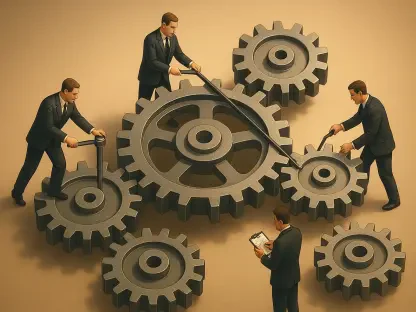

The vibrant markets of Tehran continue to bustle with the frantic energy of a nation that refuses to collapse, even as the invisible weight of systemic economic decay transforms the very nature of daily survival for its ninety-two million inhabitants. This demographic powerhouse, situated at a critical global crossroads, currently exists in a state of chronic economic sickness that defies the traditional predictions of total systemic failure. While many external observers predicted a total systemic collapse under the weight of military pressure and escalating sanctions, the state has proven surprisingly durable. It operates not through a return to prosperity, but through a brutal form of economic endurance that experts define as survival without recovery. The government has successfully avoided a total breakdown, which would be characterized by the inability to pay employees or provide basic services, by utilizing the national economy as a pressure valve. Instead of the state balance sheets absorbing the shocks of conflict and blockades, the burden has been systematically shifted onto private households, creating a functional but hollowed-out system that survives at the direct expense of its citizens’ quality of life.
This resilience is not merely a product of government policy but a reflection of a society that has been forced to adapt to extreme conditions over several years. The current landscape is defined by a dichotomy where the state remains standing, yet the foundation upon which it rests is being pulverized by the relentless pressure of isolation. Experts note that a true collapse would involve widespread famine or the total cessation of public order, neither of which has materialized. However, the absence of a total breakdown should not be mistaken for health. The system persists in a state of triage, where the immediate needs of the administrative and military apparatus are prioritized over the long-term economic stability of the populace. This strategy has successfully deferred the moment of systemic failure, but the cost of this delay is being paid in the form of depleted national assets and the erosion of the social contract that once bound the middle class to the state.
The Paradox of Survival in a Chronic State of Sickness
The endurance of the system is fundamentally linked to how the government manages the perception and reality of economic failure. By allowing the currency to lose value continuously, the state ensures that goods stay on the shelves simply because they are becoming unaffordable rather than unavailable. This mechanism prevents the empty-shelf syndrome that often triggers popular uprisings, yet it creates a pervasive sense of desperation among the working class. The national economy functions as a shock absorber for geopolitical shocks, but unlike a mechanical component, this absorber is composed of the savings and purchasing power of millions of families. Consequently, the state maintains a facade of functionality while the standard of living for the average person continues to plummet toward levels not seen in decades.
Moreover, the transition from a traditional economy to a survival-based model has altered the relationship between the government and the private sector. The state has effectively outsourced the risks of international trade to a network of private and semi-private entities that operate in a legal gray area. This shift has allowed the government to claim a degree of distance from the economic hardships faced by the population, framing the crisis as an external imposition rather than a failure of internal management. However, this strategy has also led to a significant loss of regulatory control, as the informal sectors now represent a massive portion of the total economic activity. The result is a system that can endure almost any external shock but is increasingly unable to generate the growth required to provide a future for its younger generations.
Foundations of Resilience Amidst Global Isolation
To understand why the economy has not buckled, one must look at the decades of forced self-sufficiency that preceded the current crisis. Unlike other oil-dependent nations that crumble when exports are choked, a diversified domestic base including water-intensive agriculture, local manufacturing, and a resilient services sector has been cultivated. This internal structure is bolstered by a sophisticated shadow infrastructure designed to bypass international restrictions. From unofficial maritime networks for moving crude oil to a massive informal labor market where citizens work off-the-books to survive, these mechanisms prevent a total standstill. This forced diversification has created a level of insulation against total blockade, allowing the country to produce its own basic consumer goods and food staples even when international banking lines are severed.
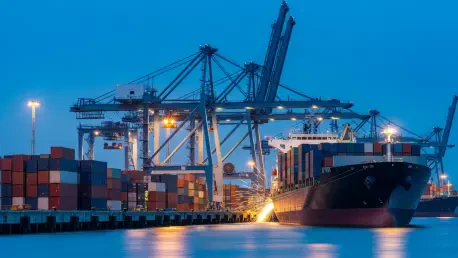
However, this endurance is being tested by the closure of critical trade routes like the Strait of Hormuz, which has severely restricted the flow of essential imports. While the domestic manufacturing sector can produce many items, it remains dependent on imported specialized parts and raw materials that cannot be sourced locally. The restrictions on maritime traffic have created a bottleneck that threatens to starve the industrial sector of its remaining vitality. Despite these pressures, the ability to pivot toward regional trade partners and utilize clandestine financial channels has provided a necessary lifeline. This resilience is a double-edged sword; it allows the state to maintain its defiant stance on the global stage, but it also traps the economy in a cycle of inefficiency and high-cost workarounds that prevent any real improvement in productivity.
The Mechanics of Economic Endurance and Shadow Infrastructure
The survival of the system relies on a combination of legitimate domestic production and high-risk clandestine trade. The government’s ability to maintain a functional state depends on trustee systems and unofficial oil transfers that keep some revenue flowing despite global embargoes. Locally, the economy remains propped up by a massive shift in labor, where formal wages are supplemented by informal trade. Despite these efforts, the physical infrastructure is deteriorating; recent military campaigns have targeted critical bridges, tunnels, and energy facilities. This has forced the government into a state of triage, where limiting industrial blackouts to just two days a week is touted as a policy success. Such measures highlight the massive gap between basic survival and actual economic health, as the industrial sector operates at a fraction of its potential capacity.
The shadow infrastructure is not merely a tool for trade but has become a permanent feature of the national landscape. It involves a complex web of intermediaries who facilitate the movement of capital and goods through third-party countries. While effective at circumventing sanctions, this system adds a significant premium to every transaction, further fueling inflation and reducing the competitiveness of local goods. Furthermore, the reliance on these unofficial channels has led to a degradation of the formal banking system, which has been further crippled by a month of persistent cyberattacks. These disruptions have prevented the government from executing basic welfare programs, such as the national electronic coupon scheme, leaving the most vulnerable populations without the subsidies they rely on for food and medicine.
The Human Consequences of Targeted Inflation and Systemic Corruption
The data paints a grim picture of the price citizens pay for the state’s continued operation, with food inflation currently ranking among the highest in the world at approximately 90%. Government strategy allows the national currency to plummet, ensuring that goods stay on shelves because they are unaffordable rather than unavailable. Expert analysis reveals that while prices for staples have tripled, the monthly minimum wage has crashed to less than $100. This is compounded by endemic corruption within the state’s own survival mechanisms; official reports indicate that trustees managing sanctioned oil sales have misused or failed to return over $11 billion. This corruption creates a feedback loop where capital flees the country and the middle class—which was the majority in 2011—has been reduced to a shrinking minority, with 70% of the population now classified as poor or vulnerable.
This socioeconomic inversion has had profound effects on the social fabric and the health of the population. Families have been forced to remove meat and dairy from their diets, and necessary medical procedures are frequently postponed due to the rising costs of supplies. The flight of capital is mirrored by a brain drain, as educated professionals seek opportunities in more stable environments, further hollowing out the country’s long-term potential. The systemic corruption that siphons off billions in oil revenue and export yields, including nearly $107 billion unreturned by various exporters, has left the state with limited resources to address these human crises. The result is a society where the struggle for daily survival has replaced any sense of collective progress or national development.
Navigating the Roadblock: The Necessity of Diplomatic Reform
The analysis of the Iranian economic landscape demonstrated that while the state possessed the tools to endure isolation, it lacked the mechanisms to foster genuine prosperity. The findings suggested that the reliance on shadow networks and inflationary pressure-valves reached its natural limit, leaving the population in a state of permanent vulnerability. The strategies employed by the administration prioritized immediate survival over the preservation of the middle class, which resulted in a massive wealth transfer from private households to the state and its intermediaries. Consequently, the study of these economic indicators confirmed that the current model was unsustainable without a fundamental shift in how the nation managed its geopolitical risks.
To move forward, the state recognized that internal reforms alone could not overcome the weight of total isolation and the ongoing degradation of physical and digital infrastructure. The evidence pointed toward a conclusion where the pivot toward de-escalation represented the only viable path to repairing the national economy and stopping the catastrophic flight of capital. Recovery required a framework for stability that moved beyond the clandestine trade of the past years and toward full reintegration into the global financial system. Ultimately, the transition from a state of emergency toward a functioning economy demanded more than mere endurance; it necessitated a comprehensive re-evaluation of diplomatic strategies to secure a future where survival was no longer the only goal.