
The 150-Day Gambit to Rewrite Global Trade
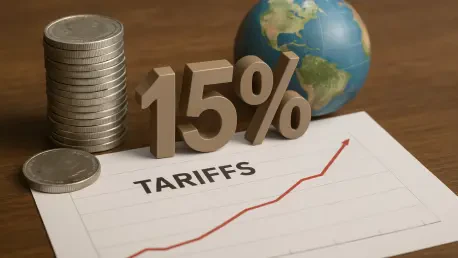
The sudden imposition of a universal fifteen percent duty on all foreign goods has sent shockwaves through the international trade community, marking a bold defiance of previous legal constraints. The executive branch is testing the absolute limits of its economic authority by pivoting to a dormant 1970s trade law after a stinging defeat at the nation’s highest court. By slapping a 15% “temporary” tariff on global imports, the administration is betting that a specific, never-before-used provision can bypass the judicial roadblocks that recently dismantled its previous trade strategy.
This aggressive move forces a confrontation between presidential power and the rule of law, leaving markets and trade partners wondering if this new legal loophole is wide enough to withstand the coming wave of litigation. While the policy provides immediate protectionist measures, it places the administration in a high-stakes game of legal cat-and-mouse with federal judges.
From IEEPA to the Trade Act of 1974
The current trade conflict stems from a 6-3 Supreme Court ruling that effectively stripped the administration of its ability to impose tariffs through the International Emergency Economic Powers Act (IEEPA). Seeking a secondary route, the White House has turned to Section 122 of the Trade Act of 1974, a statute designed to address “large and serious balance-of-payment deficits.” While this shift provides a temporary legal shield, it brings the administration into uncharted territory, as no previous president has invoked this specific authority to reshape global commerce.
The Constraints and Mechanics of Section 122
Unlike previous broad claims of executive power, Section 122 comes with built-in statutory limitations that could prove problematic for a long-term trade agenda. The provision strictly caps duties at 15% and limits their duration to a 150-day window, after which the administration must either secure congressional approval or find a new legal justification. Furthermore, the justification for these tariffs hinges on a specific economic condition—the balance-of-payment deficit—which may face intense scrutiny if the judiciary decides to look behind the administration’s stated rationale to see if it meets the statutory requirements.
Contingency Planning and the Greer Doctrine
U.S. Trade Representative Jamieson Greer has signaled that the administration is far from unprepared for judicial pushback, revealing that the White House has spent years developing a “ladder” of alternative legal justifications. While the President has publicly claimed the Supreme Court sanctioned this move, the actual majority opinion remained silent on the legality of Section 122, creating a precarious gap between the White House’s rhetoric and legal reality. This strategy suggests an administration ready to cycle through various authorities to maintain its tariff wall.
Managing Economic Exposure During the 150-Day Window
For businesses and stakeholders, the 15% tariff landscape required a tactical approach centered on sector-specific exemptions. Companies in the energy, pharmaceutical, and aerospace sectors verified their status under the new policy, as these areas remained shielded despite the broader hike. Because Section 122 functioned as a ticking clock, firms prepared for two distinct scenarios: a sudden expiration of duties after five months or a secondary executive pivot to a different legal statute that could potentially reset the clock.
Organizations that mapped out alternative supply routes and prioritized internal audits of trade classifications navigated the uncertainty more effectively. Strategic planning moved toward diversifying procurement sources and securing long-term contracts to hedge against the possibility of higher stakes following the initial 150-day window. Success was found by those who monitored the “ladder” of legal justifications to anticipate the next administrative maneuver before the statutory limit expired.