
With the election clock relentlessly ticking down, Donald Trump journeyed to the American heartland to declare economic victory, framing his first year back in office not as a work in progress, but as a mission accomplished. His rally in Iowa was more than just a political gathering; it was a calculated pivot designed to shift the national conversation squarely onto the economy. The central question now is whether this message will resonate with an electorate grappling with complex anxieties, potentially becoming the linchpin for a Republican comeback, or if it represents a gamble on a nostalgic narrative that voters no longer recognize.
The High-Stakes Backdrop of the Midterm Scramble
An unmistakable sense of urgency is emanating from the White House, fueled by persistent voter discontent. Administration aides are keenly aware that economic frustration remains a powerful undercurrent in American politics, complicating their efforts to maintain control of Congress. The political landscape is further agitated by a brewing backlash against the administration’s stringent immigration agenda, a situation that has been exacerbated by the recent fatal shootings of two Americans by federal agents in Minnesota. These crosswinds create a challenging environment for any incumbent party heading into a midterm election.
In response, the Trump administration is actively framing the upcoming midterms as a crucial referendum on its economic stewardship. The message being delivered to voters is a stark choice: preserve the economic gains achieved under the current administration or risk a complete reversal under Democratic leadership. This narrative aims to simplify the electoral decision, focusing voter attention on pocketbook issues and away from more contentious social or political debates. The Iowa rally served as the official launchpad for this strategy, explicitly designed to kick off the campaign to win back Congress.
Deconstructing Trump’s Economic Blueprint for Victory
At the core of the former president’s pitch is a “Mission Accomplished” narrative. Trump has consistently portrayed his administration’s first year as a resounding success, asserting that his policies have decisively defeated inflation, spurred significant wage growth, and unleashed a wave of domestic investment. This message, often bolstered by favorable statistics that critics argue are exaggerated or decontextualized, is intended to create a sense of completed success, reassuring voters that the economy is not just recovering, but thriving under his leadership.
To make this national message resonate on a local level, Trump tailored his rhetoric specifically for the Iowan audience. He connected his administration’s broad policies directly to the state’s economic interests, highlighting actions on ethanol production, direct farm relief payments, and widespread deregulation. Furthermore, he claimed his renegotiated trade deals have opened new markets and increased demand for key Iowan products like soybeans, pork, and biofuels, painting a picture of prosperity directly linked to his agenda.
Beyond agriculture and industry, the economic pitch was broadened to include populist themes aimed at capturing a wider swath of the electorate. Trump promoted a recent executive order intended to limit the ability of large institutional investors to purchase single-family homes, tapping into widespread frustration over housing affordability. He also renewed his long-standing attacks on the Affordable Care Act and tied his aggressive immigration enforcement policies to improved public safety and national stability, supplementing the core economic message with appeals to cultural and security concerns.
On Message and on the Attack
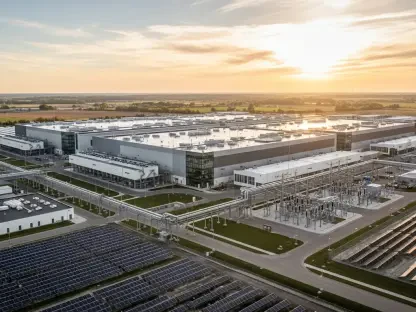
During his address, Trump used a plan by John Deere to build a new excavator plant as a prime example of his policies’ tangible benefits. He presented the development as a direct consequence of his tariff policies, which he argued have incentivized companies to bring manufacturing back to the United States. This specific, localized example was crafted to make his abstract economic claims feel concrete and immediate to the audience in front of him.
However, this narrative is not without its detractors. While Trump celebrated his trade policies, some Iowan industry groups and local business leaders have offered a starkly different perspective. These groups argue that his use of tariffs has been more detrimental than beneficial, leading to retaliatory measures from other countries that have harmed local exporters and disrupted supply chains. This creates a contested view of his economic impact within the very state he chose as his stage.
Despite the familiar grievances against political rivals and the Federal Reserve Chairman that surfaced during the rally, there was a notable effort by the former president to remain on message. In a particularly telling moment, he began a digression about French President Emmanuel Macron before abruptly cutting himself off to pivot back to his central economic theme. This instance of self-editing highlighted a newfound discipline, suggesting a highly strategic and focused approach to his midterm campaigning.
The White House’s Strategic Deployment of a Former President
The rally in Iowa was not a standalone event but the strategic kickoff of a broader White House campaign. The explicit goal, as stated by Trump himself, was to harness the economic message to build momentum for winning back control of Congress in the upcoming midterm elections. This represents a deliberate and coordinated effort to make the economy the central issue of the electoral cycle.
The choice of Iowa as the venue was highly calculated. The state, once considered reliably Republican, has become an unexpectedly competitive battleground, with Democrats actively targeting three Republican-held House seats. By staging a high-profile rally there, the administration aimed to shore up support in a vulnerable region and signal its commitment to defending every contested seat.
This event is part of a larger ground game that involves deploying the former president to districts where he remains a popular and energizing figure. The strategy relies on Trump’s unique ability to mobilize his base and drive voter turnout in key battleground areas. By strategically placing him in these competitive districts, the White House hopes to transform his enduring popularity into concrete electoral gains that could determine the balance of power in Washington.
The rally in Iowa ultimately crystallized a high-stakes political strategy. By framing the midterms as a referendum on a “completed” economic recovery, the administration placed a significant bet on the power of nostalgia and economic messaging. The focused rhetoric and strategic deployment suggested a disciplined campaign aimed at mobilizing a loyal base. Whether this economic pitch proved to be a masterful pivot or a misreading of the national mood was left for the voters to decide, but the battle lines for control of Congress had been clearly drawn in the heartland.