
For most people, “government speed” still means delays, paperwork, and confusion. While the private sector runs on real-time updates and automation, many government departments lag behind. This isn’t just a tech problem; it’s a trust problem. In a poll by Cornell University, 62% of Americans report a lack of confidence in public agencies’ ability to regulate AI effectively. By 2026, digitizing forms isn’t enough. Agencies need innovative, connected systems that simplify behind-the-scenes work and deliver clear, fast services to the public while earning their trust. This article breaks down the essential building blocks of a modern, citizen-first government and explains how to make automation effective.
The Platform Imperative: Unifying Siloed Services
One of the biggest barriers to government efficiency is fragmentation. The Planning Department uses one system, the Clerk’s Office another, and Public Works might still rely on spreadsheets and patchwork software. The result of this is confusion, delays, and duplicated work.
This disjointed setup doesn’t just frustrate employees; it alienates the public. Staff waste valuable time tracking down information across departments, while residents are repeatedly asked to resubmit the same details. It’s inefficient, and it erodes trust.
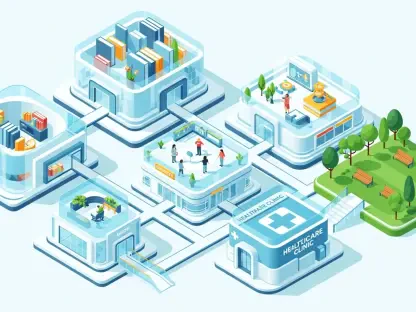
By 2026, leading municipalities won’t just “go digital”; they’ll move to unified, cloud-based platforms that connect every department through a single source of truth. From business licenses to public records and code enforcement, all data is stored in a single secure, centralized system.
The result? A seamless experience for the public and a simpler, more streamlined workflow for staff. Instead of juggling manual tasks, employees can focus on higher-impact work. And with up to 50% of public sector time often lost to redundant admin¹, this shift isn’t just smart policy; it’s a workforce multiplier.
But even with a unified platform in place, real transformation begins when those systems start to think and act on their own. That’s where intelligent automation takes the lead.
Intelligent Automation: Moving Beyond Simple Digitization
The first wave of government digitization moved forms from clipboards to screens. But in 2026, simply uploading a PDF is more digital paperwork, not progress. True transformation comes from intelligent automation, where systems can store information and act on it.
Instead of a static permit form hiding behind a “Download Here” button, imagine an online application that instantly sets a whole administrative process in motion. An intelligent system can automatically:
Verify property details against GIS records.
Flag missing documents and notify applicants in real time.
Route requests to multiple departments simultaneously.
Detect potential zoning conflicts or violations.
Schedule inspections the moment approvals are secured.
This is more than convenience. It’s a shift toward government that works in real time without bottlenecks. AI tools can pre-screen applications, extract key details from uploaded documents, spot red flags in public comments, and surface items that may need senior review.
The goal isn’t to replace human expertise, but to elevate it by freeing staff to handle sensitive issues. Of course, to make automation truly strategic, governments need to connect their systems to the insight engine that turns raw data into action. That’s where smart data governance comes in.
Data as a Strategic Asset: From Reporting to Predicting
Government agencies sit on a mountain of data, but much of it is locked away in spreadsheets, PDFs, and disconnected systems. Without integration, that data is just digital clutter. But when harnessed through a modern, unified platform, it becomes one of the government’s most powerful assets.
Centralized, real-time data enables leaders to stop reacting and start predicting. Not only can agencies see what’s happening now, but they can also forecast what’s coming. With built-in dashboards and analytics, governments can:
Spot permit volume trends to plan infrastructure investments and project future revenue.
Visualize code enforcement hot spots to guide proactive community interventions.
Measure service delivery through processing times and public satisfaction metrics.
This shift empowers departments to justify budgets with clarity, reallocate resources more strategically, and make decisions based on real needs rather than guesswork. Real transformation happens when data-driven systems translate into a better, faster, more transparent experience for the people you serve.
The Constituent Experience: The New Measure of Success
Today’s residents aren’t comparing their local government to yesterday’s standards. They’re comparing it to Amazon, DoorDash, and their mobile banking app. That’s why the constituent experience has become the new benchmark for success.
A modern digital platform can meet those rising expectations head-on. Through a clean, intuitive portal, residents and business owners can interact with their local government anytime, from anywhere. With just a few clicks, they can:
Apply for permits or licenses.
Check the real-time status of an application.
Send messages to the right department.
Pay fees online, safely and instantly.
Get reminders about renewals or deadlines before they’re missed.
This kind of transparency and convenience doesn’t just improve satisfaction; it builds lasting public trust. Fewer phone calls and in-person visits also mean staff can focus more time on high-touch cases and on supporting residents without digital access.
A Compact Playbook for Digital Transformation
Shifting to digital-first governance isn’t a flip of a switch; it’s a strategic, step-by-step journey. It takes clear priorities, cross-departmental buy-in, and a focus on visible results. The good news? You don’t have to overhaul everything at once to start seeing impact.
Here’s a simple, focused approach to help you get your agency ready for 2026:
First 30 Days: Audit Your Core Administrative Processes. Identify the top five highest-volume, highest-friction processes in your municipality. Interview department heads and frontline staff to map out the current workflows and pinpoint the most significant bottlenecks and redundancies.
Next 30 Days: Quantify the Cost of Inefficiency. Build the business case for modernization by calculating the hidden costs of your current systems. Estimate the staff hours spent on manual data entry, the costs of printing and paper storage, and the potential revenue lost due to slow processing times. This approach will make inefficiencies impossible to ignore.
Next 60 Days: Launch a High-Impact Digital Pilot. Instead of attempting a full-scale overhaul, select one critical process, such as business licensing or special event permitting, and move it to a unified digital platform. Use this pilot to demonstrate the benefits of a modern system and build momentum for broader adoption. A focused pilot gives you proof, case studies, and internal champions to scale from.
Embracing strategic implementation allows governments to earn trust, empower teams, and start delivering better service right now.
Conclusion
Governments that embrace integrated platforms, intelligent automation, and data-driven decision-making will be positioned to deliver faster, smarter, and more equitable services while rebuilding public trust along the way. As expectations rise and resources tighten, the path forward is clear: streamline the backend, elevate the experience, and let technology empower, not replace, the human expertise at the core of public service.
The future of government will be measured by how quickly, intelligently, and transparently services are delivered. By 2026, demand will remain citizen-centric, calling for unified, automated systems. Agencies don’t have to make a massive shift; they can start small, stay focused, and scale with purpose. The time to lead in digital governance is now.