
Official Metropolitan Transportation Authority records for the first half of 2026 reveal a staggering $35.7 million revenue shortfall across the city’s bus network. This financial chasm represents more than just an accounting error; it marks a fundamental clash between Mayor Zohran Mamdani’s vision of fare-free transit as a public right and the MTA’s struggle for basic operational solvency. While advocates argue that removing fares is a necessary step toward economic justice for low-income New Yorkers, the reality of maintaining a multi-billion-dollar infrastructure is becoming increasingly difficult to ignore. This policy debate has divided the city into two camps: those who see free buses as an essential tool for economic revitalization and those who fear it will lead to a systemic collapse of the transit agency’s revenue streams, leaving the network in a state of terminal disrepair. As the fiscal year progresses, the pressure to find a sustainable middle ground between idealistic policy and fiscal survival has never been more intense.
The Widening Gap in Transit Finances
Examining the Revenue Shortfall
The latest quarterly reports from the Metropolitan Transportation Authority provide a sobering assessment of the city’s surface transit operations, showing that the financial gap is widening faster than expected. Revenue from New York City Transit fell $23.1 million below initial budget projections for the current cycle, while the MTA Bus division missed its fiscal targets by more than 10 percent. These figures suggest that the budget expectations set at the start of the year were far too optimistic, failing to account for the sustained decline in paying passengers. As the deficit grows, transit officials are sounding the alarm about the long-term sustainability of current service levels. This shortfall is not merely a reflection of fluctuating ridership numbers but is deeply tied to the changing habits of commuters who are increasingly bypassing the farebox altogether. Without a reliable stream of income from fares, the agency is forced to rely on emergency state funding.
Analyzing Evasion Trends
MTA CEO Janno Lieber has expressed serious concern that the ongoing political discourse surrounding fare-free transit has inadvertently created a “culture of evasion” across the city. By framing bus travel as a service that should inherently be free, public officials may have unintentionally signaled that paying the fare is an optional contribution rather than a legal requirement. This psychological shift is particularly evident among middle-class commuters who possess the financial means to pay but choose not to, as the social stigma of fare evasion continues to erode. Statistics indicate that the loss in revenue is not solely driven by those in economic distress but by a broader demographic that has adopted a more casual attitude toward the farebox. As this perception takes root, the MTA faces the uphill battle of re-establishing the necessity of payment in an environment where the “free transit” narrative has already permeated the public consciousness, threatening core operations.
Operational Challenges and Jurisdictional Limits
The Labor Perspective
From the perspective of the Transport Workers Union (TWU) Local 100, the situation on the ground has become increasingly untenable for those tasked with operating the city’s massive bus fleet. Drivers often find themselves in a precarious position, caught between the MTA’s mandate to collect fares and safety protocols designed to prevent physical confrontations. Following the pandemic-era policy that temporarily introduced free rides, a persistent culture of non-payment has emerged that is incredibly difficult to reverse. Union leaders emphasize that asking drivers to enforce fare payment often leads to verbal abuse or physical assault, prompting many operators to prioritize their own safety over revenue collection. This lack of enforcement has created a vacuum where fare evasion flourishes without consequence, further depleting the agency’s coffers. The workers argue that the current political stalemate leaves them without the support needed to maintain order on the buses.
Legal Realities and Governance
Beyond the social and operational trends, significant legal and jurisdictional barriers prevent the Mayor from unilaterally implementing a citywide fare-free network. Because the MTA is a state-controlled entity under the Governor’s authority, any fundamental change to its fare structure requires approval at the state level in Albany. This creates a complex political dynamic where the city’s progressive vision must be reconciled with the state’s broader fiscal responsibilities. Estimates suggest that transitioning to a fully fare-free system by 2027 would require an annual subsidy of approximately $1.1 billion, a sum that the state has been hesitant to provide without a clear source of new revenue. The fiscal gap between the city’s idealistic policy goals and the state’s budgetary reality remains a formidable obstacle to reform. Without a massive infusion of capital and a legislative overhaul of how transit is funded, the push for free buses remains more of a political statement than a viable strategy.
Shifting Priorities Toward Service Quality
Investing in Infrastructure
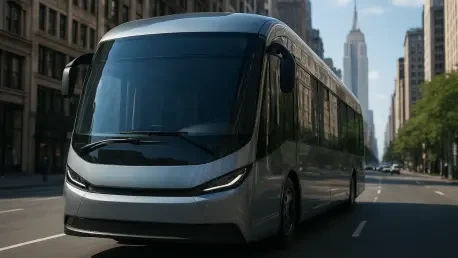
In light of these mounting fiscal pressures, a strategic middle ground has emerged through the “Next Stop: Fast Buses, Better Service” initiative. This $882 million compromise between the Mayor’s office and state leadership marks a pivot away from the total elimination of fares and toward the improvement of the network’s overall efficiency. By investing in 50 priority corridors, the city aims to dramatically increase bus speeds and reduce wait times for the millions of residents who rely on surface transit daily. The initiative also includes the modernization of the bus fleet with 2,500 new, high-tech vehicles designed to enhance the rider experience. This approach suggests that, for the immediate future, the priority will remain on making the system faster and more reliable rather than making it free. By focusing on service quality, officials hope to retain current riders and attract new ones who prioritize their time over the cost of the fare, acknowledging the pragmatism required.
Balancing Efficiency and Equity
The decision to prioritize infrastructure over fare elimination represented a calculated gamble on the future of urban mobility in New York City. By funneling resources into tangible improvements such as dedicated bus lanes and signal priority technology, the city and state bet that a higher-quality product would eventually justify its cost to the public. As the network evolved, the focus shifted toward balancing the social necessity of affordable transit with the fiscal reality of a multi-million-dollar deficit. Moving forward, policymakers explored alternative funding models, such as congestion pricing or specific tax levies, to bridge the gap between service demands and available revenue. The path ahead required a more nuanced approach that addressed the needs of low-income riders through targeted subsidies, such as expanding the Fair Fares program, rather than an across-the-board elimination of fees. Ultimately, the survival of the transit system depended on its ability to provide efficient service.