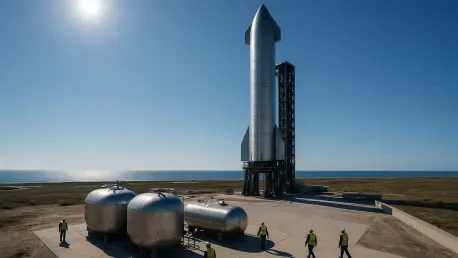

A 2025 executive order specifically instructs the Department of Transportation to remove any environmental hurdles that slow down the approval of commercial space missions. This directive has prompted the Federal Aviation Administration to rethink the foundational ways the space industry interacts with federal ecological protections. By attempting to streamline these approvals, the government is looking to fast-track American space operations while potentially bypassing decades of established safeguards. The current initiative focuses on waiving requirements for thirteen major federal laws during the rocket launch and re-entry process. This shift suggests a significant move away from the rigorous oversight that once defined the intersection of aerospace and environmental policy. As the pace of orbital activity accelerates, the FAA faces the daunting task of balancing the urgent need for technical innovation with the long-term health of coastal ecosystems. The move marks a definitive turning point in modern federal regulation.
Shifting Policies and National Goals
A New ErExecutive Orders and Rapid Growth
This administrative shift is part of a broader strategy to ensure the United States remains the global leader in space by 2030. Recent executive orders have mandated a “10-for-1” policy, requiring agencies to cut ten old rules for every new one they introduce. By removing what the administration describes as “duplicative” processes, officials hope to clear the path for more frequent launches and faster development at major spaceports across the country. The rapid growth of the private sector has put immense pressure on traditional regulatory frameworks, which were often designed for a slower era of government-led exploration. In the current landscape, the ability to iterate quickly on rocket designs and launch schedules is viewed as a national security priority. Consequently, the FAA is moving to treat environmental reviews as administrative formalities rather than exhaustive scientific investigations. This change is intended to reduce the time between a company’s application and the actual ignition of rocket engines.
Fast-Tracking Development: Duplicative Process Removal
Streamlining the approval process involves more than just cutting red tape; it represents a fundamental re-evaluation of how federal agencies interact with commercial entities. The 10-for-1 policy has forced the FAA to look at every existing environmental regulation through a lens of economic efficiency. By eliminating requirements that are deemed redundant, the government aims to support the infrastructure needed for a high-cadence launch environment. Many industry experts argue that the previous system of overlapping reviews from various agencies caused unnecessary delays that hindered American competitiveness on the global stage. Now, the emphasis is on a single, unified approval track that prioritizes speed and predictability for aerospace companies. This approach is expected to catalyze investment in new launch facilities, particularly in regions where environmental concerns have historically slowed down construction. The goal is to create a regulatory environment where innovation is not stifled by a labyrinth of antiquated rules.
The Scope of Environmental Deregulation
Challenging Foundational: Ecological Safeguards
The core of the FAA’s plan involves exempting space companies from several landmark environmental statutes, including the National Environmental Policy Act and the Clean Air Act. These laws currently require companies to conduct deep dives into how their launches might affect air quality, water sources, and local wildlife. Without these checks, the physical impact of frequent rocket launches—ranging from acoustic pollution to the deposition of propellant exhaust—may go largely unmonitored at the federal level. For decades, these safeguards ensured that industrial activities did not irreversibly harm the surrounding biosphere. However, the new proposed waivers would allow the FAA to bypass these detailed assessments in favor of broad, categorical exclusions. This move would significantly reduce the burden on companies, allowing them to proceed with launches without the multi-year environmental impact statements that were previously standard. The shift highlights a prioritization of commercial velocity over traditional ecological stewardship.
Future Oversight: Expanding Waiver Authorities
There is a possibility that this waiver power could expand to cover 21 different laws, effectively shielding the industry from traditional federal oversight and cultural preservation requirements. Such an expansion would mean that not only air and water quality protections, but also laws protecting endangered species and historical sites, could be set aside to facilitate orbital access. Critics of the plan suggest that this creates a regulatory “black hole” where the environmental costs of the space race are ignored in favor of short-term economic gains. The FAA has argued that these waivers are necessary to maintain the momentum of the modern space age, suggesting that the existing legal framework is too rigid for the dynamic nature of commercial spaceflight. If implemented, these changes could redefine the relationship between the aerospace industry and the public lands they often occupy. The move toward a more permissive regulatory regime suggests a willingness to accept higher risk to maintain strategic advantages.
Legal Foundations and Market Effects
Reinterpreting History: Legal Foundations and Case Law
To justify these changes, the FAA is leaning on a broad interpretation of the Commercial Space Launch Act of 1984. This decades-old law allows the government to waive certain requirements if they are not seen as essential for public safety or national security. Recent Supreme Court rulings have also limited the scope of environmental reviews, providing a legal “course correction” that emboldens the administration to apply these waivers to entire categories of licenses instead of reviewing them one by one. This legal strategy effectively bypasses the need for new legislation, utilizing existing executive powers to reshape the industry’s landscape. Within the industry, the proposal has sparked a clear divide between those who prioritize economic growth and those worried about long-term damage. High-profile projects in coastal regions could see their regulatory hurdles drop significantly. Supporters argue that faster approvals are a necessity for staying ahead of international rivals.
Strategic Next Steps: Industry and Ecology
The tension between industrial progress and environmental stewardship reached a boiling point as the final administrative rules were codified. Legal experts observed that the government moved to catalyze innovation while advocacy groups prepared for fierce challenges in court. This shift marked a potential end to an era of rigorous oversight, setting the stage for a defining battle over whether the future of space exploration should come at the expense of established protections. To move forward, companies had to develop internal sustainability standards that replaced the missing federal mandates. Stakeholders were encouraged to invest in cleaner propellant technologies and more efficient noise mitigation systems to preempt local opposition. The regulatory landscape required a proactive approach from developers, who sought to demonstrate that they could maintain ecological integrity without government pressure. Future missions shifted toward a model of self-regulation, where the industry’s viability depended on protecting the environment.