
Amid growing public skepticism and the often-frustrating experience of navigating federal bureaucracy, a new organization has emerged with an ambitious mission to fundamentally reshape how the government serves its citizens. A cohort of former federal officials has launched Government Renewal, a nonprofit dedicated to the complex but critical work of improving the operational effectiveness of government and, in doing so, rebuilding the American public’s trust in the institutions designed to serve them. The group’s mission is not to pursue a particular policy agenda but to fix the underlying machinery of government so that any policy can be implemented efficiently and effectively.
A New Bid to Restore Public Trust in Government Operations
Government Renewal enters the scene with a clear purpose: to bridge the cavernous gap between public expectation and government performance. Founded by veterans of the Obama and Biden administrations, the organization argues that trust is a direct byproduct of competence. When essential services are delivered reliably and respectfully, faith in public institutions naturally follows. This initiative represents a significant attempt to move beyond political rhetoric and address the tangible, everyday interactions that define the public’s relationship with the federal government.
The Experienced Leadership Behind the Initiative
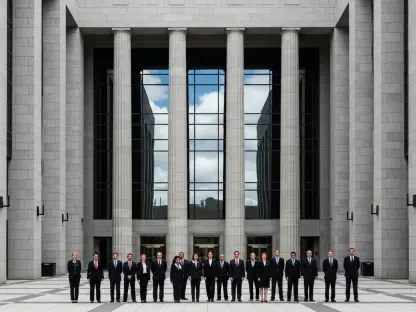
The initiative is steered by individuals with deep, firsthand knowledge of the federal government’s inner workings. At the helm is CEO Cristin Dorgelo, whose experience at the Office of Management and Budget provides a strategic overview of the systemic challenges facing the government. She is joined by key advisors like Nicole Wong, a former deputy U.S. chief technology officer, whose expertise underscores the group’s focus on modernizing services. This team of insiders is uniquely positioned not as critics looking in, but as experienced architects who know which levers to pull to create meaningful, lasting change from within.
A Targeted Strategy for Systemic Improvement
Rather than attempting to boil the ocean, Government Renewal is adopting a focused, multi-pronged strategy designed to produce cascading improvements across the federal landscape. The plan acknowledges that widespread change begins by repairing the foundational elements that support all government functions, while simultaneously demonstrating visible progress in areas that matter most to the public.
Modernizing Foundational Systems
The group’s primary focus is on overhauling the core pillars of federal administration: personnel, procurement, and operations. These interconnected systems dictate how the government hires talent, buys technology, and manages its day-to-day functions. By modernizing these foundational processes, the organization aims to create a more agile, capable, and responsive federal workforce that is equipped for twenty-first-century challenges.
Prioritizing High Impact Agencies
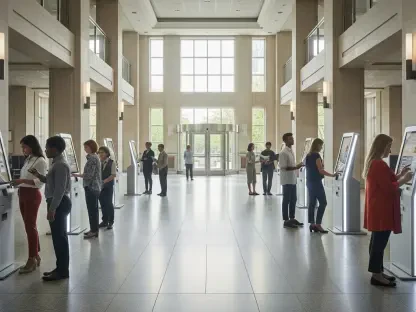
To make its impact felt, the initiative will also concentrate its efforts on specific, citizen-facing agencies where improvements can directly enhance the public’s experience. The Social Security Administration, an agency that interacts with millions of Americans, has been cited as a primary example. Success in such a high-visibility area would serve as a powerful proof of concept, demonstrating that a better functioning government is not an abstract ideal but an achievable reality.
Elevating the Standard of Federal Services
A central goal of the organization is to elevate federal services to meet the standards of speed, quality, and user-friendliness that people now expect from leading private-sector companies. However, the leadership is clear that this is not an attempt to run government like a for-profit business. The objective is to adopt the best practices in user-centric design and operational efficiency to better serve the public, while upholding the unique mission and responsibilities of public service.
A Nonpartisan Approach in a Polarized Era
Despite the founders’ ties to Democratic administrations, Government Renewal is positioning itself as a strictly nonpartisan entity. CEO Cristin Dorgelo has emphasized a commitment to collaborating with any lawmakers, including Republicans, who share the goal of effective governance. This approach is crucial for navigating a polarized political climate and ensuring that the work of improving government functionality transcends partisan divides and endures through changing political administrations.
The organization is also careful to define itself by what it is not. It is a long-term project for systemic improvement, not a rapid-response team reacting to current political events. Moreover, it is distinct from politically motivated concepts like the fictional “Department of Government Efficiency,” clarifying that its focus is on building capacity and improving services, not simply on reducing the federal workforce.
Current Status and Future Trajectory
Government Renewal is no longer just a concept; its work is officially underway as of 2025. The organization is currently in its foundational phase, building its team and refining its strategic priorities for maximum impact. The founders project that the initiative will be operating in “full swing” by 2026, by which time its initial projects will be demonstrating tangible progress. As a registered nonprofit, its operational structure is established, though details regarding its specific funding sources have not yet been publicly disclosed.
Reflection and Broader Impacts
The group’s potential to influence the future of public service and governance is significant, but its path is not without obstacles. Its success hinges on its ability to leverage its strengths while navigating the inherent challenges of federal reform.
Reflection
The primary strength of Government Renewal lies in the deep expertise of its founders and its precise focus on foundational issues rather than fleeting political battles. Their insider knowledge provides invaluable credibility and a realistic roadmap for change. However, the group faces foreseeable challenges, including overcoming entrenched bureaucratic inertia, securing genuine bipartisan cooperation in a deeply divided Washington, and obtaining the long-term funding necessary to see its ambitious projects through to completion.
Broader Impact
Should Government Renewal succeed, the implications could be profound. A more efficient and responsive government could fundamentally alter the public’s often-cynical relationship with federal institutions, fostering a renewed sense of trust and shared purpose. Furthermore, its work could set a new national standard for federal efficiency, inspiring a new wave of civil service reforms and making public service a more attractive and dynamic career path for future generations.
A Vision for a Government That Works for Everyone
Ultimately, Government Renewal champions a straightforward but powerful vision: a government that is responsive, effective, and worthy of the public’s trust. The organization’s work is a testament to the belief that operational excellence is not a partisan issue but a fundamental requirement of a healthy democracy. Its success has the potential to make a lasting difference in the lives of all Americans.
The group’s efforts are a crucial reminder that the measure of a government lies not in its promises, but in its ability to deliver. By focusing on the practical, tangible aspects of service, Government Renewal aims to create a federal apparatus that works better for everyone, ensuring that the institutions of American democracy are as capable and reliable as the people they serve.