
A political savant and leader in policy and legislation, Donald Gainsborough is at the helm of Government Curated, a firm dedicated to navigating the complexities of public sector modernization. In this conversation, we explore the remarkable transformation of North Carolina’s Department of Environmental Quality, moving from a paper-laden bureaucracy to an agile, automated agency. Gainsborough delves into the practical strategies behind this shift, discussing how they not only cleared a massive backlog of fees but also fundamentally changed how employees engage with their work. We’ll touch on the importance of process mapping, the art of interviewing staff to unlock hidden efficiencies, and the philosophy that technology must always serve a human-centric strategy.
Your agency collected over $1.2 million in backlogged fees and cut staff time by 73% for one permit type through automation. Could you walk me through the specific process changes that led to these results and explain how that new revenue is now being used to improve service?
Absolutely. The permit in question was for monitoring stormwater and erosion on any construction project disturbing one acre or more of land. You can imagine the sheer volume. The old process was a genuine relic; it was entirely paper-based and incredibly cumbersome. Our staff were essentially digital archaeologists, constantly digging through emails, tracking renewals manually, and sending individual reminders. It was a massive drain on their time and energy. The pivotal change was implementing an automated workflow. Instead of a person having to remember to send an email, the system now sends out reminders automatically. This single change had a domino effect. Permittees responded, the backlogged fees started pouring in—over $1.2 million, to be exact—and suddenly, the 73% of staff time that was spent chasing paper was freed up. That new revenue isn’t just a number on a spreadsheet; it’s a direct investment back into our mission. We’ve been able to hire more permit reviewers, which means we can process applications faster and more thoroughly, improving service for everyone from a homeowner to a large developer.
Modernizing a traditionally paper-heavy agency involves more than just new software. Could you share an example of a long-standing, siloed process you revamped and the specific steps you took to reduce its complexity and red tape for both your team and the public?
One of the biggest hurdles in an agency with decades of history is that processes don’t just become habits; they become fortresses. They exist in their own silo, often for reasons no one can quite remember. We saw this with our permit applications across the board. A business needing a permit would have to navigate a maze, and our internal teams were just as lost, passing physical files from one desk to another. These isolated processes are incredibly expensive, not just in dollars, but in time and frustration. Our first step was to establish a central document repository to act as a single source of truth. From there, we redesigned the entire permit lifecycle. Instead of a paper application, a person or business can now apply online. That submission immediately triggers an automated workflow. It’s no longer a black box. If there’s a hang-up, the system flags it immediately, so we know exactly where the bottleneck is. By breaking down those silos, we reduced the number of steps, cut out redundant internal reviews, and created a transparent, integrated system that’s faster for the public and far less complex for our staff to manage.
Engaging staff accustomed to decades-old systems can be challenging. Can you describe your method for interviewing employees to map out these processes and share an anecdote where their direct input, even if initially unconventional, led to a significant breakthrough in your modernization efforts?
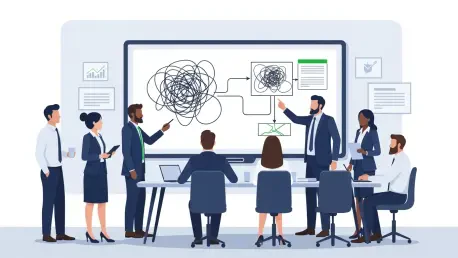
This is the human element, and it’s the most critical part. You can’t just impose a new system. We start by sitting down with the people who live and breathe these processes every day. I don’t go in with a solution; I go in with questions. We literally map out the journey of a document, step by step, person by person. During one of these sessions, an employee who had been with the agency for over twenty years shared an idea she’d had years ago, one that was dismissed at the time as being too radical. Her idea wasn’t a fully formed process, but it was the spark we needed. She pointed out a cyclical loop in the review process that didn’t need to be there at all. It was just a legacy step. At first, it sounded too simple to be true. But as we brought other minds into the conversation, we realized she was right. We were able to cut that entire loop out. The real breakthrough wasn’t just the efficiency gain; it was the feeling in that room. The staff saw that their ideas mattered, that we were open to innovation. It transformed the project from a top-down mandate into a collaborative puzzle we were all solving together. That excitement is what makes the technology application feel natural rather than forced.
Given the view that technology must serve strategy first, how do you decide which internal and external problems to prioritize for automation? What key metrics do you use to measure whether a new digital workflow is truly making your team more effective and productive?
We start with a simple question: where is the pain? Technology is not a magic wand; it’s a tool to solve problems for people. So, our strategy always begins with people—our staff, our constituents, the businesses we regulate. We prioritize the processes that are causing the most friction, the ones that are bureaucratic, slow, and frustrating for everyone involved. We’re not technology-focused; we’re problem-focused. As for metrics, we look beyond simple numbers. Yes, we measure things like processing times and fee collection, but the real measure of success is human impact. Is our staff less stressed? Do they have a better work-life balance because they’re not bogged down in repetitive, manual tasks? Are citizens and businesses able to get what they need from us more easily and with greater transparency? When we see our employees becoming more effective and productive, it’s not just about output; it’s about giving them the quality of life they deserve and enabling them to apply their expertise where it truly matters.
What is your forecast for the role of automation and data management in state-level environmental agencies over the next five years?
I believe we are on the cusp of a profound shift. For the next five years, automation and data management will move from being supportive tools to being core components of environmental stewardship itself. We’ll see agencies move beyond just digitizing old paper processes and start using data to become more proactive and predictive. Instead of just reacting to permit applications, agencies will be able to analyze environmental data to identify potential hotspots, streamline compliance monitoring, and allocate resources more intelligently. Automation will continue to free up highly skilled scientists and engineers from administrative burdens, allowing them to focus on the complex, nuanced work of protecting our natural resources. The ultimate goal will be to create a more integrated, responsive, and data-driven approach to environmental governance that is faster for the public and more effective for the planet.