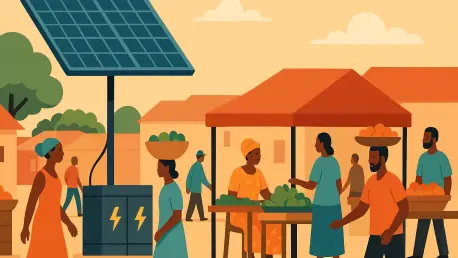

The commissioning of a one-megawatt solar mini-grid in Talasse marks the end of a seventeen-year blackout for a community previously isolated from Nigeria’s national power grid. This historic achievement signifies a pivotal shift in the Federal Government’s approach to energy justice, as it deploys a sweeping 17MW solar expansion project designed to revitalize the northeastern economic corridor. By bypassing traditional grid limitations, this decentralized strategy addresses long-standing energy poverty in Gombe State through a robust partnership. The collaboration integrates technical expertise from the Rural Electrification Agency with regional governance to foster a sustainable utility ecosystem. This pivot toward clean energy represents a broader national effort to diversify the power mix and reduce reliance on expensive fossil fuels. Beyond simple illumination, the initiative establishes a resilient framework for regional development that prioritizes the needs of underserved citizens.
Advanced Infrastructure: Scaling Access via the DARES Program
The ongoing expansion is managed through the Distributed Access via Renewable Energy Scale-up program, which utilizes sophisticated solar harvesting technology and high-efficiency battery storage systems. This initiative bridges the significant energy gap that has historically hindered the growth of households, small businesses, and agricultural centers across the region. By focusing on renewable infrastructure rather than centralized coal or gas plants, the government provides a consistent alternative that is both stable and environmentally sound. The transition to solar-based mini-grids allows for a more flexible deployment of resources, ensuring that remote areas receive power without the massive capital expenditure required for long-distance transmission lines. This model ensures that energy access is not just a temporary luxury but a permanent foundation for local development. It reflects a modern strategy where technology adapts to the geography of the people.
A core component of the current strategy involves the integration of a productive-use philosophy, where electricity serves as a direct driver for rural industrialization. Instead of focusing solely on residential lighting, the program provides the power necessary to run industrial machinery and heavy commercial equipment for local businesses. This approach ensures that energy acts as a catalyst for economic diversification, allowing entrepreneurs in Gombe State to expand their operations and adopt mechanized production methods. By empowering the local workforce with reliable power, the government encourages the creation of small-scale manufacturing hubs that can process raw materials on-site. This shift from subsistence-based activities to value-added production is essential for lifting communities out of poverty. It transforms the electricity from a standard utility into a tool for wealth creation, fostering a new class of rural industrialists and skilled laborers.
The Talasse Facility: A Blueprint for Rural Electrification
The technical architecture of the Talasse facility serves as a sophisticated benchmark for future solar deployments across the northeastern region. This specific site features a 1MW solar generation capacity coupled with a 2.4-megawatt-hour battery energy storage system that ensures uninterrupted service. The storage component is a critical technological inclusion, as it mitigates the inherent intermittency of solar power by providing electricity during nighttime hours and periods of heavy cloud cover. By utilizing advanced power management software, the site can balance load requirements in real-time, preventing surges and ensuring the longevity of the connected appliances. This level of technical reliability was previously unattainable in remote communities, making the Talasse project a proof of concept for the feasibility of high-capacity rural grids. It demonstrates that renewable energy can meet the rigorous demands of both domestic life and small-scale industrial operations.
Detailed data from the Rural Electrification Agency indicates that the Talasse project successfully supports over 6,000 active connections, covering thousands of residential homes and numerous commercial enterprises. A defining feature of this site is its dedicated support for productive economic activities, which includes powering groundnut oil processing plants and large-scale rice mills. These facilities allow the community to process agricultural goods locally, thereby retaining more economic value within the village and reducing the high costs associated with raw material transport. Furthermore, the inclusion of electric flour-grinding machines and specialized irrigation tools has modernized the local food supply chain, enhancing food security for the entire Balanga Local Government Area. This localized industrial framework reduces post-harvest losses and creates a stable market for farmers, who no longer need to travel long distances to reach processing centers.
Strategic Expansion: The 16MW Interconnected Network Pipeline
Building on the success of the initial 1MW installation, the state has moved forward with an ambitious 16MW pipeline consisting of four interconnected mini-grids located in Dukku, Bajoga, Kumo, and Kaltungo. These sites are strategically positioned to serve as regional energy hubs, significantly scaling up the existing infrastructure to meet the rising demand for electricity. Unlike standalone systems, these interconnected grids are engineered to operate in harmony with existing frameworks, providing a layer of stability that enhances the overall reliability of the regional power supply. This expansion represents a massive commitment to the decentralization of the Nigerian power sector, moving away from a single point of failure toward a distributed network of generation. Each site is tailored to the specific energy profile of its host community, ensuring that the local distribution network can handle the power needs of both expanding residential estates and growing agricultural zones.
The implementation phase of these four projects requires meticulous coordination between engineering teams and local government officials to ensure that construction deadlines are met. Developing a robust distribution network for these predominantly agrarian towns involves more than just installing solar panels; it requires the deployment of high-quality poles, transformers, and smart meters to track usage accurately. The government remains focused on creating a reliable energy corridor that can support large-scale farming operations and the burgeoning small-business sector. This infrastructure synchronization is vital for the long-term success of the regional economy, as it provides the certainty needed for private investors to commit capital to the area. By establishing a predictable power environment, the project encourages the growth of cold storage facilities and other essential agricultural services. These developments are expected to significantly reduce rural-to-urban migration by creating modern economic opportunities.
Socio-Economic Evolution: Sustainability and Regional Growth
Financial sustainability remains a primary focus of the Gombe energy expansion, addressing the historical challenges that have plagued rural electrification efforts. By prioritizing industrial and commercial use, the project creates a revenue stream that supports the ongoing operation and maintenance of the solar arrays and battery systems. This model ensures that the utility remains viable without requiring continuous government subsidies, as the local businesses generate enough economic activity to cover the costs of service. The introduction of green mobility options, such as electric tricycles for local logistics, further enhances this economic ecosystem by lowering transportation overheads for small traders. Reducing the community’s dependence on expensive, imported petroleum products protects residents from the volatility of global fuel markets and lowers the local carbon footprint. This holistic strategy positions energy as a foundational tool for poverty alleviation across the state.
The introduction of 17MW of solar power fundamentally altered the trajectory of the local real estate and housing markets as the state modernized its utility framework. Property developers recognized these solar hubs as “growth poles,” which encouraged the decentralization of urban populations by making peri-urban life more viable and attractive. Reliable electricity removed the significant financial burden of maintaining private diesel generators, thereby increasing the disposable income of average households and raising property values across the region. To ensure the long-term integrity of these systems, stakeholders prioritized local technical training and established a dedicated maintenance fund to prevent equipment degradation. Future progress remained dependent on the successful integration of these energy hubs with expanded road networks and digital communication systems. By grounding energy access in industrial utility and community ownership, Gombe State established a definitive roadmap for rural modernization.