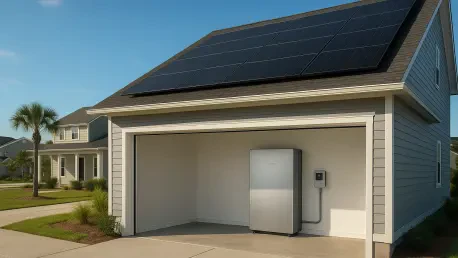

To navigate a shrinking installation market, firms like Cape Fear Energy Systems are pivoting from pure solar providers to holistic energy management companies specializing in battery storage. This strategic shift comes at a time when the North Carolina energy sector is experiencing a period of unprecedented volatility, a phenomenon often described by industry veterans as the solar coaster. While the state has historically been a national leader in renewable energy generation, the current landscape is defined by a tension between robust consumer demand and increasingly restrictive regulatory barriers. By early 2026, North Carolina held a strong position as the sixth-ranked state in the nation for solar generation, producing enough power to support approximately 1.2 million homes. However, the geographic advantages of over 200 sunny days in coastal hubs like Wilmington are now being weighed against a legislative environment that is significantly less hospitable than in previous years.
Regulatory Shifts and Net Metering Challenges
The residential solar sector in North Carolina is currently facing its most significant headwind through the fundamental restructuring of net metering policies. Major utility providers, most notably Duke Energy, have implemented new protocols that drastically reduce the financial credits solar owners receive for exporting excess energy back to the power grid. Utilities maintain that these structural changes are necessary to ensure all customers contribute fairly to the upkeep of physical infrastructure and maintenance costs. Conversely, clean energy advocates and local installers argue that these measures serve primarily to protect corporate profit margins at the expense of independent energy producers. This regulatory pivot has already caused a measurable dip in the pace of new residential installations, as the timeframe required for a system to pay for itself through energy savings has stretched considerably. The resulting market correction is forcing companies to find value beyond simple generation.
Beyond the immediate impact of net metering adjustments, the state’s broader regulatory framework has shifted toward a more conservative energy-first philosophy. This new direction prioritizes maintaining traditional power assets, such as coal and nuclear facilities, while pausing the expansion of certain renewable portfolios. The North Carolina Utilities Commission recently suspended its review process for several high-capacity solar projects, signaling a cautious approach to grid integration. Furthermore, emerging legislative proposals in Raleigh seek to eliminate property tax exemptions for large-scale solar installations, which would fundamentally alter the financial viability of utility-scale projects. This movement away from aggressive carbon-reduction targets reflects a desire for perceived grid reliability over the rapid deployment of intermittent resources. The intersection of these local policies creates a complex environment where industry growth is no longer guaranteed by environmental sentiment alone.
Federal Policy and Rising Equipment Costs
The local challenges in North Carolina are further compounded by a shifting federal landscape that has moved away from the pro-renewable incentives of the previous decade. The expiration of the 30% residential solar tax credit at the end of 2025 removed the single most effective financial tool for driving homeowner adoption. Without this federal subsidy, the upfront cost of a solar installation has become a much higher hurdle for middle-class families. Additionally, the reintroduction of significant tariffs on imported photovoltaic cells and specialized hardware has driven up equipment costs across the entire supply chain. These national trends have effectively signaled a retreat from federal climate goals, leaving states to navigate their own paths forward without the previous level of centralized support. For installers in North Carolina, this means their sales pitches must now rely on long-term performance and energy security rather than short-term government rebates or tax credits.
Supply chain constraints and the rising costs of raw materials like silicon and specialized glass have forced a reorganization of how solar projects are financed and executed. In the current year of 2026, the industry is seeing a move away from the traditional sales-heavy model toward a more technical, service-oriented approach. Smaller firms that were unable to absorb the increased overhead of tariffs have either consolidated or exited the market entirely. The remaining players are focusing on higher-efficiency panels and localized inverter technologies that can justify the higher price tags through better yield. Moreover, the federal government’s pivot away from other renewable sectors, such as offshore wind, has concentrated competition within the solar space. This environment rewards companies that can secure reliable hardware streams and provide comprehensive warranties that mitigate the risk for skeptical consumers. The stability of the market now rests on operational efficiency rather than the generosity of federal tax policy.
Rising Electricity Rates as a Market Driver
Despite the removal of various incentives and the creation of regulatory hurdles, consumer demand remains resilient because of the sharply increasing cost of traditional electricity. Duke Energy and other major regional providers have secured approval for substantial rate hikes, which have resulted in double-digit increases for monthly residential bills across North Carolina. For many residents, the decision to install solar technology has evolved from an environmental luxury into a strategic financial defense against the rising tide of utility expenses. By generating their own power, homeowners are seeking to lock in their energy costs for decades, effectively opting out of the unpredictable price fluctuations associated with fossil fuel-based generation. This trend is particularly evident in the growing interest in demand-side management, where residents use solar power to offset peak usage charges that are becoming a standard feature of modern utility billing structures in the state.
The desire for energy independence has been amplified by the state’s history of severe weather events and the resulting vulnerabilities of a centralized grid. Hurricanes and high-wind events frequently lead to prolonged power outages, highlighting the limitations of traditional infrastructure in coastal and rural areas. Consequently, the conversation around solar has shifted from simple cost savings to essential resilience. Modern installations are increasingly paired with sophisticated battery storage systems that allow homes to operate independently during grid failures. While the initial investment for a paired solar-plus-storage system remains high, the value proposition has shifted. Consumers are now viewing these systems as a form of insurance against both economic volatility and physical infrastructure failure. This pivot toward energy security is providing a floor for the market, ensuring that even as net metering credits diminish, the utility of home-grown power continues to find a receptive audience.
Evolution of Private Energy Solutions
To remain competitive in this evolving landscape, solar companies have had to diversify their service offerings far beyond the rooftop array. Successful businesses are now branding themselves as integrated energy consultants, providing solutions that include electric vehicle charging infrastructure, high-efficiency heat pumps, and smart home automation. This holistic approach allows firms to maximize the value of every customer relationship while helping homeowners optimize their total energy consumption. By analyzing a home’s entire thermal envelope and electrical load, these energy management companies can demonstrate a clearer path to savings than a solar-only provider ever could. This transition is a direct response to the solar coaster effect, as it creates multiple revenue streams that are less dependent on the immediate fluctuations of solar-specific policy. The focus has shifted to the smart home ecosystem, where solar is just one component of a larger, more efficient energy strategy.
New financing and leasing models are also emerging to fill the gap left by the expiration of the federal tax credit. Solar-as-a-service and third-party ownership agreements are becoming more common, allowing homeowners to benefit from renewable energy without the heavy burden of a large down payment. These financial products are often structured to offer a predictable monthly payment that is lower than a traditional utility bill, even under the new net metering rules. Furthermore, some installers are partnering with local credit unions to offer specialized green loans with favorable terms. This financial innovation is critical for maintaining market momentum and ensuring that solar technology remains accessible to a broader demographic of North Carolinians. As the industry matures, the focus is less on the novelty of the hardware and more on the sophistication of the financial and technical integration that makes renewable energy a practical choice for the average ratepayer in the state.
Future Pathways for Solar Integration
The North Carolina solar market moved toward a phase of forced maturation that favored stability and technical integration over rapid, subsidy-driven expansion. As firms successfully transitioned into the role of energy managers, they provided homeowners with the tools necessary to navigate a landscape of rising utility costs and reduced grid reliability. The integration of battery storage became the standard rather than the exception, effectively decoupling the value of solar from the shifting whims of net metering policies. These organizations focused on delivering private energy solutions that emphasized long-term stability and resilience, which proved to be a successful strategy in a volatile regulatory environment. By prioritizing the installation of smart technologies and EV-ready infrastructure, the industry ensured that solar remained a foundational element of the modern home. The shift toward specialized energy management allowed businesses to survive the removal of federal incentives and emerge as vital partners in the regional energy economy.
Moving forward, the focus for both consumers and industry stakeholders remained on the advancement of localized grid resilience and the optimization of energy consumption. Stakeholders should prioritize the adoption of hardware that offers high interoperability between solar arrays, storage units, and home appliances. This level of technical sophistication was necessary to maximize the return on investment as traditional utility structures continued to evolve toward time-of-use pricing models. Policymakers and utility companies eventually recognized the value of distributed energy resources in reducing the need for costly grid expansions. For the individual homeowner, the next step involved investing in comprehensive energy audits to identify efficiency gaps before sizing a solar system. The industry demonstrated that while government incentives were helpful, the true driver of renewable adoption was the inherent need for energy security. These lessons provided a clear roadmap for a sustainable energy future.