
The persistent decline of reservoir levels at Lake Mead and Lake Powell has forced federal and state authorities to implement unprecedented reductions in water allocations from the Colorado River, placing Arizona at the center of a geopolitical and environmental struggle for survival. As the lower basin faces a drier reality, the legal frameworks established decades ago are being tested by modern climatological extremes that few planners could have anticipated during the mid-twentieth century. Arizona finds itself in a precarious position because of the specific terms negotiated during the authorization of the Central Arizona Project, which effectively relegated the state to a lower priority status compared to its neighbors. This hierarchy means that when shortages occur, Arizona is often the first to experience significant delivery cuts, threatening the stability of its agricultural sector and the expansion of its desert metropolises. The current landscape requires a sophisticated re-evaluation of how water is valued, distributed, and preserved. This involves not only policy shifts but also a cultural change in how residents perceive their relationship with a finite resource.
Analyzing the Legal Burden on the Grand Canyon State
Part 1: Impact of Junior Water Rights
The foundational legal document governing the river, the Colorado River Compact, established a system of seniority that now disproportionately impacts Arizona’s municipal and industrial sectors. Under the terms of the 1968 Colorado River Basin Project Act, Arizona agreed to accept a junior priority for the Central Arizona Project in exchange for federal funding to build the massive canal system that sustains Phoenix and Tucson. This agreement stipulated that in times of shortage, deliveries through this system would be curtailed before California lost a single acre-foot of its entitlement. As reservoir levels continue to hover near critical power-pool elevations, these legal mandates are no longer theoretical threats but immediate operational realities. The state has already seen tiered reductions that have eliminated hundreds of thousands of acre-feet from its annual supply, forcing local water managers to draw from underground storage and implement strict protocols to mitigate the loss of surface water.
This tiered system creates a ripple effect throughout the regional economy, as uncertainty regarding future water availability influences everything from real estate development to industrial investment. Large-scale technology firms, such as semiconductor manufacturers that have recently established massive fabrication facilities in the Phoenix area, require reliable and consistent water supplies for their cooling and cleaning processes. While these companies have invested heavily in on-site recycling systems, the overarching reduction in the state’s total allocation puts additional pressure on municipal providers to balance industrial needs with residential growth. The legal framework provides little flexibility for reallocating water based on current economic value, tethering the state to a rigid hierarchy that reflects the political landscape of the 1960s rather than the diversified economy of today. As federal mediators look toward the next round of negotiations starting from 2026 to 2030, the demand for a more equitable distribution system has become a central point of contention.
Part 2: Rural Agriculture and Economic Fallout
Nowhere is the impact of these water cuts more visible than in the rural agricultural corridors of Pinal County, where farmers have traditionally relied on canal water to irrigate crops like alfalfa, cotton, and citrus. The elimination of agricultural water deliveries from the main canal has forced many growers to return to pumping groundwater, a practice that is both more expensive and less sustainable over the long term. This shift has led to land subsidence and the depletion of local aquifers, creating a localized environmental crisis that mirrors the broader regional drought. Many farmers have been forced to leave fields fallow or transition to less water-intensive crops, but these adjustments often come with lower profit margins and increased financial risk. The transition away from surface water has also strained the infrastructure of local irrigation districts, which were designed to manage a mix of water sources. The loss of productivity not only affects the local food supply but also reduces the tax base for communities.
Beyond the fields, the economic fallout extends to the secondary industries that support the agricultural sector, including equipment dealers, fertilizer suppliers, and transportation companies. The decline in farming activity has led to a cooling of the rural economy, prompting fears of a permanent demographic shift as younger generations seek opportunities in more water-secure urban centers. State officials have attempted to mitigate these losses through various mitigation funds and infrastructure grants, but these measures are often viewed as temporary solutions to a permanent structural deficit. The challenge lies in finding a path forward that preserves the cultural heritage and economic viability of rural Arizona while acknowledging that the era of abundant, low-cost river water has come to an end. This transition requires a fundamental rethink of land use planning and the development of new economic engines that can thrive in an arid environment. The pressure on Arizona is unique because its agricultural sector is so intertwined with the river supply.
Strategic Adaptations and Future Resilience
Part 1: Advanced Water Recycling Technologies
In response to the dwindling supply from the Colorado River, urban centers like Phoenix and Scottsdale have accelerated their investments in advanced water purification and direct potable reuse facilities. These technologies allow municipalities to treat wastewater to a standard that exceeds federal drinking water requirements, creating a closed-loop system that maximizes the utility of every drop. By treating and recycling water locally, cities can reduce their dependence on long-distance transfers and create a more resilient supply that is insulated from the fluctuations of river flow. The implementation of direct potable reuse represents a significant shift in public policy and engineering, requiring rigorous testing and public outreach to ensure safety and acceptance. These facilities utilize a multi-stage process involving reverse osmosis and advanced oxidation to remove contaminants. The success of these projects is critical for the continued growth of the region as it provides a reliable alternative to unpredictable river deliveries.
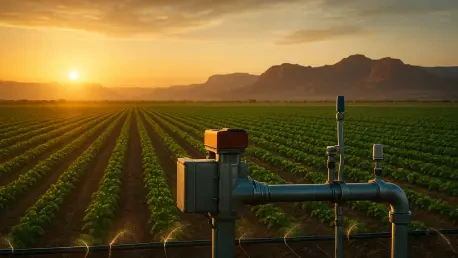
Furthermore, the integration of smart grid technology into water distribution networks is enabling more precise management of resources and reducing the volume of water lost to leaks and inefficiencies. Modern sensors and AI-driven analytics allow utility providers to monitor system health in real-time, identifying anomalies before they escalate into major pipe bursts or significant water loss. This data-centric approach also extends to the consumer level, where smart meters provide residents with detailed information about their usage patterns, encouraging more responsible consumption habits. In a desert environment where every gallon counts, these incremental gains in efficiency are essential for stretching existing supplies to meet the needs of a growing population. The adoption of these technologies is not limited to urban areas; irrigation districts are also exploring automated gate systems and canal lining to minimize evaporation. These advancements form the backbone of the state’s strategy to adapt to a drier climate and overallocation.
Part 2: Alternative Sources and Strategic Planning
Looking beyond conservation and recycling, the state is investigating the feasibility of large-scale desalination projects, potentially through partnerships with Mexico to build facilities on the Sea of Cortez. While the costs associated with desalination and the energy required for transport remain high, the prospect of an ocean-sourced supply provides a potential long-term solution to the regional water deficit. Such a project would involve complex international negotiations and significant environmental considerations, particularly regarding the disposal of brine and the impact on marine ecosystems. However, the severity of the Colorado River crisis has brought these once-fringe ideas into the mainstream of policy discussion. State leaders are also exploring the possibility of interstate water transfers and market-based mechanisms that allow for the temporary lease of water rights from willing sellers. These strategic planning efforts are designed to create a diverse portfolio of water assets that can be deployed depending on drought conditions.
The emphasis on regional collaboration has also led to the development of programs where users are compensated for voluntarily reducing their water consumption to keep more water in the main reservoirs. This program represents a shift toward a more cooperative management style among the lower basin states, moving away from the litigious history that has often characterized western water law. By working together to stabilize reservoir levels, Arizona, California, and Nevada are attempting to avoid a catastrophic dead pool scenario where water can no longer flow past the dams. This collaborative approach also involves tribal nations, who hold significant senior water rights and are increasingly playing a central role in regional water governance. Integrating tribal perspectives and ensuring that their rights are respected is a crucial component of any sustainable water management plan. The path forward involves a delicate balance of legal maneuvers, technological innovation, and political compromise to secure the future of the region.
The challenges surrounding Arizona’s reliance on the Colorado River prompted a paradigm shift in how desert communities approached resource management and urban planning. Policymakers recognized that the historical reliance on a single, shrinking source was no longer viable, leading to the aggressive pursuit of diversified water portfolios. The state prioritized the modernization of irrigation systems and the expansion of high-tech recycling plants, which effectively decoupled economic growth from rising water consumption. These efforts were bolstered by new legislative frameworks that incentivized conservation and facilitated the transfer of water between sectors with greater transparency and efficiency. Stakeholders established a clear roadmap for future negotiations, emphasizing the need for a priority system that accounted for modern economic realities rather than antiquated legal precedents. By focusing on regional cooperation and technological investment, the state transformed a looming crisis into an opportunity for leading the world in arid-land sustainability.