
The once-invisible architecture of the digital world has effectively collided with the physical reality of local communities, creating a high-stakes standoff between technological ambition and finite natural resources. For decades, the public perceived the “cloud” as an ethereal and weightless utility that required no physical presence in the tangible world. However, the rapid proliferation of generative artificial intelligence has shattered this illusion, revealing the massive, resource-hungry industrial complexes that power modern life. As AI expansion accelerates, the market is witnessing a significant shift from background logistical necessity to a primary source of social and political conflict. This analysis explores the growing tension between the digital ambitions of tech giants and the physical limits of the environments that host them, specifically examining how energy demands, water scarcity, and public sentiment are fundamentally reshaping the global technological landscape.
The summer of 2026 marked a historic escalation in this tension as the physical footprint of digital progress became impossible to ignore. A coordinated nationwide protest campaign took place across dozens of states, involving over a hundred separate demonstrations against data center expansion. This movement signaled a broad public awakening to the environmental and economic costs of the digital cloud. Public sentiment remains at a notable low, with market surveys indicating that only a small minority of residents support the construction of high-intensity AI facilities within their own neighborhoods. This dissatisfaction has reached the highest levels of governance, leading to regional moratoriums on new grid connections pending rigorous audits of their impact on energy stability. The transition from digital convenience to physical friction is no longer a localized issue but a systemic market risk.
From Digital Warehouses to Power-Hungry Industrial Complexes
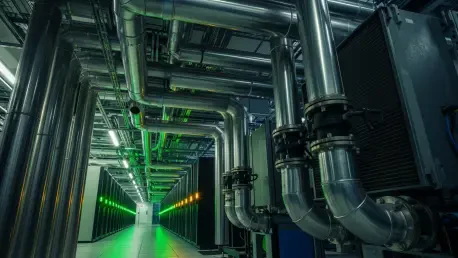
Historically, data centers functioned as relatively quiet warehouses for computers, housing the servers necessary for email, social media, and financial record-keeping. While these facilities required significant power, their growth was generally predictable and managed through steady improvements in processor efficiency. The shift began in earnest with the rise of Large Language Models (LLMs), which demand specialized graphics processing units operating at near-continuous maximum capacity. Unlike their predecessors, AI-optimized facilities are high-intensity industrial sites that place unprecedented stress on local resources. This transformation has moved data centers from the periphery of urban planning to the center of intense regulatory scrutiny, as the internet begins to demand visible and finite physical assets.
The technical requirements of generative AI have altered the very definition of a data center. Conventional digital services require hardware that fluctuates in demand based on user activity, allowing for periods of lower energy consumption. In contrast, training an AI model involves thousands of processors running at full throttle for months at a time, generating immense heat and requiring specialized cooling infrastructure. This shift has turned the “warehouse” model into a “power plant” model, where the facility is defined more by its energy and water intake than by its square footage. As these industrial complexes proliferate, they compete directly with other sectors for the basic building blocks of economic stability, creating a zero-sum game between digital innovation and physical infrastructure.
Analyzing the Three Pillars of Infrastructure Strain
The Energy Paradox: Straining the National Power Grids
The most immediate point of conflict in the current market lies in electricity consumption and the inability of existing grids to keep pace with digital demand. Data centers currently account for a significant portion of national electricity demand, with projections suggesting a massive surge from 2026 to 2028. This rapid scaling has created a logistical mismatch: while an AI data center can be built in under three years, the power plants and high-voltage transmission lines required to support them often take a decade or more to develop. This discrepancy threatens grid stability and risks driving up utility rates for residential consumers, transforming a technical challenge into a volatile political liability for utility providers and tech firms alike.
In high-growth regions, the grid operator is facing requests for new capacity that are several times higher than historical peak loads. The mismatch is not just about the volume of power but the speed of deployment. When a massive data center cluster enters a local grid, it can effectively consume the entire spare capacity meant for future residential and commercial growth. This leads to a scenario where local businesses are unable to expand because the “digital neighbor” has secured all available wattage. Consequently, the energy paradox has moved beyond a simple supply-and-issue problem, becoming a question of regional economic priority and the equitable distribution of essential resources.
The Hydrological Cost: Sustaining Large Language Models
Beyond the power grid, the cooling requirements of AI hardware have placed an immense strain on water resources, particularly in arid or drought-prone regions. To prevent high-performance processors from melting, many facilities utilize evaporative cooling towers that remove water from the local cycle. The direct and indirect water footprint of the data center industry has reached billions of liters annually. In many parts of the world, this consumption is increasingly viewed as an unacceptable trade-off, pitting the needs of AI chatbots against the requirements of local agriculture and the daily needs of residents.
Legal battles have intensified as communities realize that water used for cooling is often lost to evaporation rather than being treated and returned to the watershed. In some instances, courts have intervened to force the redesign of major projects, demanding that tech companies switch to air-cooled systems despite the higher energy costs. This hydrological tension represents a significant regulatory hurdle for the future of AI. As climate volatility increases, the industry’s reliance on liquid cooling creates a vulnerability that could halt expansion in the very regions that are otherwise attractive due to their cheap land or tax incentives.
Socio-Political Friction: The Rare Bipartisan Resistance
The expansion of AI infrastructure has accomplished the rare feat of uniting opposite ends of the political spectrum in shared opposition. Coordinated protests have signaled a broad public awakening to the environmental and economic costs of the cloud. Environmental activists on the left express deep concern over carbon footprints and water rights, while conservative groups on the right focus on rural land rights, the threat of eminent domain, and the perceived unfairness of corporate tax breaks. This “Servers vs. People” narrative reflects a fundamental grievance regarding transparency and equity, as communities question the logic of bearing the physical burden of infrastructure that offers few permanent local jobs.
The socio-political friction is exacerbated by the lack of local economic benefits. While a data center involves a multi-billion-dollar investment, once the construction phase is complete, the facility typically employs only a few dozen high-tech security and maintenance staff. For a small town, this means a massive industrial building that consumes local water and electricity but provides very little in the way of a long-term employment boost or local consumer spending. This perceived imbalance has led to a shift in the “social license” to operate, where tech companies can no longer rely on the promise of innovation to bypass local zoning laws or environmental regulations.
Technological Adaptations: The Future of Strategic Computing
As the conflict over physical resources intensifies, the industry is seeking ways to mitigate its footprint through innovation and strategic relocation. Emerging trends include the adoption of closed-loop cooling systems that recycle water and the use of treated wastewater to reduce the strain on drinking supplies. Furthermore, “grid flexibility” is becoming a critical concept, where data centers are designed to scale back power consumption during peak periods to act as virtual power plants. Despite local pushback, the construction of these facilities is increasingly viewed as a matter of national security, ensuring that the infrastructure debate will remain a central fixture of global economics for the foreseeable future.
The competition for AI supremacy has turned computing power into a strategic resource on par with oil or semiconductors. This has led to a geographic redistribution of infrastructure toward regions with underutilized power capacity or naturally cooler climates that reduce cooling demands. In some cases, tech giants are even investing in their own energy production, such as small modular nuclear reactors, to bypass the traditional grid altogether. However, these solutions are long-term and do not resolve the immediate friction with local communities. The market is currently in a transition phase where the winners will be those who can innovate their way out of physical constraints while maintaining a positive relationship with the regions they inhabit.
Navigating the Conflict: Accountability and Innovation
For businesses and policymakers, the path forward requires a shift from rapid expansion to responsible development. Success in the coming years will depend on the industry’s ability to secure a social license to operate through transparency and shared benefits. Enhancing transparency by moving away from “behind-closed-doors” deals and engaging local communities early in the planning process is a critical first step. When residents feel they are part of the decision-making process rather than victims of it, the likelihood of prolonged legal battles and public protests decreases significantly.
Furthermore, implementing rigorous auditing and mandatory impact assessments is essential to ensure that new grid connections do not jeopardize local energy security. Geographic distribution will also play a key role, as relocating facilities to regions with surplus energy or cooler weather can distribute the infrastructure load more equitably. By prioritizing accountability and resource efficiency, tech companies can move toward a model where digital progress does not come at the expense of local stability. The market now demands a more holistic approach to growth, where the environmental and social costs are factored into the initial feasibility of any large-scale digital project.
Reevaluating the Cost: The Impact of the Digital World
The growing conflict over AI infrastructure served as a clear reminder that every digital interaction carried a physical price. Stakeholders realized that the era of treating the internet as an intangible utility ended as the demands of the hardware became impossible to ignore. The industry recognized that the necessity of data centers for scientific and economic progress remained clear, yet their viability depended on balancing global technological demand with the rights and resources of local communities. The long-term success of the AI revolution was determined not just by the efficiency of its algorithms, but by the sustainability of the hardware that hummed in the physical world.
The transition toward a more accountable model of development proved to be a necessary evolution for the tech sector. Companies that embraced transparency and invested in resource-efficient cooling systems were better positioned to navigate the complex regulatory environment. It became evident that the “social license” to operate was as valuable as the electricity powering the servers. Ultimately, the industry learned that the path to digital supremacy required a grounded understanding of the land, water, and power that sustained virtual life. This shift ensured that technological advancement moved forward in a way that respected the physical boundaries of the world it aimed to transform.