
The global defense landscape is currently witnessing a seismic shift as major American contractors, including Lockheed Martin and RTX, pivot toward establishing a permanent industrial footprint within Spanish borders to meet rising demand. This movement is largely fueled by the massive surge in military spending across the European continent, a trend that has forced a complete reevaluation of how defense technology is distributed and maintained. No longer satisfied with the traditional export-only models of previous decades, these aerospace giants are now navigating the complex requirements of European strategic autonomy while managing shifting political climates within the United States. This expansion represents a departure from the simple overseas sales of the past, signaling a new era of transatlantic military cooperation that prioritizes local manufacturing and supply chain security. By embedding themselves into the Spanish industrial fabric, American firms are securing a competitive edge in a market that increasingly demands local value.
Evolution of the Transatlantic Industrial Model
Transitioning from Direct Sales to Localized Co-Production
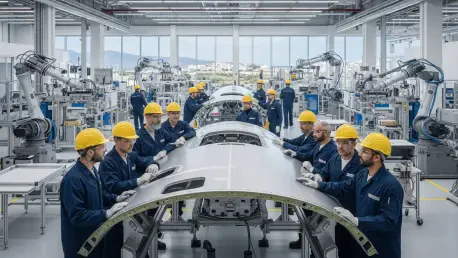
For many years, the relationship between American defense firms and European nations was defined by straightforward direct sales, but that outdated model is rapidly being replaced by sophisticated co-production agreements. As European governments demand greater sovereign control over their military hardware, U.S. companies have started adapting by acting as strategic subcontractors or joint-venture partners with established local Spanish firms. This transition is not merely a branding exercise but a fundamental change in how defense products are designed and assembled. Partnerships with domestic industry leaders like Indra, Oesia, and Sener have become essential components of the market strategy for American giants. These alliances allow for the actual fabrication of high-tech missile components and advanced defense electronics on Spanish soil, ensuring that the host nation retains a significant portion of the economic and technological benefits of these massive contracts.
This shift toward localized production reflects a broader European desire to reduce dependence on foreign-made systems that cannot be serviced or modified locally. By establishing these co-production lines, American companies are successfully bypassing political hurdles that often favor domestic European manufacturers over foreign competitors. The complexity of modern electronic warfare and missile systems requires a high level of technical proficiency, and by training Spanish workers to handle these tasks, U.S. firms are creating a loyal and skilled workforce in the region. This approach also helps mitigate the risk of protectionist policies that might otherwise block American equipment from being selected for major national defense projects. Ultimately, the integration of Spanish industrial capabilities into the global supply chain of companies like RTX and Lockheed Martin ensures that these defense systems remain the preferred choice for the Spanish Ministry of Defense.
Responding to Industrial Bottlenecks and Surging Global Demand
The sheer volume of military hardware required to replenish national stockpiles depleted by various regional conflicts has pushed existing American production lines to their absolute limits. Establishing factories and maintenance hubs in Spain has become a logistical necessity, allowing these multinational companies to bridge the supply gaps that the Pentagon’s domestic facilities cannot handle alone. As global demand for high-precision munitions and air defense systems continues to escalate, the strain on centralized manufacturing becomes a significant vulnerability. By decentralizing their operations and utilizing Spanish industrial centers, American firms can ensure a more steady flow of products to their international clients. This geographical diversification also shortens delivery timelines and reduces the costs associated with transporting heavy military equipment across the Atlantic. Furthermore, the presence of localized manufacturing sites provides a critical buffer against global shipping disruptions.
Financial stakes are incredibly high in this new industrial environment, with RTX reporting billions of dollars in European revenue in just the first half of the year alone. The European continent has become a primary engine for growth within the defense sector, forcing a decentralized manufacturing approach to sustain this massive and sudden influx of orders. Large-scale investments in Spanish facilities are no longer seen as optional but as vital to maintaining the pace of production required by modern defense procurement schedules. These facilities act as regional hubs that can service not only the Spanish military but also other neighboring European allies who use similar equipment. This network of localized production and support creates a self-sustaining ecosystem that benefits from economies of scale while remaining responsive to the specific tactical needs of regional forces. The resulting infrastructure is capable of scaling up rapidly in response to any further escalations in the global security environment.
Strategic Integration and Regional Resilience
Navigating Reciprocal Market Access and Internal Competition
This industrial shift is characterized by a unique two-way expansion where Spanish firms are simultaneously increasing their footprint within the United States market. While American giants set up shop in Madrid and other regional hubs, Spanish companies like Navantia and Indra are aggressively positioning themselves for major U.S. Navy and Department of Defense contracts. This reciprocal market access creates a deeply integrated transatlantic industrial base where the lines between foreign and domestic products are increasingly blurred. This deeper integration is essential for fostering long-term cooperation and ensuring that both nations benefit from the technological advancements developed by their respective industries. By competing on American soil, Spanish firms are demonstrating their world-class engineering capabilities and proving that they can meet the rigorous standards of the U.S. military. This exchange of expertise and capital strengthens the overall resilience of the alliance’s industrial capacity.
However, this deeper level of integration is not without its growing pains, as seen in the fierce competition between local entities in Spanish regions like Asturias. In these areas, various companies are vying for the infrastructure, skilled labor, and local government resources needed to support high-stakes international manufacturing projects. The influx of American capital and technology often creates a gold-rush atmosphere, where local subcontractors must rapidly modernize their own operations to keep pace with the requirements of firms like Lockheed Martin. This internal competition can lead to regional imbalances, but it also drives a wave of innovation and investment in Spanish infrastructure that might not have occurred otherwise. Governments are now faced with the challenge of managing this rapid growth while ensuring that the benefits are distributed fairly across the national economy. Navigating these regional dynamics is a crucial task for American executives seeking a smooth entry into the Spanish market.
Balancing National Sovereignty with Global Technology Sharing
The ultimate result of this industrial expansion is a more resilient and interconnected defense-industrial base that prioritizes regional responsiveness over centralized production models. To maintain market access in an era where European nations are championing strategic autonomy, U.S. firms are increasingly willing to share sensitive technology and manufacturing rights. These concessions, which were once considered strictly off-limits due to national security concerns, have become necessary tools for securing multi-year procurement deals. By building out advanced facilities in Spain, the defense industry creates a supply chain capable of withstanding significant global disruptions. This ensures that European allies have immediate access to the resources necessary to defend their borders without having to rely entirely on transatlantic shipping lanes during a crisis. This forward-deployed industrial posture enhances the deterrence capability of the entire alliance by making its logistics more robust.
Decision-makers in the defense sector recognized that the future of transatlantic security depended on a more integrated approach to industrial production and technology sharing. Organizations throughout Spain and the United States implemented strategies that moved beyond simple transactional sales to foster long-term industrial ecosystems. These leaders prioritized the establishment of collaborative frameworks that allowed for real-time data exchange and joint research initiatives between Spanish engineers and American designers. The industry successfully transitioned to a model where resilience was valued as much as efficiency, ensuring that military readiness remained high even during periods of extreme global volatility. Future considerations for these defense giants involved the continuous modernization of Spanish production lines to incorporate automated assembly and advanced additive manufacturing. This proactive stance ensured that the partnership remained dynamic and capable of evolving alongside new threats.