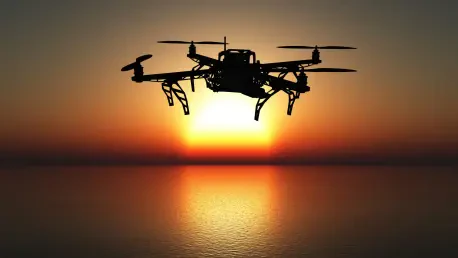

The rapid proliferation of small, commercially available unmanned aircraft systems has created a complex and unpredictable security challenge, transforming public spaces and critical infrastructure into potential targets for disruption and harm. In a decisive move to address this escalating issue, the United States government has enacted the “Safer Skies Act,” a landmark piece of legislation integrated into the National Defense Authorization Act. This new law represents a fundamental shift in domestic security strategy, moving beyond patchwork regulations to establish a cohesive, nationwide framework for countering the threat posed by unauthorized drones. It not only renews and extends the authority of federal agencies but, for the first time, formally empowers state, local, and tribal law enforcement to detect, track, and neutralize these aerial threats. By combining robust legal authority with significant financial investment, the act aims to build a layered defense system, enabling first responders to safeguard their communities from the ground up against a danger that has become all too real.
An Escalating Threat in Crowded Skies
The justification for this sweeping legislation is rooted in a clear and present danger that is no longer theoretical. Federal data reveals an alarming trend, with the Federal Aviation Administration (FAA) now receiving over 100 reports each month of drone sightings in close proximity to airports, creating a substantial and unacceptable risk of catastrophic collision with commercial aircraft. The threat extends far beyond aviation hazards. These highly mobile and difficult-to-detect devices are increasingly being exploited for a range of illicit activities, from smuggling contraband over prison walls to conducting unauthorized surveillance of sensitive facilities and critical infrastructure, thereby circumventing traditional ground-based security measures. This evolution in the use of drone technology has demonstrated that existing regulations are insufficient to deter malicious actors, necessitating a more proactive and empowered law enforcement response to protect both public safety and national security interests from a threat that can emerge from anywhere, at any time.
This vulnerability is particularly acute at large-scale public gatherings, which have become prime targets for disruption. Compelling data provided by the National Football League (NFL) illustrates the sheer scale of the problem, with an estimated 2,300 unauthorized drones detected flying in or near its stadiums during the 2024 season alone. These flights were in direct violation of Temporary Flight Restrictions (TFRs), the FAA-mandated no-fly zones that prohibit drone operations below 3,000 feet within a three-nautical-mile radius of a stadium from one hour before an event until one hour after. The high volume of incursions underscores the challenge of enforcement. A powerful sense of urgency propelled the law’s passage, driven by a packed calendar of high-stakes international events on American soil. With the FIFA World Cup scheduled for later this year, nationwide celebrations for America’s Semiquincentennial, and the Summer Olympic Games in Los Angeles in 2028, lawmakers were compelled to ensure a comprehensive security apparatus was in place to protect millions of athletes, spectators, and citizens.
Forging a New Legal and Operational Framework
At the heart of the Safer Skies Act is the critical reauthorization and extension of counter-drone authorities for the Department of Homeland Security (DHS) and the Department of Justice (DOJ). The legislation explicitly extends their mandate to detect, track, and safely disable threatening drones until the year 2028. This provision is of foundational importance, providing a stable and long-term legal basis for federal operations after these essential authorities had previously lapsed during a government shutdown, a period that left communities and infrastructure in a state of heightened vulnerability. By ensuring this continuity, the act allows these federal agencies to maintain their protective posture and continue developing advanced counter-UAS strategies without the risk of sudden interruption due to political gridlock, solidifying the federal government’s role as the backbone of the nation’s domestic drone defense. This long-term authorization is designed to foster stability and allow for strategic planning and investment in new technologies and tactics over the coming years.
Perhaps the most transformative component of the new law is its establishment of a formal, nationwide framework designed to empower state, local, and tribal law enforcement agencies. This is not merely a grant of authority but a structured program that facilitates access to critical training and advanced counter-drone technology, effectively decentralizing the first line of defense. This framework enables police departments and other local agencies to take direct, immediate action to mitigate drone threats during specific, high-risk scenarios such as major sporting events and public gatherings, where they serve as the primary security provider. Crucially, this provision resolves a significant legal ambiguity that had previously hindered local action. The FAA retains ultimate authority over the nation’s airspace, a federal preemption that created legal uncertainty for states that had attempted to enact their own counter-drone legislation. By creating a federally sanctioned pathway, the Safer Skies Act provides a clear legal umbrella for state and local agencies to operate under, ensuring their actions are protected and empowering them to safeguard their jurisdictions without legal jeopardy.
A Unified Front Backed by Bipartisan Support
The political context surrounding the law’s passage was notable for its strong bipartisan consensus, a rarity in the current political climate. The fact that the bill was introduced by a prominent Senate Democrat and subsequently signed into law by a Republican president signifies that the threat posed by unauthorized drones is widely viewed as a non-partisan issue of national importance, transcending typical political divisions. This unity was instrumental in the bill’s successful integration into the essential National Defense Authorization Act, ensuring its swift passage. This broad support extended beyond the halls of Congress to include major private sector organizations and other key stakeholders who are on the front lines of managing public safety. The NFL, a vocal proponent of the legislation, issued a statement thanking congressional champions from both parties, reinforcing the gravity of the threat from the perspective of an organization responsible for the safety of millions of fans annually and validating the urgent need for these new tools.
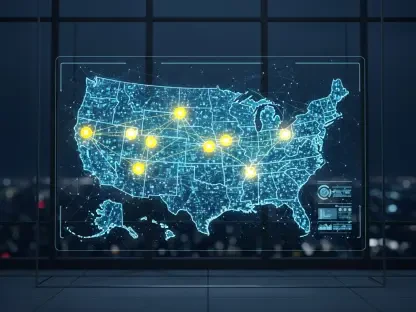
This comprehensive strategy is not limited to legislative authorization alone but is also supported by a significant financial investment designed to build tangible capabilities at the state and local levels. This is primarily accomplished through a new Counter Unmanned Aircraft Systems Grant Program administered by the Federal Emergency Management Agency (FEMA). The program represents a major financial commitment, structured as a two-year, $500 million initiative with the stated goal of providing state and local agencies with the resources needed to acquire the technology and training to detect, identify, track, and mitigate drone threats. The first tranche of funding, totaling $250 million, was strategically awarded in late 2025 to the 11 states slated to host matches for the 2026 FIFA World Cup, as well as the National Capital Region, in preparation for America’s 250th-anniversary celebrations. This targeted approach demonstrates a risk-based allocation of resources to address the most immediate and high-profile security needs.
A Proactive and Cohesive National Security Strategy
The federal government’s approach was defined by a remarkable administrative efficiency that underscored the urgency of the mission. The initial grant distribution was executed by FEMA with unprecedented speed, with funds awarded just 25 days after the application deadline, reflecting a commitment to cutting bureaucratic red tape and rapidly delivering vital resources to law enforcement. This rapid deployment of capital was a clear signal of the administration’s focus on tangible outcomes. The program was designed for national expansion from the outset, with the next round of grants, constituting the remaining $250 million, planned for distribution later in 2026. This second phase will be open to all states and territories, with the ultimate goal of building a baseline of counter-drone detection and response capabilities across the entire country, ensuring no region is left unprepared to confront this modern security challenge.
Ultimately, the passage of the Safer Skies Act and its associated programs signaled a unified and coherent national strategy to combat a complex and evolving threat. The initiative established a multi-layered defense defined by its core pillars: the renewal of federal authority, the empowerment of state and local partners through a new national framework, the resolution of long-standing jurisdictional conflicts, and substantial financial investment to build real-world capabilities. Bolstered by strong bipartisan political will and the vocal support of key private sector stakeholders, this forward-looking policy was directly tailored to secure a series of major national and international events. More broadly, it represented a proactive shift in domestic security, creating a sustainable and legally sound model for a collaborative, whole-of-government approach to protecting the American public in an era of rapid technological change.