
At the nexus of technology and policy, few issues are as charged as the arrival of autonomous vehicles on the crowded streets of New York City. With Waymo’s self-driving cars already logging miles in Manhattan and a new mayoral administration on the horizon, the city is at a critical inflection point. To unravel this complex dynamic, we turn to Donald Gainsborough, a political savant and the leader of Government Curated. He joins us to dissect the intense political maneuvering Waymo must navigate with Mayor-elect Zohran Mamdani, a staunch ally of the taxi industry. We will explore the looming regulatory clash between state and city interests, the hard-earned lessons from Uber and Lyft’s disruptive entry, and the profound, human-scale challenge of protecting the livelihoods of over 100,000 city drivers from the tide of automation.
Given Mayor-elect Mamdani’s successful hunger strike for taxi medallion relief and his alliance with taxi workers, what specific, step-by-step concessions or guarantees would Waymo need to offer his administration to secure an operating permit extension after March 2026? Please provide some tangible examples.
This is the absolute heart of the matter. For the Mamdani administration, this isn’t a conversation about technological inevitability; it’s a conversation about justice for a workforce that has been battered for a decade. A standard pitch about safety and efficiency will fall on deaf ears. Waymo has to come to the table with a concrete “Just Transition” package. First, they must propose a dedicated, multimillion-dollar fund, financed by a per-ride surcharge on every autonomous trip, aimed directly at driver retraining and financial support. Second, they need to offer a phased, geographically-limited rollout with a guaranteed cap on vehicle numbers, contractually ensuring that for the first five years, their service supplements, rather than supplants, the existing TLC workforce. Third, they could offer to make their data platform available to the city’s Department of Transportation for real-time traffic management, framing themselves as a partner in solving congestion, not a cause of it. Finally, a commitment to build and staff their regional maintenance and operations centers within the five boroughs, with preferential hiring for former TLC drivers, would be a powerful, tangible gesture. It has to feel less like a tech company asking for permission and more like a potential partner offering solutions to the city’s long-standing labor and transit problems.
The article mentions state legislation to remove the human driver requirement while also noting a push for NYC’s Taxi and Limousine Commission to regulate AVs. How might these two regulatory efforts conflict, and what process would determine which rules take precedence on city streets?
You’re highlighting a classic Albany versus City Hall power struggle, but with a futuristic twist. The state legislation, pushed by proponents like Assembly Member Cunningham, aims to create a uniform, business-friendly framework to ensure New York doesn’t “fall behind.” It’s about statewide competitiveness. The city-level push from the TLC and council members, however, is about granular, street-level control. It recognizes that regulating traffic in Manhattan is fundamentally different from anywhere else in the state. The conflict arises in the details. What if the state mandates a certain insurance minimum, but the TLC demands a higher one? What if the state approves a vehicle for operation, but the TLC’s safety standards for navigating dense pedestrian plazas are more stringent? The key is the “carveout” provision mentioned for New York City. The process to determine precedence will be a brutal legislative and lobbying battle over the exact wording and scope of that carveout. The city will argue for home rule, citing the TLC’s decades of experience. The state, backed by tech lobbyists, will push for preemption to avoid a confusing patchwork of rules. Ultimately, the victor won’t be determined by legal theory, but by political capital and backroom negotiations.
TLC Commissioner David Do wants to avoid repeating the “unregulated scheme” of Uber and Lyft’s entry. Beyond the community collaborations mentioned, what specific metrics or operational data can Waymo share from cities like San Francisco to prove its commitment to a more regulated, worker-conscious rollout?
Commissioner Do’s words carry the weight of a decade of regulatory battles, and he’s right to be skeptical. The collaboration with Bronx Community College is a nice piece of public relations, but the TLC will demand cold, hard data. From San Francisco, where they have a fleet of around 1,000 vehicles, Waymo needs to proactively share several key metrics. First, they need to provide granular data on their service to transit deserts and passengers with disabilities, proving they are actually enhancing accessibility as they claim. Second, they should release audited reports on their impact on congestion and vehicle miles traveled, to counter fears of a fleet of empty cars clogging streets. Third, and most critically, they need to show the economic impact. What new jobs have been created in San Francisco to support their operations, what are the wage and benefit levels for these jobs, and how does this compare to the traditional ride-hail driver? Transparency on these points, before being forced by regulators, would be a massive step toward building trust and demonstrating that they’ve learned from the combative, bull-headed approach of their predecessors.
Bhairavi Desai of the Taxi Workers Alliance warns of “massive job loss.” Based on Waymo’s operations in other cities, what has been the actual, quantifiable impact on professional driver jobs, and what specific programs can be implemented to transition or support the 100,000+ TLC drivers in NYC?
Bhairavi Desai’s warning is the emotional and economic core of the opposition, and it’s completely valid. The threat to over 100,000 livelihoods is existential. Looking at San Francisco, the data is still nascent but complex. Waymo represents about a fifth of the ride-share market, but the overall market has also grown. This suggests it’s not a simple one-to-one replacement yet; it’s a market shift. However, that provides little comfort when you’re talking about a workforce the size of New York’s. A gradual entry is likely, but the long-term threat is undeniable. To address this, the programs must be robust and well-funded, not just token gestures. We need a “TLC Transition Authority” funded by a significant tax on every autonomous vehicle mile. This authority would oversee three key initiatives: first, mass-scale retraining programs for jobs in the new AV ecosystem—fleet logistics, remote monitoring, sensor maintenance, and customer service. Second, it would offer early retirement packages and benefits bridging for veteran drivers. Third, it could provide grants and low-interest loans for drivers to start new businesses, leveraging their entrepreneurial spirit. The goal can’t just be to manage the decline; it must be to build a tangible bridge to a new economic reality for these workers and their families.
Waymo’s safety pitch references a 91% reduction in serious crashes. Can you detail the top technical challenges in adapting this technology from Phoenix to New York’s uniquely dense environment, and describe the process for validating that safety record before a fully driverless launch is considered?
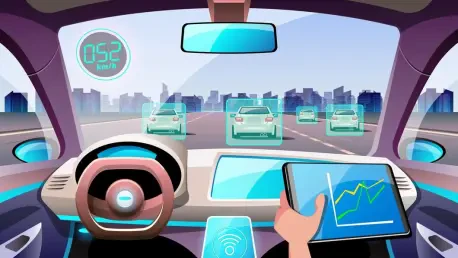
That 91% figure is impressive, but it was generated in places like Phoenix—a city with wide, sun-drenched, predictable grid streets. New York City is a chaotic, unpredictable ballet. The technical challenges are immense. The biggest is “sensory overload.” The system’s sensors have to process a fire hydrant, a food cart, a jaywalking tourist, a delivery cyclist weaving through traffic, and a double-parked truck all within the same 50 feet. Distinguishing a genuine hazard from the city’s background noise is a monumental software challenge. Then you have the “urban canyon” effect in Midtown, where tall buildings can block or distort GPS signals, which are crucial for navigation. Finally, there’s our weather—slush and road salt obscuring camera lenses, snow changing the geometry of the street, and torrential rain confusing lidar sensors. Validating safety here requires a multi-year, multi-stage process. It starts with thousands of hours in a high-fidelity digital simulation of NYC. Then, you have the current phase: logging thousands of real-world miles with human safety specialists who can intervene. Before any driverless launch, regulators would demand a pilot program in a limited, less-congested area, with full access to all disengagement and incident data. They won’t simply take Waymo’s word for it; the technology will have to prove itself, block by chaotic block.
What is your forecast for the future of autonomous vehicles in New York City over the next five years?
My forecast is one of cautious, politically-fraught evolution, not revolution. Over the next five years, the primary battle will not be fought by engineers on our streets, but by lobbyists and advocates in City Hall and Albany. We will see Waymo’s testing permit extended, but with increasingly stringent requirements for data sharing and community engagement. The Mamdani administration will use every ounce of its leverage to extract major concessions for labor, likely resulting in the creation of a framework for a driver transition fund before a single passenger is picked up without a safety driver. By the end of this five-year window, we may see the very first, highly-restricted, fully driverless pilot program, perhaps a late-night service on a fixed route in an outer borough or a shuttle service in a large commercial development. But the vision of a ubiquitous fleet of robotaxis replacing yellow cabs across the five boroughs is pure science fiction for this timeframe. The future of AVs in New York will be a slow, deliberate, and negotiated rollout, shaped far more by the city’s political power than by the pace of technological innovation.