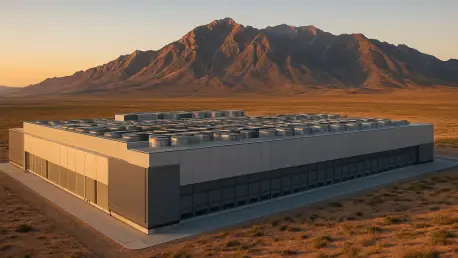

Many data centers operate under the public radar until their sheer scale and utility demands trigger environmental crises in regions already struggling with prolonged drought conditions. In Utah, this tension has reached a boiling point as the state attempts to balance its reputation as a burgeoning technology hub with the ecological necessity of preserving the Great Salt Lake. For years, the rapid construction of massive server farms was celebrated as a sign of economic progress, bringing high-tech jobs and infrastructure investment to the Silicon Slopes. However, the hidden cost of this growth became impossible to ignore as the water levels in the region’s most vital reservoirs dropped to historic lows. The lack of public data regarding the precise volume of water used for cooling these facilities created a vacuum of accountability, leaving residents and environmental advocates to wonder if the state’s digital future was being built on an unsustainable foundation of hidden resource consumption.
Part 1: The Rising Demand for Digital Infrastructure
The unprecedented explosion of generative artificial intelligence and high-performance cloud computing has transformed the physical landscape of the American West, necessitating the construction of “hyperscale” data centers that dwarf traditional server rooms. These facilities are the essential hardware of the 2026 digital economy, processing billions of transactions and training complex neural networks every second. Yet, the heat generated by these operations requires constant cooling, often achieved through evaporative systems that consume millions of gallons of water daily. In Utah’s arid climate, where every drop is contested, the arrival of these industrial giants has shifted the conversation from general economic development to a specific, urgent debate over water security. As these centers continue to expand in footprint and density, the conflict between industrial cooling needs and the basic water requirements of local communities has become a defining challenge for state planners and utility providers alike.
Historically, the data center industry operated with a degree of opacity that was unique among large-scale industrial water users. Unlike traditional manufacturing plants or agricultural operations, which often have clearly defined and publicly disclosed water permits, data centers frequently benefited from vague reporting requirements or proprietary confidentiality agreements. This information asymmetry made it difficult for local governments to conduct accurate long-term planning, as they were often forced to estimate consumption based on power usage or square footage rather than real-time meter data. This lack of transparency fostered a sense of public unease, particularly as massive new developments were approved in areas already experiencing severe water restrictions. Without clear, empirical evidence of how much water was being diverted and how much was actually being lost to evaporation, the debate remained emotional and speculative rather than data-driven and objective.
The transition to hyperscale infrastructure has concentrated these massive resource demands into specific geographic corridors, placing an immense strain on local municipal water systems that were never designed for such heavy industrial loads. In many cases, the rapid pace of development outstripped the ability of regulators to implement meaningful oversight, resulting in a “laissez-faire” environment where growth took precedence over conservation. As the digital economy becomes even more central to daily life in 2026, the physical requirements of that economy are finally being subjected to the same level of scrutiny as traditional heavy industries. The shift toward demanding more accountability is not merely a reaction to drought conditions but a recognition that the digital “cloud” has a very real, very thirsty physical presence on the ground that requires rigorous and transparent management to ensure regional survival.
Part 2: Transforming Research into Policy
The movement toward legislative reform in Utah gained momentum through the dedicated work of scientific fellows who sought to bridge the gap between technical complexity and practical lawmaking. By investigating the actual water footprints of the tech corridor, these researchers uncovered a systemic failure in how industrial consumption was tracked and reported to the public. Their investigation into 21 major data centers in the Salt Lake City area revealed a fragmented system where obtaining consistent consumption data was nearly impossible, even through formal government record requests. This research provided the first comprehensive look at the “net loss” of water—the portion that is evaporated and removed from the local hydrological cycle—versus the total volume diverted. By presenting these findings to state legislators and the public, the researchers transformed a niche environmental concern into a high-priority policy issue that demanded an immediate legislative response.
A critical component of this research involved the standardization of performance metrics, specifically the “Water Usage Effectiveness” or WUE ratio. This metric, which measures the amount of water used for cooling relative to the energy consumed by the servers, provides a clear benchmark for evaluating the efficiency of different cooling technologies. The fellows demonstrated that without a mandated reporting standard, companies had little incentive to adopt more expensive, water-efficient technologies such as closed-loop liquid cooling or air-cooled chillers. Their analysis showed that some facilities were far more efficient than others, yet because the data was not public, there was no competitive or regulatory pressure for the laggards to improve. This evidence was instrumental in convincing lawmakers that transparency was not just a tool for public information, but a necessary mechanism for driving industrial innovation and resource conservation across the entire technology sector.
The successful translation of this research into law required navigating a complex landscape of corporate interests and bureaucratic inertia. For months, the fellows collaborated with media outlets and advocacy groups to ensure that the data reached a wide audience, eventually finding a legislative champion who recognized the long-term risks of the status quo. The resulting policy shift moved the state away from speculative planning toward a model of empirical oversight, where the approval of future projects would be contingent on clear data and proven efficiency measures. This transition has redefined the relationship between the state and the technology industry, signaling that while Utah remains open for digital business, it will no longer provide a “rubber stamp” for resource-intensive projects that fail to meet high standards of transparency and environmental responsibility.
Part 3: Specifics of the New Transparency Law
The legislative framework adopted in Utah targets the largest and most resource-intensive facilities to ensure that oversight is focused where it matters most. Under the new regulations, any data center exceeding 10,000 square feet that consumes more than 75 acre-feet of water annually is required to provide detailed, recurring reports to the Utah Division of Water Rights. This threshold of 75 acre-feet—equivalent to approximately 24 million gallons—ensures that smaller, less impactful businesses are not overwhelmed by administrative burdens, while the massive “hyperscale” facilities that drive the majority of consumption are held to strict accountability standards. By codifying these specific triggers into law, the state has created a clear and predictable regulatory environment that allows companies to plan their infrastructure investments while giving the public confidence that large-scale industrial users are being monitored.
Impacted facilities must now disclose a comprehensive set of data points, including their specific water sources, total annual consumption, and descriptions of the conservation measures they have implemented. This level of detail allows state water managers to assess the cumulative impact of the data center industry on local aquifers and reservoirs with a level of precision that was previously impossible. Furthermore, the law mandates the reporting of efficiency metrics, which encourages operators to transition away from traditional evaporative cooling systems in favor of advanced technologies that recycle water or use ambient air. By making this information a matter of public record, the state is leveraging transparency to incentivize a “race to the top” in cooling efficiency, where companies are motivated to reduce their water footprint to avoid negative public perception and potential future regulatory penalties.
To address industry concerns regarding the disclosure of proprietary information, the law includes provisions to ensure that data is presented in a way that protects competitive advantages. This is typically achieved by aggregating specific metrics or focusing on totals that illustrate the environmental impact without revealing the internal configurations of a company’s server racks or proprietary cooling algorithms. This balanced approach has helped to neutralize opposition from the tech sector, as it allows companies to remain “good neighbors” without compromising the trade secrets that define their business operations. By providing a high-level view of the industry’s total impact, the state can now make informed decisions about water allocation and land use, ensuring that the growth of the digital economy does not outpace the available supply of its most precious natural resource.
Part 4: Shaping the Future of Industrial Oversight
The transparency-focused model established in Utah is increasingly viewed as a viable alternative to the more drastic measures of development bans or construction moratoriums seen in other arid regions. While some jurisdictions have attempted to halt the expansion of data centers entirely, such blanket prohibitions often lead to legal challenges and can stifle economic growth in the long term. Utah’s approach suggests that the tensions surrounding industrial water use are best resolved through the provision of clear, verifiable facts rather than political mandates. By shifting the burden of proof to the developers and requiring them to demonstrate their efficiency through data, state leaders have managed to de-escalate public tension and create a pathway for sustainable growth that respects the ecological limits of the region.
Many industry proponents have begun to embrace this shift toward transparency, recognizing that documenting their conservation efforts is the most effective way to combat negative public sentiment. In an era where corporate environmental, social, and governance (ESG) goals are under constant scrutiny, the ability to point to audited state records of water efficiency has become a valuable asset for data center operators. This trend has led to an increase in the adoption of “dry cooling” technologies and reclaimed water systems, as companies seek to position themselves as leaders in industrial sustainability. The narrative is shifting from one of resource exploitation to one of technological stewardship, where the most advanced data centers are those that can deliver massive computing power with the smallest possible environmental footprint.
The proactive stance taken by Utah has already begun to influence policy discussions in other states facing similar challenges, from the desert landscapes of Arizona to the cooling-intensive corridors of Northern Virginia. As the global demand for AI-driven infrastructure continues to surge in 2026, the “Utah Model” of mandated disclosure offers a scalable and effective framework for balancing the needs of the digital age with the imperatives of environmental preservation. This strategy proves that transparency is not merely a bureaucratic requirement, but a fundamental prerequisite for the responsible management of shared resources. By ensuring that the public and policymakers have access to accurate information, Utah has set a national precedent for how a modern society can integrate high-tech industrial growth with a deep commitment to long-term resource security.
Part 5: Actionable Insights for Resource Sustainability
The implementation of the new reporting standards provided a clear roadmap for how other states and municipalities managed their industrial water portfolios. The legislative success in Utah demonstrated that bridging the gap between technical research and policy development was the most effective way to address the complexities of modern utility management. Policymakers utilized the data gathered from the first cycle of reporting to refine their water allocation strategies, ensuring that new industrial permits were only granted to facilities that met or exceeded the established efficiency benchmarks. This data-driven approach moved the state beyond the era of reactionary governance, allowing for a more proactive and sustainable management of the Great Salt Lake’s drainage basin.
The focus on transparency also catalyzed a significant shift in how data center operators designed their infrastructure, with many prioritizing liquid-to-chip cooling and other water-free technologies earlier in the planning phase. The availability of standardized metrics like WUE allowed investors and local communities to objectively compare the environmental performance of different projects, rewarding those companies that invested in superior cooling designs. This transition illustrated that when resource costs were made visible through public reporting, the market naturally gravitated toward more sustainable solutions. The move away from “rubber stamp” approvals toward a model of rigorous, data-based oversight became a cornerstone of Utah’s long-term economic and environmental strategy, providing a clear path forward for other regions grappling with the intersection of technology and natural resource scarcity.