
The rhythmic thrum of the American economy is facing its most significant threat as the gap between political rhetoric and the physical reality of empty oil tanks continues to widen under the pressure of a global blockade. While the national gasoline average currently hovers around $4.26, the specter of $200-per-barrel crude oil looms like a dark cloud over the horizon of the summer driving season. This creates a high-stakes gamble for the current administration, which must determine if American consumers can sustain their travel plans or if a geopolitical “iceberg” hidden beneath the surface of current pricing will derail the recovery. The confidence inherent in the “energy dominance” narrative is being pushed to its absolute limit by the tangible physical supply crunch occurring in the most vital shipping lane on the planet.
This precarious situation is not merely a localized issue but a systemic challenge to the global energy order. The effective closure of the Strait of Hormuz has forced a recalculation of every economic forecast, shifting the focus from paper trades to the harsh reality of physical barrels. As storage tanks drain, the disconnect between the optimistic daily briefings from the White House and the frantic activity in industrial shipping centers becomes more pronounced. Every cent added to the price at the pump acts as a reminder that the world’s energy security is currently tethered to a narrow strip of water currently caught in a geopolitical vice.
The Precarious Balance: Between Political Optimism and a Dry Pump
The disconnect between current consumer pricing and the potential for a catastrophic market failure represents the central tension in the current administration’s energy policy. While the public enjoys a degree of stability at the $4.26 mark, this price is increasingly viewed by experts as a fragile ceiling that could shatter if crude oil moves toward the $200 threshold. The summer travel season, traditionally a period of peak demand, has turned into a high-stakes experiment in consumer psychology and economic endurance. The question remains whether the average American household can absorb the shock of an impending price surge or if the sheer weight of energy costs will trigger a broader cooling of the economy.
Political messaging continues to lean heavily on the concept of energy dominance, a narrative that relies on the vastness of domestic resources to project a sense of security. However, this narrative is being tested by the reality of a physical supply crunch that domestic production alone cannot immediately resolve. Shipping lanes are the arteries of the global economy, and any blockage inevitably creates a backup that ripples through every sector, from agriculture to logistics. The administration’s gamble lies in the hope that domestic stocks and alternative routes can provide a bridge until the crisis in the Middle East is resolved, but the margin for error is becoming razor-thin.
From Military Strikes to Market Stagnation: The Genesis of the Energy Blockade
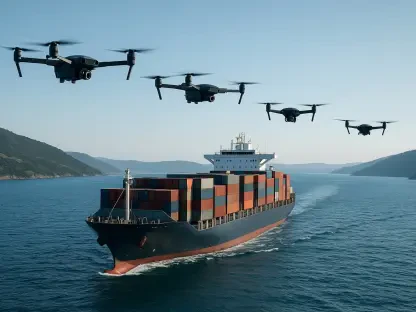
The current energy blockade traces its roots back to the immediate aftermath of coordinated military operations conducted by the United States and Israeli forces. These strikes, designed to degrade hostile capabilities, triggered a retaliatory closure of the Strait of Hormuz, effectively cutting off one of the most vital transit points for global petroleum. This disruption is now considered the most significant interruption to crude oil flows in modern history, eclipsing previous crises in both scale and potential duration. The physical blockage of the strait has created a bottleneck that traps millions of barrels of oil away from the markets that need them most.
Within the halls of government, the White House National Energy Dominance Council has been tasked with maintaining market order, yet it faces constant friction with the operational realities of the oil industry. While policymakers focus on long-term strategic goals, energy companies must deal with the immediate logistics of rerouting tankers and managing depleted inventories. This friction is not just bureaucratic; it is a fundamental disagreement on the timeline of the crisis. Industry leaders argue that the “genesis” of this stagnation has created a permanent shift in market dynamics that cannot be fixed by simple diplomatic statements or short-term military posture.
Analyzing the Deficit: The Stunning Rate of Global Inventory Depletion
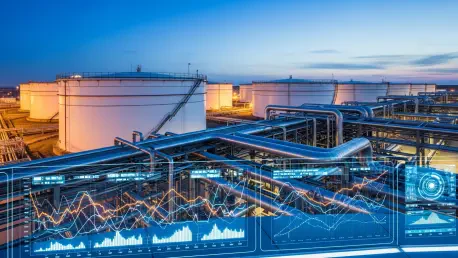
Recent data provided by the Energy Information Administration paints a sobering picture of the current supply landscape, revealing an eight-week consecutive decline in U.S. crude stocks. Private inventories have plummeted by 8 million barrels in a single week, leaving national reserves between 3 and 5 percent below their five-year averages. This is not a minor fluctuation; it is a systematic draining of the nation’s energy insurance policy. For refined products like diesel and jet fuel, the numbers are equally concerning, suggesting that the industrial and aviation sectors may soon face the same pressures currently felt by motorists.
On the global stage, the situation is even more dire, with petroleum inventories falling at a rate of 5.8 million barrels every day since the conflict intensified. This unprecedented drawdown has already removed over 52 million barrels from total commercial stocks. Although the world technically holds roughly 7.5 billion barrels in storage, the “commitment problem” renders much of this supply unavailable. Most of these barrels are already under contract or are held as essential operational minimums, meaning they cannot be released to alleviate new shortages without compromising the baseline stability of the companies that own them.
Industrial Alarms: Why Energy Executives Are Bracing for a Price Shock
Executive leadership at companies such as Exxon Mobil and Chevron has begun to voice public concerns regarding the evaporation of the global inventory cushion. Neil Chapman, a senior figure at Exxon, has explicitly warned that the current market stability is an illusion maintained by the rapid depletion of storage tanks. He projected that Dated Brent could surge toward $160 per barrel regardless of whether a diplomatic breakthrough occurs in the coming weeks. The industry view is that the market is essentially living on borrowed time, using the last of its readily available reserves to mask a massive structural deficit in supply.
The “iceberg” analogy has become common among market analysts to describe the current state of energy storage. While the visible part of the market—the daily price at the pump—seems manageable, the vast majority of the problem lies beneath the surface in the form of nearly empty storage facilities. When these tanks reach their “operational minimums,” they can no longer provide the necessary flow to keep refineries running efficiently. At that point, the price shock will likely be sudden and severe, as the market realizes that there is no more physical buffer left to absorb the impact of the ongoing blockade in the Middle East.
The Resilience Framework: Leveraging Reserves and Navigating Logistics Constraints
The administration has responded to the crisis by deploying a resilience framework that heavily relies on the Strategic Petroleum Reserve and international cooperation. A coordinated effort involving the International Energy Agency has resulted in a 400-million-barrel release designed to buy time for a diplomatic or military resolution. This massive influx of oil is intended to act as a temporary “runway,” allowing the global economy to continue functioning while negotiators work to reopen the shipping lanes. However, the reliance on the SPR is a finite strategy, as the reserve itself is approaching historical lows that may limit its effectiveness in the future.
Beyond the use of reserves, the government has moved to streamline domestic logistics through tools like the Jones Act waiver. By allowing foreign-flagged vessels to move petroleum between American ports, the administration seeks to prevent localized shortages, particularly on the West Coast where refining capacity is most strained. Additionally, the pivot toward alternative supply routes, including increased imports from Venezuela and the utilization of bypass pipelines, represents an effort to diversify the sources of energy coming into the country. These measures are designed to create a logistical bypass that reduces the nation’s vulnerability to the specific chokepoints that have caused the current global stagnation.
The mitigation of the energy crisis required a significant departure from traditional reliance on Middle Eastern transit and necessitated a rapid investment in domestic refining flexibility. It was determined that the strategic release of reserves provided only a brief window of opportunity, which was successfully used to establish more robust trade agreements with South American partners. The resolution of the shortage became possible only after the administration formalized new logistics protocols that allowed for the bypass of traditional maritime chokepoints. This shift ultimately demonstrated that future energy security depended on the structural diversity of supply chains rather than the mere volume of stored petroleum. The implementation of modular refinery technology and the expansion of North American pipeline corridors acted as the final safeguards that stabilized the market and protected the consumer from future geopolitical volatility.