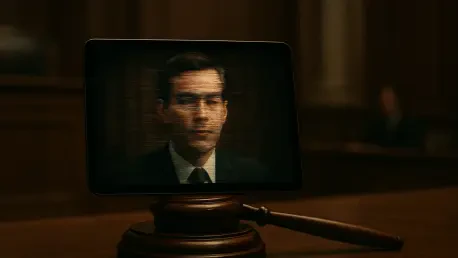

A hyper-realistic video of a presidential candidate admitting to a scandalous crime they never committed can circulate to millions of people before a single fact-checker has the opportunity to blink. This is no longer a scenario confined to science fiction; it is the lived reality of a modern information ecosystem where synthetic media blurs the line between fabrication and truth. As the federal judiciary begins to weigh in on the constitutionality of state-level bans, the nation finds itself at a crossroads. The central question remains whether the government possesses the authority to prune the digital garden of lies, or if the First Amendment protects the right to speak falsely in the pursuit of political theater.
The Digital Mirage: The Courtroom Reality
The ability to manipulate reality with a few keystrokes has moved from high-budget film studios to the smartphones of every citizen, creating a world where seeing is no longer believing. While digital editing once required a team of specialists, modern generative models allow users to synthesize voices and facial expressions with startling accuracy. This democratization of deception has forced a confrontation within the American legal system. Courts are now tasked with determining if an AI-generated image is a form of protected speech or a dangerous instrument of fraud that lacks constitutional standing.
Recent federal rulings suggest that the hunt for digital authenticity may be on a direct collision course with the most sacred protections of the American legal system. Judges have begun to express concern that in the rush to solve the problem of misinformation, the government may inadvertently seize the power to define what is true. This tension is particularly visible in cases where political ads use synthetic media to exaggerate a candidate’s flaws. The legal challenge lies in whether a digital lie should be treated differently than a traditional spoken one under the law.
The High Stakes of Election Integrity in the Age of AI
The rise of synthetic media poses a unique threat to the democratic process, capable of placing false statements in the mouths of candidates or fabricating events that never occurred. In an environment where trust in institutions is already fragile, the introduction of convincing deepfakes can shatter the shared reality necessary for a functioning democracy. Legislators are rushing to codify protections against this misinformation to preserve the sanctity of the ballot box and prevent the mass manipulation of the electorate. From 2026 to 2028, many states are expected to implement more aggressive disclosure requirements to mitigate these risks.
However, this urgency has created a legal tug-of-war between the need for a factual public square and the longstanding American tradition of protecting even the most controversial forms of expression from government interference. The fear is that a government empowered to ban “fake” speech will eventually use that power to suppress “unfavorable” speech. This struggle highlights the difficulty of creating a legislative fix for a technological problem without eroding the foundational principles of free inquiry. The debate is not just about the technology itself, but about who gets to decide what is fit for public consumption.
Navigating the Legal Threshold of Content-Based Restrictions
The judiciary views any government attempt to regulate the “content” of speech with extreme skepticism under the doctrine of strict scrutiny. For a law to survive this level of review, the government must prove that the regulation is necessary to serve a compelling interest and is narrowly tailored to achieve that end. Most deepfake bans struggle with this standard because they often cast a net so wide that they catch legitimate expression. When a law is drafted poorly, it risks creating an “overbreadth” problem, where the threat of prosecution silences satirists, comedians, and political commentators who use parody to make a point.
Distinguishing between protected parody and “malicious” deepfakes remains a significant hurdle for legislators. While a satirical video of a politician dancing may be clearly recognizable as a joke to some, a law that prohibits “misleading” synthetic media could technically apply to such creative works. Furthermore, the technical environment of the internet creates a secondary layer of digital control. Frameworks like the CCPA and other privacy regulations govern how data is tracked and processed, but they do not address the core issue of whether the content of the speech itself is legal. This creates a paradox where technical tracking is highly regulated, while the truth of the message remains constitutionally elusive.
Judicial Perspectives on the “Greater Risk to Liberty”
In a landmark federal ruling, a judge recently struck down a state law that sought to ban synthetic media in political advertisements. The court argued that a broad ban on deepfakes is more dangerous than the misinformation it seeks to curb. The ruling emphasized that the First Amendment does not contain a “misinformation exception” that allows the state to act as a central arbiter of truth. By striking down the law, the court signaled that the government cannot simply outlaw speech because it is factually incorrect or created using artificial intelligence.
Legal experts frequently cite the “marketplace of ideas” argument, suggesting that the remedy for false speech is more speech, rather than government-mandated censorship. From this perspective, it is the responsibility of the public, the press, and opposing candidates to debunk deepfakes rather than the role of the state to prevent them from being seen. The expert consensus suggests that while deepfakes are a legitimate threat to social cohesion, the constitutional cost of a government-enforced truth is far higher than the cost of digital deception.
Frameworks for Narrowly Tailored AI Governance
Legislators recognized that the path forward required a shift toward identifying specific harms like fraud or defamation rather than banning the technology outright. They moved toward a model where the focus was placed on the intent of the creator and the demonstrable damage caused by the media. This transition allowed for the protection of artistic liberties while providing a legal avenue to prosecute those who used AI to commit actual crimes. Stakeholders discovered that focusing on the context of the speech, rather than its synthetic nature, provided a more stable legal foundation.
The implementation of mandatory watermarking and clear labeling requirements emerged as a viable alternative to total bans. These “clear and conspicuous” disclosures ensured that the audience was informed without the government having to suppress the content itself. By prioritizing transparency, policy makers successfully drafted language that survived strict scrutiny by focusing on the right of the viewer to know the source of the media. This approach preserved the creative freedom of satirists and editorialists while establishing a new standard for digital accountability that respected the First Amendment.