
Recent legislative shifts in Texas have fundamentally transformed how digital service providers verify the age of their users, sparking a heated debate over the delicate balance between child safety and individual privacy rights. As regulators enforce strict mandates requiring platforms to confirm a visitor’s maturity before granting access to specific content, the technical infrastructure supporting the internet has faced unprecedented pressure. The core of the controversy lies in the methodology employed by these companies to satisfy legal requirements without compromising the sensitive personal information of millions of residents. While the primary objective remains the shielding of minors from harmful material, the implementation of these protocols often necessitates the collection of biometric data or government-issued identification. This shift has forced technology firms and civil liberties groups to confront the reality of a fragmented digital landscape where geography dictates the level of anonymity one can expect while browsing the web today.
The Evolution of Identity Validation
Biometric Estimation and Document Verification
Traditional methods of age verification have moved beyond simple date-of-birth entries, which were notoriously easy to circumvent by dishonest users seeking restricted access. In the current landscape, many platforms integrated with third-party verification services to validate government-issued credentials in real-time. This process typically involves a user uploading a photograph of a driver’s license or passport, followed by a live facial scan to ensure the person presenting the ID is the same individual shown in the document. The technological sophistication required for these checks has created a lucrative market for identity verification startups, but it has also introduced significant friction into the user experience. For many Texans, the requirement to share sensitive biometric identifiers just to access legal content feels like an overreach that prioritizes regulatory compliance over the fundamental right to digital privacy in a world where personal info is a currency.
Vulnerabilities in Centralized Data Systems
One of the most pressing concerns regarding the Texas mandates involves the potential for centralized databases to become primary targets for sophisticated cybercriminals and state-sponsored hackers. When thousands of websites require users to submit sensitive identification documents, the sheer volume of data being processed creates a massive surface area for potential exploitation. Even if a platform uses a third-party provider to handle the verification, the trust is merely shifted rather than eliminated, as these providers themselves hold the keys to a treasure trove of personal information. A single breach at a major verification hub could lead to identity theft on a massive scale, affecting not just the ability of users to browse the internet, but their financial security and personal safety as well. The history of large-scale data leaks suggests that no repository is entirely impenetrable in this digital age, making the mandatory collection of such data a very high-stakes gamble.
Navigating Rights and Technological Solutions
Impact on Online Anonymity and Speech
The erosion of online anonymity is a direct consequence of these verification requirements, as the ability to browse the web without revealing one’s true identity becomes increasingly difficult. For decades, the internet served as a space where people could explore diverse ideas and communicate without the constraints of their physical persona, a feature that was vital for many communities. When users are forced to link their legal identity to their digital footprint, the psychological barrier to engaging with sensitive or controversial topics rises significantly. This change does not just affect the consumption of adult content; it influences how people interact with political forums, support groups, and whistleblowing platforms that may utilize similar verification infrastructures. This results in an environment where every click and search query could potentially be traced back to a verified legal identity, altering the nature of digital discourse and expectations.
Innovations in Privacy-Preserving Compliance
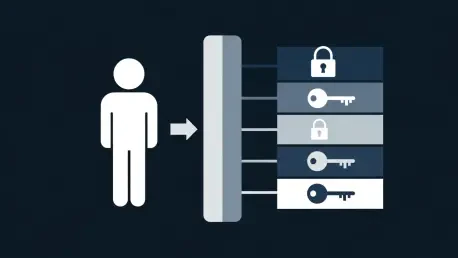
In response to these privacy threats, some technological innovators have begun advocating for zero-knowledge proofs and decentralized identity solutions to satisfy legal requirements without exposing personal data. A zero-knowledge proof allows a user to prove that they are over a certain age without revealing their actual birth date, name, or any other identifying information to the requesting website. This is achieved through cryptographic protocols where a trusted issuer vouches for the user’s age, and the user presents a mathematical proof to the website. This approach drastically minimizes the amount of data shared and eliminates the need for websites to store sensitive identification documents on their own servers. By shifting the focus from data collection to data verification, these technologies offer a potential path forward that aligns with the principles of data minimization and user autonomy while still complying with state laws.
Strategic Recommendations for Digital Autonomy
The implementation of Texas’s age verification laws necessitated a fundamental shift in how residents and digital platforms interacted with the concept of online identity. As these regulations matured from 2026 to 2028, it became clear that the initial rush toward centralized identity harvesting posed substantial risks that outweighed the purported benefits of child safety. Privacy advocates and security experts successfully argued that the reliance on government IDs and facial scans created a dangerous precedent for digital surveillance. Consequently, the industry pivoted toward more robust, privacy-preserving technologies such as zero-knowledge proofs and local device-based authentication. Organizations that prioritized these decentralized solutions were better positioned to maintain user trust while remaining compliant with the evolving legal landscape. Individuals were encouraged to use privacy-focused browsers and hardware-backed credentials to protect their digital footprints from unnecessary exposure.