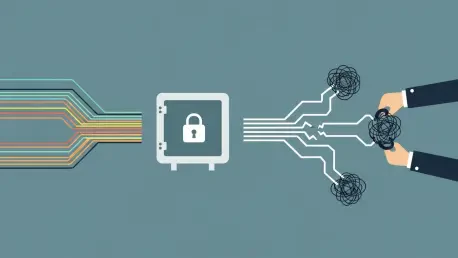

The personal information you entrust to the federal government exists in a legal landscape designed for a world of paper records and filing cabinets, not one of interconnected databases and cloud servers. A federal law enacted half a century ago, the Privacy Act of 1974, stands as the primary guardian of this sensitive data. However, its analog-era framework is increasingly seen as inadequate for the complexities of the digital age. The vast expansion of government data collection, storage, and sharing has exposed critical vulnerabilities in this aging statute, prompting a significant legislative push to bring federal privacy protections into the 21st century.
This call for reform is not merely academic; it is a direct response to modern governmental practices that have stretched the 1974 law to its breaking point. At the heart of this movement is a comprehensive legislative proposal, detailed in a 68-page staff report from Representative Lori Trahan, which seeks to overhaul the outdated law. The blueprint aims to do more than just patch holes; it charts a course toward restoring public trust by creating clear, enforceable rules for how the government handles the immense volumes of data it collects on its citizens, marking a pivotal moment in the ongoing debate over digital privacy and government accountability.
From the Filing Cabinet to the Cloud: Why a 1974 Law Is Failing Our Digital Reality
The Privacy Act of 1974 was born from a post-Watergate concern about government overreach, designed to give individuals more control over the personal information held by federal agencies. It established principles of data minimization, purpose limitation, and individual access rights that were revolutionary for their time. The law was written, however, with physical records in mind—information stored neatly in manila folders and locked away. It could not have anticipated the speed and scale of digital data processing, the rise of cloud computing, or the intricate web of inter-agency data sharing that defines modern governance.
As a result, the law’s foundational concepts have become strained and its enforcement mechanisms weakened. Agencies now manage petabytes of data, from tax filings and health records to Social Security information, all of which can be accessed and cross-referenced with unprecedented ease. This digital reality has created new risks that the 1974 Act is ill-equipped to handle, highlighting an urgent need for reform. The proposed overhaul is not simply an update but a fundamental reimagining of federal privacy principles, spurred by the recognition that a law from the analog era cannot effectively protect citizens in a digital one.
The Anatomy of a Modern Privacy Crisis
The Ticking Time Bomb: How One Agency’s Actions Ignited a Call for Change
Recent controversies surrounding a federal entity, the Department of Government Efficiency (DOGE), have served as a stark illustration of the current law’s shortcomings. A series of high-profile lawsuits and whistleblower claims allege that DOGE engaged in a pattern of improper data handling, pushing the weaknesses of the Privacy Act into the national spotlight. These allegations have become the catalyst for the current legislative reform effort, transforming abstract legal debates into a tangible crisis of public trust.
Legal challenges have been mounted involving data from several key agencies, including the Treasury Department, the Consumer Financial Protection Bureau, and the Office of Personnel Management. The lawsuits claim that DOGE improperly accessed sensitive personal information, violating the very statutes designed to protect it. These court battles are amplified by whistleblower reports asserting that DOGE not only exfiltrated data from the National Labor Relations Board but also stored sensitive Social Security data on a vulnerable cloud server. The cumulative effect of these incidents has been a surge of alarm among both the public and members of Congress, creating a powerful momentum for change.
Dismantling the Loopholes: Inside the Blueprint to Reinvent Federal Privacy
In response to this growing crisis, Representative Trahan’s staff report lays out a detailed blueprint for reform, centered on ten core recommendations. The proposal’s primary objective is to close the legal loopholes that have allowed for expansive and sometimes unchecked data sharing among federal agencies. It represents a direct attempt to modernize the government’s privacy obligations by creating a clear, enforceable standard that reflects contemporary technology and public expectations.
A cornerstone of this proposed reinvention is the elimination of two broad legal exceptions that have long been criticized by privacy advocates. The “routine use” exception, which permits agencies to share data for purposes compatible with the reason it was collected, is targeted for removal due to its often-vague interpretation. Similarly, the proposal seeks to eliminate the “need-to-know” exception, a key defense the government has used in the ongoing DOGE litigation. By dismantling these exceptions, the legislative framework aims to ensure that data sharing is governed by explicit rules and consent, rather than agency discretion.
Forging a Digital Shield: Expanding Protections for the 21st Century
The proposed overhaul extends its reach beyond traditional government-collected data by confronting the modern data economy. It investigates the increasingly common practice of government agencies purchasing vast quantities of commercially available information from data brokers. This unregulated channel allows law enforcement and intelligence communities to obtain detailed profiles of individuals without a warrant or direct collection. The blueprint calls for new regulations to govern this practice, challenging the assumption that the government’s view of citizens should be limited only to what they directly provide.
Furthermore, the reform effort pushes to expand privacy rights beyond their current scope. It proposes extending the Privacy Act’s protections to individuals who are not U.S. citizens or lawful permanent residents, a significant shift with major implications for immigration policy and the handling of data related to non-citizens. This move recognizes the global nature of data and aims to establish a more universal standard for how the U.S. government respects personal information, regardless of an individual’s citizenship status.
The Double-Edged Sword: Navigating the Tension Between Security and Service
Any effort to strengthen data protection inevitably confronts the inherent tension between robust privacy and government efficiency. Stricter rules can create hurdles for agencies seeking to deliver services, combat fraud, or enhance national security. The legislative proposal directly addresses this conflict, acknowledging that while the current law is too permissive, an overly restrictive framework could hinder beneficial and low-risk data sharing that improves the lives of citizens.
Arguments from civic technology advocates and good-government groups highlight the potential benefits of more streamlined data exchange. They contend that better sharing could simplify access to public benefits, reduce administrative burdens on individuals, and improve the government’s ability to detect and prevent fraud. The proposed framework attempts to strike a difficult but necessary balance, creating stringent safeguards and clear rules that protect privacy while simultaneously allowing for effective governance and the efficient delivery of essential public services.
The Path Forward: From Legislative Proposal to Enforceable Rights
The legislative blueprint recaps several critical proposals aimed at transforming federal privacy law. At its core, the plan advocates for stronger limits on how government agencies collect, use, and share personal data. It also calls for modernizing enforcement by increasing financial penalties for violations and expanding the civil remedies available to individuals whose rights have been infringed. Alongside these measures, the framework seeks to bolster oversight, potentially by creating a new legislative branch entity or significantly empowering the Government Accountability Office to monitor agency compliance.
For this new era of data accountability to succeed, federal agencies must begin preparing for significant operational shifts. This involves not only updating internal policies and technological systems but also fostering a culture of privacy-by-design. Agencies would need to invest in training and resources for their chief privacy officers, ensuring these officials have the authority and support to implement and enforce the new, stricter standards across their organizations. The transition would require a proactive approach to re-evaluating all existing data-sharing agreements and collection practices.
A pivotal element of the proposed reform is its potential to empower citizens to defend their privacy in court by legally recognizing non-monetary harms. Historically, plaintiffs have struggled to demonstrate sufficient legal standing in privacy lawsuits without proving direct financial loss. By codifying that harms like emotional distress or reputational damage are legally actionable, the new framework could give individuals a more effective tool to hold the government accountable for privacy breaches, fundamentally altering the balance of power between the citizen and the state.
Redefining the Digital Citizen: The Lasting Impact of Privacy Reform
The extensive effort to reform the Privacy Act reinforced the central conclusion that laws designed for an analog world are fundamentally insufficient for a digital government. The rapid evolution of technology had outpaced the half-century-old statute, leaving critical gaps that threatened individual liberties and eroded public confidence. This legislative push represented a long-overdue acknowledgment that modern data practices required a modern legal framework.
Ultimately, this initiative considered the future of government transparency and the very nature of public trust in the information age. By attempting to establish clearer rules, stronger enforcement, and greater accountability, the reform aimed to redefine the relationship between the citizen and the state’s vast data apparatus. The proposed changes concluded with a call to action for a privacy framework that not only addressed the failures of the past but was also resilient enough to protect Americans for the next 50 years.