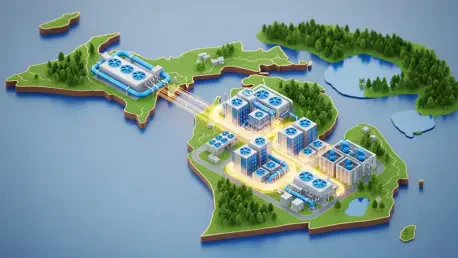

The steps of the Michigan state capitol became the epicenter of a high-stakes political standoff in late June 2026 as a bipartisan coalition of lawmakers and residents gathered to voice their growing opposition to the unchecked expansion of massive data centers across the state. This intense demonstration marked a pivotal moment in Michigan’s technological trajectory, highlighting a widening gap between state-level economic ambitions and the lived realities of local communities tasked with hosting these industrial giants. For many, the sight of hundreds of citizens standing alongside legislators signaled that the honeymoon period for big tech in the Great Lakes State had officially ended, replaced by a cautious and often adversarial scrutiny of the industry’s long-term footprints. This friction is not merely a local zoning dispute but a fundamental disagreement over the state’s vision for progress, pitting the promise of high-tech infrastructure against the preservation of rural landscapes and resource security. As project proposals continue to flood local planning commissions, the sense of urgency among activists has only intensified, leading to calls for a radical reassessment of how these facilities are integrated into the state’s social and physical fabric.
The current conflict began in earnest during the preceding year, 2025, when Michigan officials established significant tax breaks for data center equipment to position the state as a premier tech destination in the Midwest. While these incentives were initially framed as a necessary tool to attract modern investment, they quickly triggered significant pushback regarding the rapid industrialization of rural land and a perceived lack of transparency in the development process. Residents and local leaders now argue that the rush to modernize has outpaced the development of necessary regulatory safeguards, leading to a “not-in-my-backyard” sentiment that has unified various political factions. This atmosphere of distrust has been fueled by the sheer scale of the proposed projects, which often dwarf existing local infrastructure and raise difficult questions about the long-term sustainability of the state’s power and water resources. Consequently, the debate has shifted from how to attract these facilities to how the state can effectively manage their presence without sacrificing the character and stability of its most vulnerable communities.
Legislative Pathways to Infrastructure Reform
Pursuing a Statewide Moratorium: The Case for a Regulatory Pause
The most prominent legislative response to this expansion is a set of bills, known as SB 1018–1020 and HB 5594–5596, which propose a statewide moratorium on all new data center development until the state can adequately assess the situation. Led by State Senator Jim Runestad and State Representative Jennifer Wortz, this legislative push aims to halt all construction and new project approvals through April 2027. Proponents of this pause argue that Michigan desperately needs a “time-out” to study the long-term effects of these facilities on the state’s infrastructure, environment, and tax base. Without such a pause, they fear that the state will be locked into long-term commitments that benefit multinational corporations at the expense of local citizens. This proposed moratorium is seen as a vital protective measure, allowing for a comprehensive statewide review that should have occurred before the current development surge began, ensuring that any future growth is both sustainable and beneficial for all stakeholders.
Representative Wortz has been particularly vocal about the threat these facilities pose to the state’s agricultural heritage, noting that some of Michigan’s most fertile farm ground is being sacrificed for industrial use. She contends that the current system uses taxpayer-funded subsidies to benefit highly profitable corporations while simultaneously diminishing the capacity for local food production and altering the rural landscape forever. This argument has resonated deeply with rural constituents who feel their way of life is being traded for corporate growth that offers little in the way of tangible local benefits once the initial construction phase is finished. The fear is that once these agricultural lands are paved over for server farms, they can never be restored to their original productive state, representing a permanent loss of natural capital. By advocating for the moratorium, Wortz and her colleagues are championing a vision of Michigan where technology and tradition can coexist, rather than one where the former inevitably consumes the latter.
Rescinding Incentives: Redefining the Fiscal Relationship with Big Tech
Beyond a simple pause in construction, some lawmakers are seeking to dismantle the financial framework that attracted these developers to Michigan in the first place. A group of representatives has introduced legislation, specifically HB 5396–5398, designed to repeal the 2025 tax exemptions for data center equipment. They argue that tech giants possess more than enough capital to fund their own expansions and should not be relying on public subsidies that could otherwise support essential public services like schools, roads, and emergency response teams. The fiscal logic behind this repeal is based on the idea that public funds should be prioritized for the common good rather than corporate incentives that provide questionable returns on investment. Critics of the current tax policy point out that while data centers require massive initial investments, they often create very few long-term jobs relative to their footprint, making the economic trade-off less favorable than it initially appeared.
Simultaneously, State Senator Ruth Johnson is working on legislation that would treat data centers as heavy industrial sites rather than mere technology hubs or office spaces. By holding these facilities to the same environmental and physical footprint standards as automotive plants, the state would effectively strip away any “tech-sector” exceptionalism that has shielded them from rigorous oversight. This move aims to ensure that the massive resource consumption and physical presence of data centers are regulated with the same intensity as Michigan’s traditional manufacturing sectors. Treating these sites as heavy industry would require developers to undergo more extensive environmental impact studies and adhere to stricter zoning requirements, reflecting the actual impact they have on the surrounding environment. This legislative shift represents a broader effort to modernize Michigan’s regulatory code to match the realities of the twenty-first-century industrial landscape, ensuring that all large-scale developments are held to the same high standards of accountability.
Competing Ideologies and Economic Realities
Balancing Growth: Implementing Strict Regulatory Oversight
While there is a bipartisan consensus that the current situation is unsustainable, Senate Democrats have introduced a different strategy focused on rigorous regulation rather than a total development halt. Their comprehensive eight-bill package emphasizes mitigation and accountability, including strict caps on water usage for facility cooling and a requirement that developers cover the full cost of the energy infrastructure needed to serve their sites. This approach is designed to ensure that the massive burden of powering and cooling these sites does not fall on residential ratepayers or deplete local water tables. By forcing companies to internalize these costs, the state can ensure that only the most efficient and responsible projects move forward. This regulatory framework seeks to balance the desire for technological growth with the non-negotiable need to protect public resources and maintain the stability of Michigan’s utility networks for all consumers.
A critical component of the Democratic proposal involves increasing transparency by banning local officials from signing nondisclosure agreements (NDAs) with tech developers. Many residents have expressed deep frustration over the “cloak and dagger” nature of these projects, where massive industrial developments are often planned in secret before the public is ever formally notified. By outlawing these agreements, lawmakers hope to restore trust in local government and ensure that communities are fully informed about projects that will fundamentally change the character of their neighborhoods. Transparency is viewed as the essential antidote to the suspicion that has clouded data center expansion, allowing for a more honest public dialogue about the trade-offs involved in large-scale infrastructure projects. This focus on open communication and community consent is intended to replace the current culture of secrecy with a more democratic and participatory planning process that respects the rights of local residents.
Learning from Regional History: The Economic Risks of Unchecked Subsidies
Opponents of Michigan’s current data center policy often point to neighboring states like Ohio and Illinois as cautionary tales of what happens when tax incentives are handled poorly. In Ohio, the fiscal impact of providing aggressive tax breaks to data center developers far exceeded early projections, eventually costing the state many times more than the initial estimates provided to the public. These escalating costs have forced neighboring governments to reconsider their subsidy programs, providing Michigan lawmakers with a clear warning about the potential for long-term revenue loss and budgetary instability. The regional competition for data center investment has often led to a “race to the bottom” where states offer increasingly generous incentives that fail to provide a meaningful net benefit to the taxpayer. By examining these outside examples, Michigan legislators are attempting to avoid the same fiscal traps that have plagued other Midwestern states.
Closer to home, the nonpartisan Senate Fiscal Agency has estimated that Michigan’s current tax breaks could result in a loss of at least $52.5 million, with some projections reaching as high as $90 million in the coming years. These lost revenues are diverted from the state’s general fund, which serves as the primary source of funding for vital public safety initiatives and educational programs. Environmental advocates like the Sierra Club argue that this represents a transfer of wealth from the public sector to some of the world’s most profitable companies, which do not need public assistance to succeed. The economic debate also touches on the quality of the investment, as data centers are notorious for their low job-density relative to their physical size. While the construction phase provides a temporary boost to the local economy, the permanent workforce required to maintain these facilities is often quite small, leading many to question why the state is providing such significant financial support for an industry with limited employment benefits.
Environmental Stability and Long-Term Resource Management
Reconciling Energy Demands: Closing the Clean Energy Gap
The environmental impact of data centers is a major sticking point for many Michigan residents, particularly regarding the immense amounts of water and electricity required to keep these facilities operational. Residents at the June rally shared deep concerns about the stability of the power grid and the potential for the depletion of local water tables near large-scale server farms. As these facilities consume millions of gallons of water for cooling purposes, there is a legitimate fear that neighboring residential wells and agricultural operations could be left dry during periods of drought or increased demand. This physical impact on the environment is one of the primary drivers of the push for a moratorium, as communities demand proof that their essential resources will not be compromised to support the digital infrastructure of multinational corporations. The competition for water and power is becoming a central theme in the broader discussion about how Michigan manages its natural and utility assets.
The push for data center expansion also creates a direct conflict with Michigan’s ambitious goal to reach 100% clean energy by 2040. While current laws require facilities receiving tax breaks to source a portion of their power from renewable sources, critics argue that these rules contain loopholes that undermine the state’s climate goals. Specifically, there is a growing concern that a “fossil fuel off-ramp” allows for the continued use of coal and gas plants if energy demand from data centers surges too quickly for renewable sources to keep pace. This could effectively lock the state into higher carbon emissions for decades, undermining its environmental commitments simply to serve the energy-intensive needs of the tech industry. Ensuring that data centers actually contribute to the state’s green energy transition, rather than hindering it, remains a primary objective for those seeking to tighten regulations on the industry.
Protecting Local Autonomy: The Battle for Community Transparency
The debate over the moratorium highlights a fundamental disagreement regarding the balance of power between local and state control. Democratic leadership has suggested that local governments should retain the authority to implement their own pauses or regulations, whereas Senator Runestad and his supporters argue that a statewide mandate is necessary to protect all residents equally. This legislative friction suggests that while there is widespread agreement that change is needed, the method of achieving that change remains a point of significant political contention. Proponents of a statewide moratorium believe that a fragmented approach would allow developers to simply move to the municipality with the weakest regulations, creating a “checkerboard” of industrialization that harms the state as a whole. They argue that only a unified, state-level response can provide the necessary protection for Michigan’s diverse communities and natural resources.
To address these concerns, some proposed measures focus on empowering local planning boards with better tools and data to evaluate data center proposals. This includes providing state-funded experts to help small towns navigate the complex technical and environmental details of these projects, which often overwhelm local volunteer boards. By bridging the information gap, the state can help ensure that local decisions are based on a full understanding of the long-term consequences rather than just the immediate promise of tax revenue. Ultimately, the goal is to create a planning environment where communities are no longer reacting to developer-driven agendas but are instead proactive in shaping how technology fits into their long-term vision for their homes. This shift toward community-driven development is seen as essential for reducing the tension between the tech sector and the public, fostering a more sustainable and less adversarial relationship between the two.
Moving forward, the resolution of this conflict required a fundamental shift in how Michigan balanced industrial ambition with community preservation. State leaders eventually moved toward a hybrid model that prioritized local zoning authority while establishing strict statewide environmental baselines for resource consumption. They successfully integrated data center growth into a broader 2026 infrastructure plan that mandated full transparency and the elimination of private nondisclosure agreements. This legislative evolution ensured that the state did not sacrifice its agricultural heritage or natural resources for short-term economic gains. By prioritizing the stability of the power grid and the protection of water tables, Michigan established a regulatory precedent that other states began to follow. The process emphasized that technological advancement must be accompanied by rigorous oversight and a commitment to the long-term well-being of the citizens who lived alongside these massive facilities. This proactive approach turned a period of intense political friction into a collaborative effort to define the sustainable future of the Great Lakes State.