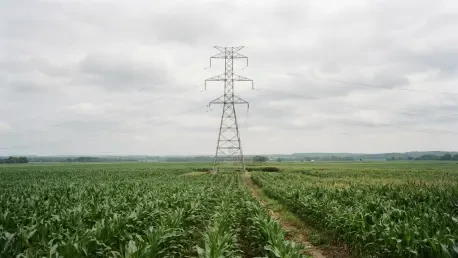

The Minnesota Public Utilities Commission is currently evaluating whether the benefits of a cross-state transmission line outweigh the significant impacts on local land and people. This massive infrastructure undertaking, known as the PowerOn Midwest project, proposes a 765-kilovolt transmission line that would stretch from the Brookings Substation in South Dakota to the Hampton Substation in Dakota County, Minnesota. During a recent hearing held in Sherburn, the sheer scale of this project became a focal point for hundreds of residents who fear the industrialization of their agricultural landscapes. The proposed route traverses a vast portion of Southern Minnesota, passing through key hubs like Lakefield Junction in Jackson County and eventually cutting through Martin and Mower counties. As developers like Great River Energy and Xcel Energy push for approval, they face a wall of unified public resistance from community members who believe their voices have been sidelined in favor of urban energy demands. This tension highlights the growing conflict between regional grid modernization and the preservation of rural livelihoods.
Regulatory Standards for Project Approval
Four Criteria: Determining Project Need
The legal pathway for a project of this magnitude is governed by the necessity of obtaining a Certificate of Need from state regulators. Scott Ek, the State Planning Director for the Minnesota Public Utilities Commission, recently clarified the specific criteria used to judge such applications. These standards are designed to ensure that any new energy infrastructure is not only efficient but also the most prudent option available for the state. The first pillar of this evaluation asks whether the project is truly required to maintain a reliable energy supply for the region. Secondly, regulators must investigate if there are more reasonable alternatives that could meet electricity needs with fewer negative consequences. Beyond technical efficiency, the commission must weigh the potential benefits against the inevitable disruption to local communities and the environment. Finally, any proposed design must strictly comply with all relevant state and federal regulatory requirements to ensure long-term safety and operational viability for all stakeholders.
Utility Arguments: Growth and Reliability
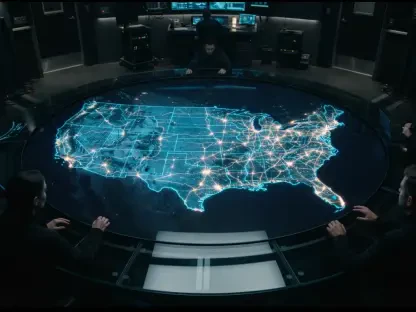
Utility representatives from Great River Energy and Xcel Energy contend that the PowerOn Midwest line is a proactive response to shifting energy trends across the North American grid. Matt Ellis, representing Great River Energy, presented data from the Midcontinent Independent System Operator suggesting that regional electrical consumption could grow by nearly 25 percent over the next twenty years. The utilities argue that by building high-capacity infrastructure now, they are securing the energy future for subsequent generations of Minnesotans. However, this forward-looking narrative was met with significant skepticism during the public testimony phase in Sherburn. Residents pointed out that while consumption might be rising in metropolitan areas or specific industrial sectors, the actual demand within the rural counties hosting the line does not justify such a massive 765-kilovolt installation. This disconnect forms the crux of the regulatory debate as the commission determines if the utilities have sufficiently proven the need for this specific scale of development.
Technical Objections and Alternative Solutions
Expert Dissent: Infrastructure Scale
The technical foundation of the PowerOn Midwest project came under intense scrutiny from industry veterans who question the necessity of a 765-kilovolt line. Kent Scholl, a retired expert in generation resource planning with over two decades of experience at Xcel Energy, provided a detailed critique of the current proposal. He argued that the utilities’ own documentation and reports from the regional grid operator suggest that near-term reliability issues could be solved with much smaller infrastructure. Specifically, Scholl pointed to a 365-kilovolt line as a more proportional solution that would bridge the gap between South Dakota energy production and the Twin Cities demand. By opting for the maximum possible voltage, Scholl suggested that the utilities are potentially overbuilding at the expense of local landowners. His testimony introduced the idea that the current plan is not necessarily the most efficient engineering choice, but rather a strategic move to secure the largest possible asset in a rare building opportunity.
Community Concerns: Industrialization Risks
A pervasive concern among Southern Minnesota residents is that the high-voltage line will serve as a catalyst for unwanted industrial development, specifically the construction of massive data centers. Resident Karen McConnell articulated this fear by referencing the famous Field of Dreams analogy, suggesting that if the utilities build the massive 765-kilovolt infrastructure, data-heavy corporations will inevitably follow. These facilities are known for their staggering consumption of both electricity and local water resources, often providing very few long-term jobs for the communities in which they are located. Many community members view the PowerOn Midwest project as an invitation for large-scale industrialization that threatens the character of their rural environment. There is a growing movement among local officials to consider moratoriums on such developments to protect regional resources. The sentiment in Sherburn was clear: residents do not want their agricultural land repurposed into a high-energy industrial corridor.
Future Outlook for the Project
Demographic Realities: Pass-Through Power
The demographic argument used by utilities to justify the project was further challenged by local leaders like Martin County Commissioner Richard Koons. He pointed out a glaring discrepancy between the utility projections of residential growth and the actual population trends in rural Southern Minnesota. Aside from the Rochester area, most counties along the proposed path are seeing population plateaus or declines, calling into question where exactly the new residential energy demand is coming from. Koons characterized the project as a pass-through system designed to transport energy from coal-heavy regions in South Dakota to demand centers in Illinois. This arrangement leaves Minnesota residents with the aesthetic and environmental burden of the transmission towers without providing them with cheaper or more reliable power. This perception of being a sacrifice zone for out-of-state energy needs has fueled much of the local opposition. Critics argue that the utilities have failed to demonstrate how this project improves local lives.
Final Rulings: Public Comment Periods
As the state moves toward the final stages of the regulatory review, the focus has shifted toward balancing long-term energy security with the immediate concerns of the rural electorate. The Minnesota Public Utilities Commission evaluated the project docket, CN-25-117, with a specific eye on whether the developers sufficiently explored low-impact alternatives. Actionable next steps for concerned citizens included the filing of formal interventions and participation in upcoming environmental impact statement drafting sessions. Looking ahead, the final determination scheduled for the spring of 2027 is expected to set a precedent for how Minnesota handles large-scale grid transitions in the face of local opposition. Stakeholders were encouraged to monitor the commission updates and engage with local planning boards to ensure that any approved route minimizes the fragmentation of prime farmland. By prioritizing community feedback, the state aims to develop a solution that integrates modern energy needs with a deep respect for demographic and economic realities.