


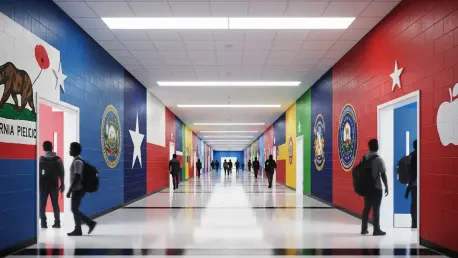

A tectonic shift in the enforcement of educational equity is currently stripping away the federal safety net that once promised every American student a baseline of protection against discrimination, regardless of their home state. This systemic overhaul, orchestrated by the current administration, marks the most significant departure from centralized civil rights oversight since the inception of the Department of Education’s Office for Civil Rights. By delegating the investigative and enforcement duties to state governments and the Department of Justice, the federal government is effectively resigning from its role as the primary guarantor of student equality. This transformation is not merely a bureaucratic reorganization; it represents a fundamental reinterpretation of the relationship between the federal government, the states, and the individual rights of students.
The current policy environment places the burden of proof and the necessity for action squarely on the shoulders of local entities that may or may not have the capacity to handle them. For decades, the federal government maintained a presence in every school district, ensuring that Title IX, Title VI, and Section 504 of the Rehabilitation Act were applied consistently from coast to coast. Now, that consistency is being traded for a model of local autonomy that favors regional governance over national standards. The resulting landscape is one where the strength of a child’s civil rights is increasingly dictated by the political climate of their state capital rather than the mandates of federal law.
Beyond the Beltway: How a Policy Shift Is Redrawing the Lines of Student Equality
The administration’s strategy centers on a deliberate contraction of the Department of Education’s footprint, moving the locus of power away from Washington, D.C. This move is characterized by a significant reduction in the opening of new investigations into systemic discrimination, with the federal government now deferring to state-level administrative bodies. While the administration frames this as a way to streamline government, it effectively creates a bifurcated system of justice. Students in states with robust civil rights infrastructure may see little change, but those in states with minimal oversight now face a future where federal intervention is the exception rather than the rule.
Moreover, this shift has recalibrated the types of cases that receive federal attention, prioritizing issues that align with the administration’s broader political objectives. While traditional areas of enforcement, such as racial disparities in school discipline or accessibility for students with disabilities, have seen a decline in federal activity, the Office for Civil Rights has pivoted toward high-profile investigations involving school policies on transgender students and specific allegations of antisemitism at elite universities. This selective enforcement suggests that the federal government is moving toward a model where civil rights are used as a tool for ideological influence rather than a comprehensive shield for all marginalized groups.
The Return to Federalism: Understanding the Move Toward Localized Educational Oversight
Proponents of this shift argue that the return to federalism is a necessary correction to decades of federal overreach. Representative Burgess Owens and other supporters of the move contend that local officials are better equipped to handle the nuances of their specific communities. From this perspective, a centralized bureaucracy in the capital is too disconnected from the daily realities of classrooms in states like Utah or Alabama. By returning authority to the states, the administration claims it is fostering an environment where innovation can thrive and where local taxpayers have more control over the educational standards and disciplinary policies within their own school districts.
This philosophy posits that the federal government should act only as a resource of last resort, providing funding and broad guidelines while leaving the heavy lifting of enforcement to those closest to the students. Supporters believe that state human rights commissions and departments of education are more accountable to the families they serve, as they are led by officials who are either elected or appointed by local leaders. This “education back to the states” approach is presented as a way to eliminate the perceived inefficiency of federal mandates, which critics argue often lead to “one-size-fits-all” solutions that fail to address the specific needs of diverse student populations.
Mapping the Consequences: Statistical Declines, the DOJ Transition, and the “ZIP Code” Disparity
The statistical reality of this transition is stark, revealing a dramatic drop in the volume of cases handled by the federal Office for Civil Rights. Recent reports indicate that during the current administrative term, the resolution of cases involving racial discrimination and sexual harassment has reached historic lows. In several high-profile categories, the number of completed investigations has plummeted toward zero, signaling a functional retreat from active oversight. This decline is not due to a lack of complaints, but rather a change in how those complaints are processed, with many now being redirected to state agencies that often lack the legal authority or staffing to pursue them.
Simultaneously, the administration has moved the majority of the Office for Civil Rights’ legal work to the Department of Justice. Assistant Attorney General Harmeet Dhillon has confirmed that the Civil Rights Division now handles roughly 99 percent of the investigative workload formerly managed by the Department of Education. While the administration claims this move leverages the legal expertise of the Department of Justice, critics point out that this consolidation further distances the enforcement process from the educational environment. The transition also places an immense strain on a Department of Justice that is already tasked with a myriad of other federal legal responsibilities, raising concerns about the long-term sustainability of this enforcement model.
Perspectives from the Frontlines: Expert Analysis of the Erosion of Federal Protections
Expert observers and former officials warn that the current trajectory is creating a “ZIP code” lottery for civil rights. Beth Gellman-Beer, a veteran of the Office for Civil Rights, notes that many states simply do not have the equivalent of a federal investigative body. In some jurisdictions, the state department of education only manages funding and curriculum, leaving no one to investigate a claim of disability discrimination or racial bias. This creates a vacuum where students are left without any clear path for recourse, as state agencies often lack the subpoena power and specialized expertise that federal investigators once provided to ensure school compliance.
The legislative struggle at the state level further complicates the situation, as some states actively resist taking on these new responsibilities. In Pennsylvania, efforts to create a dedicated state civil rights office for education have faced significant political opposition, while in Mississippi, officials have explicitly stated that they do not believe they have the jurisdiction to replace federal oversight. This jurisdictional confusion often leads to a “catch-22” for families, where the federal government tells them to go to the state, and the state tells them that only the federal government has the power to act. Consequently, the most vulnerable students are often the ones who fall through these expanding cracks in the system.
A Framework for Student Advocacy: Navigating State Systems and Non-Governmental Resources
As the federal presence diminishes, non-governmental organizations and private advocacy groups have become the primary defenders of student rights. The National Center for Youth Law and the Southern Poverty Law Center have increased their efforts to provide families with the tools needed to navigate the complex web of state-level administrative procedures. These organizations are producing detailed guides that explain how to file complaints with state human rights commissions and how to leverage local school board meetings to demand accountability. However, these groups emphasize that their resources are a supplement to, not a replacement for, the massive enforcement power of the federal government.
Advocacy in this new era requires a shift in strategy, moving away from a reliance on federal investigators toward a model of local litigation and community organizing. Families are being encouraged to build coalitions with local civil rights attorneys and to push for state-level legislation that codifies student protections into state law. While this decentralized approach is more labor-intensive and expensive for families, it is currently the only viable path for many seeking justice. The future of student civil rights now depends on the ability of these non-governmental frameworks to bridge the gap left by a retreating federal government and to hold state and local officials accountable for the safety and equality of all students.
The transition toward state-led civil rights enforcement fundamentally altered the landscape of American education by shifting the primary responsibility for student protection away from a centralized federal authority. Families and advocates adapted by seeking out state-level administrative remedies and pushing for the establishment of independent monitors to fill the gaps left by the Office for Civil Rights. Stakeholders recognized that the erosion of federal standards necessitated a more localized and legally intensive approach to advocacy, where protection was no longer a guaranteed national baseline but a goal to be fought for in individual state houses. Ultimately, this shift compelled a new generation of activists to focus on building state-level infrastructure that could withstand federal policy fluctuations and ensure the long-term durability of student equality.







