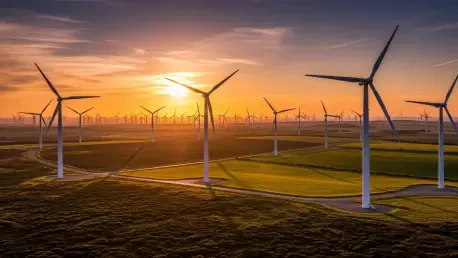

The American energy sector is currently navigating a pivotal transition where the focus is shifting away from the vast expansion of land use toward the intensive modernization of existing wind power infrastructure. This strategic pivot allows for a drastic increase in power density while maintaining the same physical footprint that has been utilized for decades by established facilities. Many of the most productive wind sites were developed when turbine technology was significantly less advanced, meaning these prime locations are currently occupied by machines that capture only a fraction of the kinetic energy that modern systems could harness. By focusing on the refurbishment or replacement of aging turbines within the boundaries of currently operational wind farms, the industry is finding ways to bypass the logistical nightmares associated with land acquisition and long-distance transmission planning. This evolution marks the end of the traditional land grab phase and the beginning of a period defined by asset optimization and efficiency.
Strategic Modernization: Harnessing the Potential of Existing Hubs
Quantitative Analysis: The Statistical Case for Modernization
Recent findings from the National Renewable Energy Laboratory and Stanford University emphasize that the United States is currently positioned to tap into a substantial renewable energy surplus by looking inward. Analysis of existing data suggests that the national onshore wind capacity, which currently stands at approximately 153 gigawatts and provides over ten percent of the total electricity supply, could be expanded significantly without breaking new ground. If the industry successfully implements a comprehensive repowering strategy across all eligible sites, this capacity could effectively double to more than 314 gigawatts. Such an increase would allow wind power to meet over twenty-one percent of the nation’s energy demands, providing a stable and localized source of electricity. This mathematical possibility highlights the untapped value hidden within the grid connections and permits that are already in place across the wind-rich corridors of the American landscape.
The technical logic behind this capacity surge is rooted in the exponential growth of turbine performance and mechanical reliability seen over the last few years. Modern turbines are equipped with significantly longer blades and more sophisticated control systems that allow them to operate at lower wind speeds while producing more power at peak conditions. When these advanced units replace machines designed decades ago, the difference in total output is profound. Furthermore, modernizing a site involves more than just swapping hardware; it includes optimizing the layout of the entire farm to reduce wake effects and improve airflow between units. This allows a single modern turbine to do the work of several older versions, effectively de-cluttering the horizon while simultaneously pumping more electrons into the grid. The integration of advanced power electronics also ensures that these upgraded sites can provide better frequency response and voltage support to the national power grid.
Diverse Tactics: Regional Variability in Implementation
Implementation strategies for these upgrades vary significantly depending on local environmental requirements and the specific mechanical condition of the existing hardware. In regions like California, developers are often opting for full repowering, a process that involves the complete removal of hundreds of older, smaller turbines to make room for a smaller number of high-capacity models. At sites such as Mulqueeney Ranch, this “thinning the herd” approach has proven beneficial not only for energy production but also for local wildlife preservation. By reducing the total number of physical obstacles and rotating blades, the project lowers the risk of avian collisions while increasing the total energy yield of the ranch. This method demonstrates how large-scale energy production can be harmonized with conservation goals, using modern design to mitigate the environmental footprints that were common in earlier wind developments.
In contrast, developers in the Dakotas and other parts of the Midwest are frequently utilizing partial repowering as a more cost-effective and rapid alternative to full site reconstruction. This approach involves upgrading the internal nacelle components, the gearbox, and the rotor blades while retaining the existing towers and concrete foundations. This hybrid strategy allows for a significant boost in energy output and an extension of the facility’s operational life without the massive capital expenditure and labor required to tear down and rebuild entire structures. Because the foundational infrastructure is already settled and the underground cabling is functional, these projects can be completed in a fraction of the time required for a new build. This speed is critical for meeting short-term energy goals and ensuring that existing wind farms remain competitive as electricity markets evolve. Partial repowering serves as a pragmatic bridge for immediate performance gains.
Administrative Hurdles: Balancing Social Support and Politics
Local Synergy: Cultivating Long-Term Community Acceptance
One of the most significant advantages of focusing on repowering is the established social license that these projects already possess within their respective host communities. Unlike new greenfield developments, which often face intense scrutiny and opposition from local residents concerned about changes to the landscape, repowered sites have been part of the local scenery for years. Neighbors have already coexisted with the infrastructure, and the social friction typically associated with industrializing rural areas is largely absent or significantly diminished. Most stakeholders prefer the modernization of an existing site over the environmental disruption of developing untouched territory, leading to a much smoother negotiated process during the planning phases. This level of local consensus is a valuable asset for developers, as it reduces the likelihood of costly legal delays and helps maintain a positive relationship with the rural populations.
Beyond the reduction of visual and social friction, these projects provide a consistent and reliable economic backbone for rural towns and agricultural landowners. In states like Iowa, wind farms have become permanent fixtures that provide long-term streams of lease payments for farmers, offering financial stability that is independent of crop prices or weather conditions. Furthermore, the property tax revenue generated by these upgraded facilities is vital for funding local schools, emergency services, and infrastructure maintenance. By treating these sites as long-term investments rather than temporary installations, the industry cements its role in the socio-economic fabric of the American heartland. When a site is repowered, it signals a multi-decade commitment to the local economy, ensuring that jobs related to maintenance and operations remain in the area. This economic integration creates a virtuous cycle where local communities become advocates for energy.
Federal Bottlenecks: Addressing Regulatory and Defense Constraints
Despite the clear benefits and social support for repowering, the industry still faces substantial headwinds from the federal administrative environment and national security reviews. Projects are frequently subjected to mandatory evaluations by the Pentagon and the Air Force, which assess the potential impact of turbines on radar systems and military flight paths. While these reviews are necessary for national safety, they have increasingly become a significant bottleneck, with hundreds of projects facing lengthy delays. Some industry experts have pointed out that the lack of clear, consistent standards for these reviews leads to uncertainty for developers and investors. In some instances, the friction appears to be driven by administrative inertia or competing political priorities rather than genuine technical concerns regarding radar interference. Addressing these bureaucratic hurdles is essential for maintaining the momentum of the wind sector.
The future of the American energy grid likely depends on the ability of the wind industry to navigate these political obstacles while continuing to drive mechanical efficiency and cost reductions. The current momentum behind repowering suggests that the shift toward a higher percentage of wind-based power is well underway, even if it is happening quietly under the radar of federal policy debates. By focusing on doing more with less and maximizing the utility of every acre of permitted land, the industry is positioning itself as a cornerstone of national energy independence. However, achieving the goal of doubling onshore capacity will require a concerted effort to streamline federal permitting and improve coordination between energy developers and defense agencies. As the demand for clean, domestic power grows, the focus will increasingly remain on these existing hubs, where the infrastructure is already proven and the local support is strongest.
Strategic Foundations: Future Considerations for a Resilient Grid
The transition toward a repowering-centric model established a clear pathway for the American wind industry to enhance its contribution to the national energy portfolio without expanding its physical footprint. Stakeholders recognized that the most effective way to strengthen the grid involved leveraging the reliability of proven sites while integrating the superior efficiency of modern turbine technology. This movement prioritized the stabilization of rural economies through consistent tax revenue and lease agreements, ensuring that local support remained a fundamental pillar of the energy transition. Policymakers and industry leaders coordinated efforts to address the administrative bottlenecks that previously hindered the speed of these upgrades, focusing on transparent standards for national security reviews. By choosing to modernize existing assets, the sector successfully demonstrated a pragmatic approach to energy growth that balanced technological ambition with environmental responsibility.