
Donald Gainsborough stands at a unique intersection of bureaucratic strategy and environmental stewardship, having spent decades navigating the halls of power to ensure that those who feed the nation are not left in the dark. As a political savant at the helm of Government Curated, his insights into the recent legal battles over the Department of Agriculture’s digital purge offer a sobering look at how data suppression can destabilize rural economies. In this discussion, we explore the precarious balance between shifting political administrations and the essential transparency required to manage a landscape increasingly defined by extreme weather and financial uncertainty. We delve into the mechanics of the recent USDA settlement, the legal protections afforded by the Paperwork Reduction Act, and the grassroots efforts to safeguard the datasets that underpin modern, resilient farming.
When federal agencies remove digital tools like climate risk maps or wildfire datasets, what specific hurdles do agricultural producers face in securing loans? How does losing access to these 140-layer mapping tools disrupt the implementation of soil health and conservation practices on a seasonal basis?
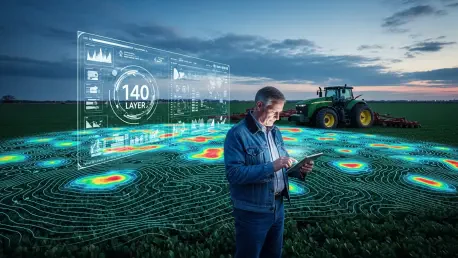
When the government decides to flag and delete critical resources, they aren’t just removing text from a screen; they are essentially blinding farmers who operate on razor-thin margins. These climate risk viewers, which feature over 140 sophisticated layers of data including wildfire risk maps, are fundamental for growers trying to prove the viability of their land to lenders who require data-backed risk assessments. Without this granular information, a producer might find it impossible to justify the upfront costs of climate-smart conservation practices that protect soil health over the long term but offer no immediate cash return. It feels like having the legs cut out from under you just as a storm is rolling in, leaving you with no way to navigate the financial or physical terrain of a changing environment. The seasonal disruption is profound because agricultural planning requires a lead time that doesn’t wait for a federal agency to decide if it believes in the data it has already spent public funds to collect.
Legal settlements often mandate the release of underlying raw data to ensure public access is not permanently lost. What are the technical steps required for a nonprofit to recreate these risk viewers independently, and what metrics are most critical to maintain for farmers facing extreme weather patterns?
The path to independence for these nonprofits begins with securing the underlying raw data, a move that ensures the public’s investment isn’t wiped out by a change in leadership. In our recent negotiations, the priority was to keep the climate risk viewer online specifically until this data transfer was complete so that organizations like the Natural Resources Defense Council could step in as stewards. Once the raw datasets are in hand, the technical team must rebuild the interface and host the 140 layers on private servers, which requires significant computational power and cloud storage. The most critical metrics to preserve are those relating to historical wildfire trends and moisture levels, as these allow farmers to visualize the specific threats to their acreage and adjust their planting schedules accordingly. It is a massive undertaking that shifts the burden of public service onto the nonprofit sector, but it is the only way to guarantee that the information remains a permanent fixture of the agricultural landscape.
The Paperwork Reduction Act requires agencies to provide adequate notice before altering public access to informational tools. Beyond legal compliance, what are the practical implications for food security when climate-smart resources are abruptly flagged for deletion, and how can advocacy groups better protect these digital assets?
The 1995 Paperwork Reduction Act is a vital shield, but the practical fallout of ignoring it is a direct threat to the stability of our food supply chain. When resources are abruptly taken down, it creates a vacuum of information that leads to paralyzed decision-making at the farm level, where one bad season can end a family legacy. Advocacy groups must be vigilant, as we saw with the recent lawsuit where the USDA’s move to purge webpages was met with immediate legal resistance to prevent a total loss of access. To better protect these assets, groups should not only rely on the Freedom of Information Act but also push for “digital redundancy,” ensuring that every federal dataset is mirrored by a third-party academic or environmental institution. If the government is going to act in a way that looks “stupid and mean,” as some have described it, the advocates must be the ones holding the lantern to keep the path to climate-smart farming illuminated.
Financial precarity often dictates which sustainable growing practices a farmer can adopt. How do shifting government priorities regarding climate-smart loans affect long-term business planning, and what specific anecdotes have you heard from growers trying to navigate these opaque funding cycles?
The financial precarity of modern farming means that even a minor shift in federal priorities can send shockwaves through a grower’s ten-year business plan. I have heard from leaders at the Northeast Organic Farming Association of New York who describe a landscape of deep confusion, where growers are literally asking which loan programs are “live” and which have been quietly mothballed. This uncertainty prevents farmers from investing in the very soil health improvements that would make them more resilient to the extreme weather we are seeing more frequently. There is a sense of being trapped in an opaque cycle where you know you need to adapt, but the financial ladder you were promised has been pulled up halfway through your climb. It makes the transition to sustainable practices feel like a gamble rather than a strategic business move, which is a tragedy for the future of American agriculture.
Future legislative changes, such as a new farm bill, could potentially gut funding for conservation programs. In a landscape of shrinking federal support, what alternative strategies should farming organizations employ to safeguard their livelihoods and maintain the data transparency necessary for modern agriculture?
As we look toward a future farm bill, the threat of gutting funding for conservation practices is a dark cloud hanging over the entire industry. Farming organizations need to pivot toward building their own data infrastructure and seeking private-sector partnerships that value the stability of the food supply over political cycles. We are seeing a shift where transparency is no longer something we can simply expect from the Department of Agriculture; it is something we have to fight for and then manage ourselves. Diversifying income streams and forming regional data-sharing cooperatives can help mitigate the loss of federal support, allowing farmers to maintain their soil health without being entirely dependent on a fickle administration. The goal is to create a localized resilience that can withstand the “mean-spirited” policy shifts that occur in Washington, ensuring the survival of the independent producer.
What is your forecast for the future of federal climate data accessibility and its impact on the American agricultural industry?
My forecast for the coming years is one of increased volatility, where data accessibility will likely become a recurring battleground between the executive branch and the judicial system. We will see more instances where agencies attempt to bury information, but the precedent set by this settlement proves that legal transparency can win out if we are persistent. The impact on the industry will be a growing divide: those who have the resources to access private or nonprofit-mirrored data will thrive, while those who rely solely on federal tools may find themselves increasingly vulnerable to sudden shifts. Ultimately, the survival of the American agricultural industry will depend on our ability to decentralize this information and treat climate data as a fundamental right of the producer, rather than a political chip to be traded or deleted at will. This struggle is about more than just maps; it is about the very foundation of how we will feed ourselves in an era of unprecedented environmental change.