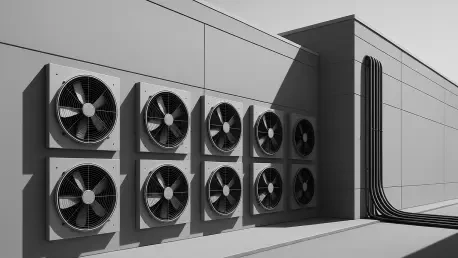

A significant portion of the population now views data centers as competitors for finite water resources, especially in regions already struggling with drought and management challenges. This shift in public perception represents a major departure from the early days of the digital revolution, when the “cloud” was viewed as an ethereal, weightless entity that existed purely in the digital realm. Today, the reality of massive concrete structures, spanning hundreds of thousands of square feet and consuming as much power as small cities, has grounded that metaphor in a way that many communities find unsettling. Recent sentiment analysis suggests that these facilities have become the least favored development projects among American citizens, often ranking below heavy industrial sites and power plants in terms of local desirability. This “better nothing” mentality signals that many residents would rather see land remain vacant or agricultural than witness the arrival of a hyperscale server farm, indicating a systemic rejection of the industry’s traditional value proposition which centered on tax revenue and technological prestige.
The Escalating Friction Over Local Resources and Environmental Impacts
Growing Pressures on Regional Utility Infrastructure: Challenges and Costs
The sheer scale of electrical consumption required by modern data centers has placed an unprecedented strain on the American power grid, leading to a palpable sense of frustration among residential ratepayers. In high-density tech corridors, the rapid expansion of these facilities has coincided with visible spikes in utility costs and growing concerns regarding grid reliability. Many residents feel that they are essentially subsidizing the energy needs of trillion-dollar tech conglomerates, as the infrastructure upgrades required to support massive server loads—such as new high-voltage transmission lines and substations—are often reflected in broader community tax hikes or utility rate adjustments. This tension is exacerbated by the fact that data centers operate around the clock with a constant, massive “base load” demand, leaving little room for the grid to breathe during peak summer or winter months when residential heating and cooling needs are at their highest.
The industrial appetite for electricity shows no signs of waning as we move from 2026 to 2028, with projections indicating that the tech sector’s share of national energy consumption will continue to climb. This creates a zero-sum game in the minds of many local activists, who argue that every megawatt allocated to a new data center is a megawatt unavailable for new housing developments or local small businesses. Furthermore, the visual impact of the necessary electrical infrastructure, including sprawling switchyards and towering transmission towers, has become a lightning rod for community opposition. Residents who once enjoyed unobstructed views of rural landscapes now find themselves surrounded by the steel skeletons of the digital age. This aesthetic degradation, combined with the underlying fear of rolling blackouts during extreme weather events, has transformed what was once a technical logistical hurdle into a heated social and political battleground that threatens the pace of future deployments.
Ecological Concerns: Water Usage and the Local Living Environment
Beyond the electrical grid, the immense volume of water required for industrial cooling systems has turned data centers into direct competitors for a resource that is increasingly scarce. Many facilities utilize evaporative cooling methods that can consume millions of gallons of water daily, a fact that resonates poorly in regions where agricultural sectors and households are being asked to conserve. The environmental footprint of these buildings is no longer hidden behind high fences; it is measured in the depletion of local aquifers and the diversion of municipal water supplies. This has led to the formation of grassroots coalitions dedicated to protecting local watersheds, with many demanding that developers switch to closed-loop or waterless cooling technologies, regardless of the increased operational costs. The argument that data centers are essential for the modern economy often rings hollow to a farmer or a homeowner facing strict water rationing and rising costs.
Noise pollution has also emerged as a significant grievance for those living in proximity to these massive server warehouses. The constant, low-frequency hum generated by thousands of high-powered cooling fans and backup diesel generators can travel for miles, disrupting the peace of residential neighborhoods and, according to local real estate experts, negatively impacting property values. Unlike traditional factories that may operate on a set shift, data centers are active twenty-four hours a day, providing no respite from the mechanical drone. For many communities, the arrival of a data center represents a permanent change in the “sensory character” of their environment, replacing the sounds of nature or quiet suburban life with the industrial vibrations of the internet. This perceived reduction in the quality of life has fueled a wave of zoning challenges and lawsuits, as citizens fight to maintain the sanctity of their homes against the encroachment of digital infrastructure.
Societal Anxiety and the Shadow of Artificial Intelligence
Data Centers: The Physical Manifestation of Artificial Intelligence Fears
The surge in opposition is deeply intertwined with the broader societal unease surrounding the rapid proliferation of artificial intelligence. To the average citizen, a data center is not just a building full of servers; it is the physical engine room of an AI revolution that many perceive as a threat to their livelihoods and privacy. As AI models become more complex, requiring exponentially more computing power and physical space, the construction of a new data center is often viewed as a tangible step toward a future dominated by automation and algorithmic control. This psychological connection has made data centers a convenient target for those looking to voice their anxieties about job displacement and the ethical implications of unchecked technological growth. Protesting a local zoning board decision becomes a way to take a stand against a global shift that otherwise feels distant and uncontrollable.
This ideological friction is further complicated by the fact that data centers, once operational, provide very few permanent jobs compared to the massive physical footprint they occupy. While the construction phase might bring a temporary influx of workers, the long-term reality is often a “ghost building” staffed by a skeleton crew of security guards and a handful of specialized technicians. This lack of robust, long-term local employment makes it difficult for tech companies to argue that they are providing a significant economic boon to the community. When residents weigh the perceived risks of AI—such as the automation of white-collar jobs or the spread of deepfakes—against a facility that offers almost no local career opportunities, the cost-benefit analysis almost always leans toward opposition. Consequently, the industry is struggling to craft a narrative that resonates with the average voter who sees the tech sector as taking local resources while providing global profits.
The American Phenomenon: Global Divergence and Strategic Risks
Interestingly, the intense hostility toward data center development appears to be a uniquely American trend at this stage. In rapidly developing economies like those of India, Nigeria, and Vietnam, the construction of such facilities is often celebrated as a hallmark of progress and a sign of integration into the global high-tech economy. In these contexts, data centers are associated with modernization, improved digital services, and the attraction of foreign investment. This divergence in public sentiment creates a potential strategic vulnerability for the United States. If domestic opposition continues to stall projects and increase the regulatory burden, the digital infrastructure necessary to power the next generation of innovation may naturally migrate to more permissive jurisdictions. This shift could lead to a scenario where American companies are forced to host their critical data and AI training modules abroad, raising concerns about national security and data sovereignty.
The contrast between domestic resistance and international enthusiasm highlights a fundamental shift in how the American public views the role of technology in society. In the United States, the novelty of being “the world’s digital hub” has worn off, replaced by a more critical examination of the trade-offs involved in hosting the world’s data. While emerging markets are still in the “build at all costs” phase of digital development, the American market has entered a phase of maturity where local impacts are scrutinized as heavily as national benefits. This puts policymakers in a difficult position, as they must balance the need to remain competitive in the global race for AI supremacy against the growing demands of their constituents for local environmental and economic protections. The risk of a “digital brain drain” where infrastructure follows the path of least resistance is becoming a primary concern for industry analysts and national security advisors alike.
Political Fallout and the Demand for Structural Accountability
Political Wedge Issues: Legislative Demands and Voter Sentiment
The shift in public opinion has rapidly moved into the political arena, where data center development is becoming a potent “wedge issue” in state and local elections. Political candidates are increasingly finding success by positioning themselves against “Big Tech” and the perceived exploitation of local resources. This has led to a surge in legislative proposals aimed at curbing the unchecked expansion of these facilities, including mandatory setbacks from residential areas and schools, as well as more stringent noise and light pollution standards. In several key states, what was once a routine administrative approval process has been transformed into a high-stakes political battle, with incumbents being challenged on their records regarding tech subsidies and land-use permits. The days of bipartisan support for data center incentives are largely over, replaced by a more skeptical and often adversarial political climate.
Voters are also demanding a fundamental change in the financial relationship between data center operators and the communities that host them. There is overwhelming support for policies that would force these corporations to pay the full cost of infrastructure upgrades, including grid enhancements and water treatment expansions, rather than relying on public funds or tax breaks. The historical model of offering lucrative tax abatements to attract tech giants is under fire, with many arguing that these funds would be better spent on education, healthcare, or local infrastructure that benefits a wider range of citizens. This push for fiscal accountability is accompanied by calls for binding local referendums on large-scale projects, giving residents a direct say in whether their town becomes a hub for digital storage. As these legislative trends continue to gain momentum, the industry must prepare for a future where the cost of doing business in the United States includes significantly higher levels of community investment and transparency.
Strategies for Harmonizing National Interests: Rebuilding Public Trust
To navigate this period of heightened friction, the tech industry and government regulators recognized that a total restructuring of the community engagement model was necessary. Success required moving away from secretive, top-down development deals toward a framework based on radical transparency and mutual benefit. Companies that found success in this new environment were those that proactively addressed resource consumption by investing in local renewable energy projects and advanced water recycling facilities that provided a net benefit to the community. By treating the local population as a vital stakeholder rather than an obstacle to be bypassed, developers were able to mitigate some of the “not in my backyard” sentiment. The industry learned that the “good neighbor” policy was not just a public relations slogan but a functional requirement for obtaining the social license to operate in an increasingly skeptical American landscape.
Moving forward, the focus must remain on aligning the national strategic need for digital infrastructure with the very real concerns of local residents. This involves creating a more equitable distribution of the economic benefits generated by data centers, perhaps through localized “tech dividends” or dedicated funds for community-led environmental projects. Legislative bodies should consider standardizing impact fees that ensure the tech sector pays its fair share for the strain it places on public utilities. Additionally, the industry should prioritize the redevelopment of brownfield sites and the retrofitting of existing industrial buildings to minimize the impact on green spaces and agricultural land. By adopting these actionable steps, the United States can maintain its leadership in technological innovation while respecting the rights and quality of life of its citizens. The transition from a conflict-based model to a collaborative one is the only viable path for the continued growth of the nation’s digital backbone.