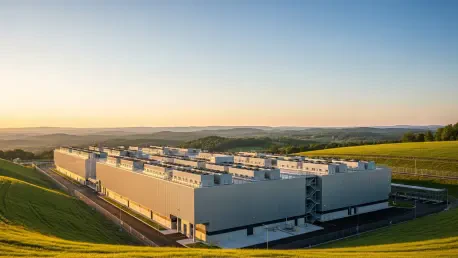

The rolling hills of the Keystone State once beckoned technology giants with the promise of endless digital expansion and a taxpayer-funded safety net designed to fuel the cloud computing revolution. However, the political landscape in Pennsylvania has shifted dramatically as the honeymoon phase between state officials and data center developers reached an abrupt conclusion. What began five years ago as a unified, bipartisan push to secure a piece of the tech sector through the Computer Data Center Equipment Incentive Program is now being systematically dismantled by the very legislature that championed its inception.
Legislators are walking away from some of the wealthiest corporations on the planet, signaling a new era in state economic policy. This pivot was not merely a result of changing partisan tides but stemmed from a growing realization that the current model of corporate welfare no longer served the public interest. By stepping back from these lucrative subsidies, the state prioritized fiscal responsibility over the aggressive pursuit of industry giants that once defined its growth strategy. This shift reflected a broader national trend where states are beginning to question the long-term value of high-cost tech incentives.
A Costly Farewell to the Tech Subsidy Era
The aggressive pursuit of data centers was once seen as a guaranteed ticket to modernizing Pennsylvania’s economy. Lawmakers initially believed that providing tax relief for expensive computer equipment would create a ripple effect of high-paying jobs and technological prestige. However, as the program matured, the disconnect between the promised economic windfall and the reality of automated, low-employment facilities became increasingly difficult to ignore. The initial enthusiasm gave way to a critical examination of whether these centers truly integrated into the local economy or merely occupied vast swaths of land.
This dismantling of the incentive program represented a fundamental change in how the public viewed corporate assistance for the technology sector. Rather than viewing tech giants as vulnerable startups in need of a boost, the legislature began to see them as established entities that had already extracted significant value from the state. Consequently, the decision to end these breaks was framed as a necessary correction to a policy that had outlived its original purpose, moving the state toward a more balanced approach to industrial development.
The Half-Billion Dollar Price Tag: Big Tech Incentives
A significant catalyst for this policy reversal was the alarming escalation of costs associated with sales and use tax exemptions. When these incentives were first drafted, they were envisioned as a modest investment in the state’s digital future. Instead, the fiscal burden ballooned beyond original projections, leaving a massive hole in the state’s potential revenue stream that was becoming impossible to ignore. For a state balancing various public needs, the opportunity cost of these exemptions grew too high to justify to the average taxpayer.
Data indicated that Pennsylvania was on a trajectory to lose $188.4 million in the 2026-27 fiscal year alone due to these specific carve-outs. If the trajectory were to continue, that annual loss was projected to climb to a staggering $517 million by the year 2030. For many lawmakers, these figures represented a massive transfer of public wealth to multi-billion-dollar entities that had already achieved unprecedented market dominance. This fiscal reality forced a total re-evaluation of whether the state could afford to continue subsidizing the most profitable companies in history while local infrastructure and education required additional funding.
Rethinking Subsidies in a Saturated Market
Beyond the immediate financial costs, there was a mounting consensus that the data center industry reached a level of maturity where government assistance was no longer a necessity for site selection. Legislative leaders pointed out that companies like Amazon, Microsoft, and Alphabet faced such overwhelming demand for their digital services that they were forced to build new infrastructure regardless of state incentives. The marketplace evolved from a competition for scarce investment into a race for essential capacity driven by the rise of artificial intelligence and global connectivity.
Pennsylvania’s unique geographic position and existing power grid created a state of market saturation where developers were drawn to the region for its inherent logistical advantages. Consequently, the argument that tax breaks were needed to lure these projects lost its persuasive power over time. The state transitioned its strategy away from recruitment and toward the active management of the industry’s existing footprint. This approach ensured that technology companies contributed their fair share to the state’s coffers rather than benefiting from outdated incentive programs that no longer influenced their corporate decision-making.
Community Sentiment: The Environmental Crisis
While fiscal concerns dominated the halls of the state capitol, public opposition emerged as a formidable force driving this legislative shift. Many Pennsylvanians no longer viewed the arrival of a massive data center as an economic victory but rather as a localized community crisis. Recent polling reflected this growing discontent, with 42% of residents expressing direct opposition to having these expansive facilities built in their immediate neighborhoods. The sheer scale of these projects often clashed with the rural and suburban character of the regions they occupied.
This resistance was rooted in tangible anxieties regarding land use and the potential for skyrocketing utility costs as these high-capacity facilities placed immense pressure on the local power grid. Furthermore, the environmental toll of data storage became a central point of contention for advocacy groups. The massive water consumption required for cooling systems and the resulting impact on local air quality led many to conclude that the social costs far outweighed any localized economic benefits. These community concerns provided the political cover necessary for lawmakers to move against some of the world’s most powerful lobbies.
The Transition to a Responsible Development Framework
In response to these multi-faceted challenges, Pennsylvania replaced its old incentive structure with a rigorous regulatory model known as “Responsible Development.” This new strategy was codified through two pivotal pieces of legislation designed to rebalance the relationship between tech giants and local communities. House Bill 2650 established the Governor’s Responsible Infrastructure Development (GRID) standards, which mandated that developers meet strict benchmarks for local labor hiring and resource conservation before receiving any form of state permitting.
Furthermore, House Bill 2496 provided local municipalities with the authority to implement a 180-day pause on new development applications. This temporary reprieve allowed local governments the necessary time to modernize their zoning laws and land-use ordinances to better protect the interests of their residents. By implementing these measures, the state shifted the burden of proof onto the developers, requiring them to demonstrate a commitment to transparency and environmental stewardship. This legislative transformation ensured that the era of unchecked, subsidized expansion was replaced by a more sustainable and accountable growth model.