
The once-distinct boundaries between battlefield defense and boardroom negotiations have blurred into a single, high-stakes arena where a nation’s silicon supply is as vital as its missile shield. As the strategic partnership between the United States and the Republic of Korea enters a new phase of integration, the fundamental nature of their cooperation is undergoing a metamorphosis. This transition from a traditional military pact, forged in the fires of mid-century conflict, into a sophisticated technological and industrial alliance represents a pivotal shift in the Indo-Pacific power dynamic. However, this deepening interdependence is currently being tested by a resurgence of economic nationalism and assertive trade policies that threaten to complicate the very security architecture they are meant to bolster.
The current geopolitical climate demands a reassessment of how economic friction influences long-term strategic stability. While military exercises continue to demonstrate a unified front, the underlying economic engine is navigating a terrain of “America First” priorities and South Korean export sensitivities. This report examines the intricate balance between these two pillars of the alliance, analyzing whether the collaborative momentum in high-tech sectors like artificial intelligence and nuclear energy can withstand the pressures of regulatory disputes and protectionist impulses. The following analysis explores the convergence of industrial policy and national security, mapping out the trajectories that will define the trans-Pacific relationship in the coming years.
The Current Landscape of U.S.-ROK Strategic and Economic Interdependence
The convergence of military security and industrial policy in the Indo-Pacific has created a new reality where hardware and software are as critical as boots on the ground. For decades, the U.S.-ROK alliance was primarily viewed through the lens of deterrence on the Korean Peninsula. Today, that narrow focus has expanded to encompass the entire technological supply chain. Washington and Seoul now recognize that a vulnerability in semiconductor manufacturing or a breach in a digital network is a direct threat to national sovereignty. Consequently, the alliance is being retooled to protect the “commanding heights” of the 21st-century economy, ensuring that the critical components of modern civilization are developed within a trusted, democratic framework.
This transition from a traditional military pact to a sophisticated technological partnership is not without its growing pains. The “America First” paradigm, which emphasizes the reshoring of manufacturing and the reduction of trade deficits, has introduced a layer of unpredictability for the South Korean export-driven economy. Seoul finds itself in a delicate position, attempting to secure its security guarantees from Washington while simultaneously protecting its market share in the United States. The challenge lies in harmonizing the U.S. desire for industrial revitalization with the South Korean need for stable, predictable access to the world’s largest economy. This tension is particularly visible in the semiconductor and automotive sectors, where the push for domestic U.S. production creates both opportunities and hurdles for Korean conglomerates.
Despite these frictions, key sectors of cooperation have emerged as the primary engines of the modern alliance. Artificial Intelligence, semiconductor manufacturing, and nuclear energy are no longer just commercial interests; they are the cornerstones of a shared strategic vision. The two nations are increasingly looking toward joint ventures in small modular reactors (SMRs) to provide clean energy security, while the integration of AI into defense systems represents a new frontier for military interoperability. By identifying these critical nodes of cooperation, the U.S. and South Korea are building a foundation for a relationship that is as much about economic resilience as it is about physical defense.
Evolving Industrial Trends and the Quantitative Growth of High-Tech Cooperation
The global shift toward localized “Strategic Industrialism” has redefined the parameters of bilateral trade between Washington and Seoul. The concept of “Economic Security” has risen to become the primary driver for high-tech cooperation, moving beyond the simple exchange of goods toward the creation of a closed-loop ecosystem of trusted partners. This trend is characterized by a deliberate decoupling from adversarial supply chains and a renewed focus on ensuring that critical technologies, from sensors to advanced materials, are produced within the alliance’s sphere of influence.
The Shift Toward AI-Centric Industrial Partnerships and Supply Chain Decoupling
The rise of artificial intelligence as a general-purpose technology has catalyzed a new model of collaborative innovation. Emerging partnerships between Silicon Valley chip designers and Seoul-based memory giants are creating a synergy that is difficult for competitors to replicate. While the U.S. leads in architectural design and software development, South Korea’s dominance in high-bandwidth memory (HBM) and foundry services provides the physical substrate necessary for AI to function. This specialized division of labor is fostering a deep level of technical integration, where the success of a California startup is often inextricably linked to the production capacity of a factory in Pyeongtaek.
Furthermore, consumer behavior is shifting toward a demand for secure, data-protected digital infrastructure. This preference is driving both governments to emphasize the security of the underlying hardware and the integrity of the data centers that house AI models. The result is a transition from globalized rules-based trade, which often prioritized cost over security, to a more managed form of trade that prioritizes resilience and trust. This decoupling from less secure supply chains is not merely a policy choice but a market-driven response to the growing risks of cyber warfare and intellectual property theft.
Analyzing Market Projections and the Impact of Multi-Billion Dollar Investment Pacts
The scale of financial commitment within the alliance is unprecedented, with South Korean firms pledging over $350 billion in investments in the U.S. market. These commitments serve a dual purpose: they facilitate the reshoring of critical manufacturing and act as a buffer against potential tariff escalations. By establishing a physical footprint in American states, South Korean companies are embedding themselves into the U.S. domestic economy, thereby creating a political and economic incentive for Washington to maintain favorable trade relations. This “investment diplomacy” is a key component of Seoul’s strategy to mitigate the risks associated with shifting American trade policies.
Market projections indicate that the potential for AI-related infrastructure and data center development between the two nations could reach $950 billion in the period from 2026 to 2028. This growth is expected to be particularly robust in the semiconductor foundry and advanced packaging sectors, which are essential for the next generation of computing. Additionally, the revitalization of the maritime sector through a new shipbuilding partnership offers a significant avenue for growth. By combining South Korean industrial expertise with U.S. naval requirements, the alliance is poised to modernize a critical piece of the Pacific security architecture while creating high-value jobs in both countries.
Identifying Friction Points in Digital Regulation and Trade Protectionism
While the technological partnership expands, friction points in trade and regulation persist. The application of Section 301 tariffs on South Korean steel and certain technology exports remains a contentious issue. These measures, aimed at protecting domestic U.S. industries, often catch Korean exporters in the crossfire of broader trade disputes. For South Korea, these tariffs represent a significant barrier to market access and a source of diplomatic frustration, as they are often viewed as inconsistent with the spirit of a strategic alliance. The challenge for both sides is to address these specific trade grievances without allowing them to spill over into the broader security relationship.
Digital regulation has emerged as a new frontier for disagreement, as exemplified by the ongoing Coupang case study. Disputes over platform regulation and market access highlight the difficulties of reconciling different regulatory philosophies. U.S. officials have expressed concerns that South Korean antitrust and data privacy laws may inadvertently, or intentionally, disadvantage American-owned platforms. Conversely, South Korean regulators argue that these measures are necessary to ensure fair competition and protect consumer rights in an increasingly digitalized economy. Navigating these disputes requires a high degree of regulatory transparency and a commitment to ensuring that digital rules are applied in a non-discriminatory manner.
Moreover, the “Buy American” provisions in joint maritime and infrastructure projects present significant hurdles for South Korean firms. Bureaucratic inertia and complex domestic procurement rules can often delay or derail collaborative efforts that are otherwise strategically sound. Overcoming these obstacles requires a concerted effort to harmonize standards and create exemptions for trusted allies. Without such reforms, the alliance risks missing out on the industrial benefits of its shared technological leadership, as potential projects become bogged down in the intricacies of domestic legislation and protectionist sentiment.
The Regulatory Environment and the Impact of Economic Security Legislation
The legal framework governing trans-Pacific trade is increasingly defined by statutes that prioritize security over market efficiency. The Trade Act of 1974 and the strategic use of Section 301 continue to shape the tariff landscape, providing the U.S. executive branch with broad powers to respond to perceived unfair trade practices. Additionally, the International Economic Emergency Powers Act (IEEPA) is being utilized more frequently as a tool for strategic leverage. These laws allow Washington to impose restrictions on trade and investment in the name of national security, creating a more complex and often unpredictable regulatory environment for South Korean businesses.
In response to significant data breaches and cyber threats experienced in the previous year, South Korea is evolving its own antitrust and data privacy frameworks. These changes are aimed at strengthening the resilience of the nation’s digital core but have also raised questions about market access for foreign firms. The challenge for Seoul is to build a robust regulatory environment that protects its citizens without creating a “fortress Korea” mentality that stifles innovation and alienates partners. Ensuring that these new frameworks are compatible with international standards is crucial for maintaining the flow of data and investment across the Pacific.
Compliance with labor standards has also become a critical component of the regulatory landscape. Both nations are increasingly focused on preventing the entry of goods produced through forced labor into their supply chains. This requires rigorous auditing and transparency from manufacturers and suppliers, adding another layer of complexity to the trans-Pacific trade relationship. By aligning their standards on labor and human rights, the U.S. and South Korea are not only addressing ethical concerns but also reinforcing the “values-based” nature of their partnership, distinguishing their supply chains from those of authoritarian competitors.
Emerging Frontiers in Maritime Revitalization and Next-Generation Innovation
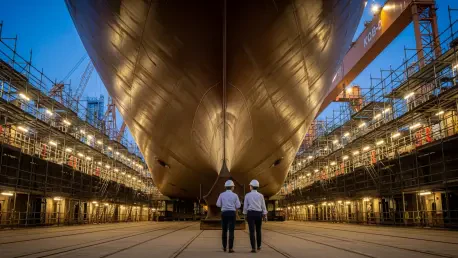
One of the most promising areas for future cooperation is the revitalization of the maritime industry. The Korea-U.S. Shipbuilding Partnership Center (KUSPC) stands as a model for industrial rebirth, aiming to combine South Korea’s world-class shipbuilding efficiency with U.S. strategic needs. This partnership is designed to modernize American shipyards and enhance the production of both commercial and naval vessels. As the maritime environment in the Indo-Pacific becomes more contested, the ability to rapidly produce and maintain a modern fleet is becoming a central requirement for regional stability.
Beyond the shipyards, next-generation innovation in semiconductors remains a top priority. The integration of high-bandwidth memory (HBM) with specialized AI chips is a field where the U.S.-ROK partnership is uniquely positioned to lead. By fostering close ties between researchers and manufacturers, the two nations can stay at the forefront of the hardware revolution that powers modern AI. Similarly, the potential for leadership in global nuclear energy deployment and aerospace is significant. Joint efforts to export nuclear technology to third-party markets and collaboration on lunar exploration represent the expanding horizons of the alliance.
However, the path forward is influenced by geopolitical shifts that can act as market disruptors. Changes in regional security dynamics or shifts in domestic political leadership can rapidly alter the cost-benefit analysis of long-term investments. Anticipating these shifts and building flexible, resilient partnerships is essential for maintaining the momentum of the alliance. By diversifying their areas of cooperation and creating multiple points of interdependence, the U.S. and South Korea can ensure that their partnership remains robust even in the face of unforeseen global challenges.
The examination of the current U.S.-ROK relationship revealed a sophisticated architecture of interdependence that surpassed traditional military cooperation. The analysis of high-tech sectors, particularly in AI and shipbuilding, showed that the strategic necessity of collaboration outweighed the immediate friction caused by trade disputes. While tariffs and regulatory hurdles in the digital sector created significant diplomatic “noise,” the underlying trend pointed toward a deliberate synchronization of industrial and security policies. It was determined that the alliance functioned as a primary engine for stability because both nations successfully recognized that their economic health and national security were inseparable. The findings suggested that the path toward a unified strategic industrial base was already being paved by multi-billion dollar investment pacts and joint technological centers. Ultimately, the partnership proved its resilience by evolving into a multifaceted ecosystem where mutual industrial revitalization became the new standard for the 21st-century alliance.