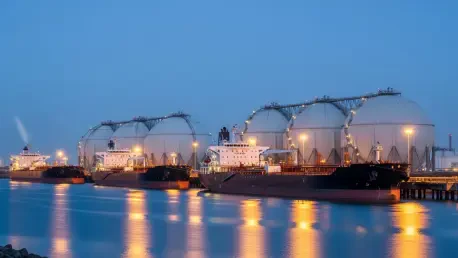

The global energy infrastructure is currently reeling from a catastrophic disruption as the Strait of Hormuz, a critical maritime artery responsible for the transit of nearly twenty percent of the world’s daily petroleum liquids, remains effectively shuttered following a cycle of unprecedented military escalations between Washington and Tehran. This blockage occurred shortly after high-intensity U.S. and Israeli airstrikes targeted key Iranian command structures, resulting in the death of the nation’s supreme leader and triggering a retaliatory naval siege that has sent shockwaves through international markets. President Donald Trump has responded by issuing an ultimatum to European capitals, demanding a robust military presence to clear the waterway and restore the flow of crude oil. However, the collective response from Brussels has been a startling display of defiance, as European foreign ministers explicitly rejected the call for intervention. This standoff represents a watershed moment in the transatlantic relationship, exposing a fundamental disagreement over the limits of allied commitments and the shared risks of regional warfare in the Middle East.
Divergent Strategic Priorities: The Fragmented Alliance
The prevailing consensus within the European Union emphasizes a stark separation between the strategic objectives of the United States and the collective security responsibilities of the 27-member bloc. European officials have argued that the current crisis is the direct result of unilateral tactical decisions made by Washington and Jerusalem, rather than a coordinated initiative within the framework of NATO or international law. Consequently, there is a strong sentiment in Brussels that the maritime blockade is an American-created problem that does not necessitate an automatic European military response. This perspective marks a significant shift from previous decades where European allies were more inclined to support U.S. maritime security initiatives in the Persian Gulf. By framing the conflict as a bilateral dispute between the U.S. and Iran, the European leadership is effectively insulating its military assets from being drawn into a wider regional escalation that they believe offers little strategic benefit to the continent’s long-term stability.
Central to this diplomatic rejection is the refusal of the European Union to expand the operational mandate of Operation Aspides, the naval mission originally established to protect shipping from Houthi attacks in the Red Sea. While there is a recognition that securing trade routes is vital for the European economy, there is a total absence of political will to transition this defensive mission into an offensive patrolling operation within the Strait of Hormuz. High-level diplomats have underscored that while Europe’s economic interests are at stake due to rising fuel costs, the continent remains unwilling to be coerced into an open-ended military engagement against a state actor like Iran. This refusal highlights a broader strategy of “de-escalation and maximum restraint” which seeks to prevent a localized maritime dispute from spiraling into a full-scale continental war. The European position suggests that the protection of merchant vessels must be achieved through diplomatic channels and alternative energy logistics rather than through the deployment of carrier groups and missile destroyers.
National Sovereignty: Rejection of Transactional Diplomacy
The firm pushback against the Trump administration’s demands is anchored by the specific rhetoric of Europe’s primary economic and military powers, particularly Germany. Chancellor Friedrich Merz and his defense ministry have reiterated that NATO functions strictly as a defensive alliance, designed to protect the sovereign territory of its members rather than to facilitate interventionist policies in the Middle East. Berlin has pointed out that the current escalation was triggered by actions taken outside of the NATO command structure, meaning there is no legal or strategic obligation for the alliance to intervene on behalf of the United States. This stance reflects a growing commitment to international law and a refusal to allow NATO to be utilized as a tool for American geopolitical maneuvering. By emphasizing the alliance’s charter, German leadership is signaling that any military cooperation must be based on mutual consultation rather than reactionary demands issued after a crisis has already been initiated. This approach serves to protect German domestic interests while challenging the traditional dominance of U.S. influence over European defense.
Further complicating the diplomatic landscape is the perception of “transactional blackmail” expressed by several smaller European states, who feel that the future of the North Atlantic Treaty Organization is being unfairly linked to compliance with U.S. naval demands. Luxembourg’s Deputy Prime Minister was particularly vocal in labeling the American pressure tactics as a form of coercion that undermines the spirit of the alliance. This sentiment is echoed across many European capitals where leaders are frustrated by a diplomatic style that treats security guarantees as a trade-off for participation in high-risk military ventures. Surprisingly, even the United Kingdom has shown a notable reluctance to follow the American lead, with Prime Minister Keir Starmer signaling that British forces will not be committed to a wider regional conflict without a clear and legally sound objective. This lack of enthusiastic support from London is a major blow to the American effort to build a “coalition of the willing,” as it isolates the U.S. position and reinforces the European narrative that the current path toward war is both unnecessary and strategically reckless.
Economic Calculus: The Pursuit of Strategic Autonomy
The ongoing standoff serves as a powerful illustration of “European Strategic Autonomy,” a concept that has gained significant traction as EU leaders increasingly prioritize their own regional security assessments over directives from the White House. Despite the fact that the closure of the Strait of Hormuz has pushed global oil prices above the $100 per barrel mark—a development that places immense pressure on European industries and consumers—the bloc has made a calculated decision that the cost of an all-out regional war would be far more devastating. The economic damage of high energy prices is viewed as a temporary crisis that can be managed through strategic reserves and accelerated transitions to alternative energy sources, whereas a conflict with Iran could lead to long-term instability, mass migration, and direct threats to European soil. This prioritization of long-term geopolitical stability over immediate economic relief demonstrates a maturing of European foreign policy, where the bloc is no longer willing to trade its security for the sake of maintaining a unified front with an increasingly unpredictable and assertive American administration.
In contrast, the United States continues to utilize public briefings and social media platforms to frame the maritime crisis as a fundamental test of allied fairness and shared burden-bearing. The American argument posits that because Europe is a primary beneficiary of the oil flowing through the Gulf, it has a moral and financial obligation to assist in the military efforts required to keep those shipping lanes open. U.S. officials have even attempted to drive wedges between European allies by suggesting that certain nations, such as France, might be more predisposed to military cooperation than their neighbors. However, these attempts to fracture European unity have largely failed to produce a shift in official policy, as the major powers remain committed to a joint diplomatic approach. This divergence in tactical philosophy reveals a deepening rift that goes beyond the immediate crisis in the Strait of Hormuz, touching on the very nature of how democratic nations should respond to global threats in a multipolar world. The persistence of this standoff suggests that the days of automatic European alignment with U.S. foreign policy are rapidly coming to an end.
Future Pathways: Diplomatic De-escalation and Security
The resolution of this diplomatic impasse required a pivot toward a multi-layered security strategy that prioritized energy diversification and regional mediation over direct military confrontation. European leaders successfully maintained their refusal to engage in combat operations, which forced a shift in the global discourse toward alternative logistics and the rapid expansion of Mediterranean and African energy pipelines. By focusing on these long-term structural changes, the European Union avoided the immediate pitfalls of a high-intensity conflict while still addressing the underlying vulnerability of its energy supply chains. This period demonstrated that a collective refusal to escalate could serve as a stabilizing force in international relations, even when faced with extreme pressure from a dominant superpower. The tactical decision to remain on the sidelines encouraged other regional actors to pursue diplomatic backchannels, ultimately leading to a precarious but functional ceasefire that allowed for the limited resumption of commercial shipping without the need for a devastating and costly naval war.
Looking forward, the transatlantic alliance emerged from this crisis with a renewed understanding of the necessity for clear communication and the establishment of independent security protocols that respect the sovereignty of all member states. The events of this period established a precedent for “strategic patience,” where the impulse for immediate military retaliation was replaced by a sophisticated blend of economic resilience and targeted diplomacy. Industry stakeholders and policymakers realized that the future of maritime security would depend less on naval dominance and more on the development of resilient, decentralized energy networks that are less susceptible to regional bottlenecks. This shift provided a clear roadmap for future cooperation, emphasizing that true allied strength was found in the ability to disagree on tactics while remaining committed to the shared goal of global stability. The lessons learned from this defiance offered a blueprint for a more balanced partnership, ensuring that the burden of global security was shared through proactive infrastructure investment rather than reactive and destructive military engagements in volatile regions.