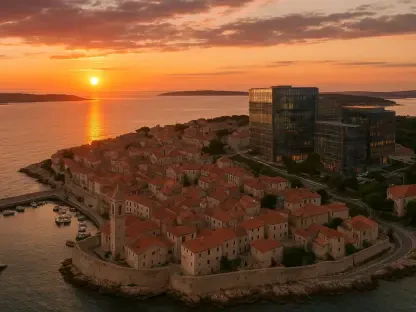

The tension between providing for-sale townhomes for $450,000 and maximizing the number of rental apartments reflects the broader challenge of balancing diverse housing needs in South Side developments. As the city moves forward with the massive Red Line Extension project, the vacant lots surrounding the 95th Street terminal have become the ultimate testing ground for urban renewal strategies that seek to reverse decades of disinvestment. Two distinct development teams recently presented their contrasting blueprints to the community, highlighting a fundamental disagreement over how to best stabilize the local economy while attracting new residents. One proposal emphasizes the creation of generational wealth through high-end homeownership opportunities, while the other prioritizes maximum density and modern rental units to support the burgeoning transit hub. This competition represents a pivotal choice between establishing a traditional residential foundation or embracing a rapid urban expansion that utilizes modern connectivity to foster a dense, walkable, and commercially vibrant district.
Economic Viability: Homeownership Versus Rental Density
The first proposal, submitted by the 95th Street Development Partners, leans heavily into the philosophy of neighborhood stability through owner-occupied housing. By focusing on the construction of townhomes priced near the $450,000 mark, the group aims to attract middle-income families who have often looked toward the suburbs for modern amenities and security. This strategy addresses a specific gap in the current housing market where quality for-sale inventory remains scarce despite the presence of a robust transit connection. Beyond the residential units, their plan incorporates local retail components designed to serve long-term residents rather than transient commuters. By anchoring the development with permanent stakeholders, the developers argue that the community will see a more significant decrease in crime and a more consistent increase in property values. This approach assumes that the primary obstacle to growth is a lack of high-quality ownership options that keep existing wealth within the city limits and provide a solid tax base for local schools.
In sharp contrast, the second group, known as Team 95, advocates for a high-density rental model that capitalizes on the thousands of commuters passing through the 95th/Dan Ryan station daily. Their vision includes a multi-story mixed-use complex featuring hundreds of studio and one-bedroom apartments equipped with smart-home technology and flexible workspaces. Proponents of this plan argue that rental density is the most effective way to support the retail ecosystem, providing the foot traffic necessary for grocery stores and pharmacies to thrive. Furthermore, by allocating a higher percentage of units to affordable housing programs, Team 95 seeks to ensure that the development remains accessible to essential workers and young professionals just starting their careers. This model prioritizes flexibility and modern lifestyle amenities, suggesting that a vibrant, populated streetscape is the most reliable engine for long-term urban vitality. The debate now rests on whether the South Side needs more permanent residential owners or a more dynamic influx of new mobile workers.
Technological Infrastructure: Modernizing the South Side Corridor
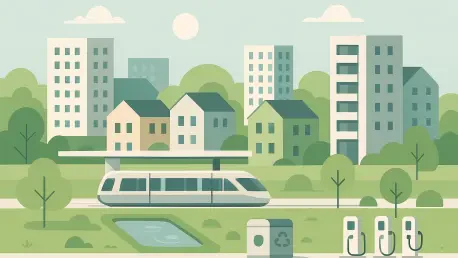
Regardless of the final choice between ownership and rentals, both proposals integrate sophisticated technological infrastructures aimed at making 95th Street a smart transit corridor. Plans for the site include the installation of high-capacity fiber optic networks and public Wi-Fi zones to bridge the digital divide that has historically hindered local businesses. Additionally, the developers have committed to incorporating advanced environmental sensors and intelligent lighting systems that adjust based on foot traffic and ambient weather conditions. These tech-driven features are intended to improve public safety and operational efficiency, transforming the area into a modern urban hub that rivals downtown districts. Sustainable building practices are also a central focus, with both teams proposing LEED-certified structures that utilize solar panels and greywater recycling systems. By embedding these technologies into the physical foundation of the project, the city aims to create a resilient neighborhood capable of adapting to future energy demands and communication needs.
The selection committee eventually determined that the path forward required a hybrid approach that blended the strengths of both competing visions to ensure long-term success. City officials emphasized that any approved plan had to prioritize immediate infrastructure investments, specifically focusing on the integration of automated traffic management systems to handle the increased density near the Red Line station. It was decided that the final development agreement would mandate a phased rollout, starting with the technological backbone and ground-floor commercial spaces before finalizing the residential mix. Stakeholders recommended that the community maintain an active role in the oversight of construction milestones to ensure that the promised technological benefits, such as localized mesh networks, were actually delivered. This decision-making process illustrated that the solution to urban decay was not found in a single housing philosophy but in a comprehensive strategy that coupled modern construction with equitable economic opportunities for all residents.