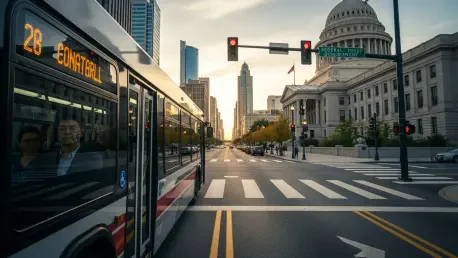

With a new federal proposal threatening to pump the brakes on fare-free bus initiatives, the debate over the future of urban mobility has never been more intense. We’re joined by Donald Gainsborough, a leading voice in policy and legislation from Government Curated. He’s here to unravel the complex tug-of-war between federal oversight and local innovation, and what it means for commuters across the country.
Federal officials have raised concerns that fare-free transit can lead to financial instability and safety issues. From your perspective, how do cities weigh these risks against the documented benefits of increased ridership and improved access to jobs, like those seen in Kansas City?
It’s a classic policy tightrope walk. On one side, you have the federal government, specifically the DOT, pointing to very real concerns about long-term financial health. Their draft legislation explicitly states that fare-free policies can lead to “unsustainable finances” and potential safety issues from more disruptive passengers. But on the other side, you have compelling evidence from places like Kansas City. A University of Kansas study there found that eliminating fares doesn’t just get more people on the bus; it fundamentally improves their mobility and enhances access to jobs and services. When a city sees that kind of positive impact on quality of life, it becomes a powerful argument to find a way to manage the financial and security risks.
In New York, a top transit executive dismissed the mayor’s fare-free bus plan as a “campaign bumper sticker.” What are the biggest operational hurdles and financial trade-offs a city must overcome to turn a fare-free promise into a sustainable, long-term transit system?
That “campaign bumper sticker” comment really cuts to the heart of the challenge. The biggest hurdle is transforming a popular political promise, like Mayor Zohran Mamdani’s commitment to permanently eliminate bus fares, into a fiscally sound reality. The primary trade-off is revenue. When you eliminate fares, you lose a direct stream of income that supports operations, maintenance, and expansion. The federal proposal highlights this, suggesting agencies need to be funded by users to remain viable. A city must then find a new, stable funding source to replace that lost revenue, which is an immense political and logistical undertaking, especially in a system as large as New York’s. It’s not just about a one-time budget fix; it’s about creating a new financial model that can last for decades.
The proposed policy would exempt specific groups like seniors and students, as well as major events like the World Cup. What is the underlying logic for these particular carve-outs, and what practical effects might they have on an agency’s daily operations and budget?
The logic behind these carve-outs is twofold. For groups like seniors, students, veterans, and people with disabilities, the exemption is rooted in social equity. These are populations that have historically received fare assistance, so continuing that is politically palatable and serves a social good. The exemption for major events like the World Cup or the Olympics is purely pragmatic. During these massive, short-term events, the priority is moving huge crowds efficiently and safely, and waiving fares is a key tool for that. For an agency, this creates a hybrid system. They must maintain the infrastructure to collect fares from the general public while also managing complex verification systems for exempt riders and planning for temporary, system-wide free periods during special events.
Some lawmakers argue that local transit agencies should make their own decisions on fares. What are the key arguments for federal oversight in this area, and how might this proposal impact an agency’s ability to innovate and meet the specific needs of its community?
The argument for federal oversight, as laid out in the DOT’s proposal, is fundamentally about protecting the federal investment. The government’s position is that if they are providing significant funding, they have a vested interest in ensuring the systems are financially stable and safe. They see mandatory fares as a way to guarantee that. Conversely, the argument for local control, voiced by lawmakers like Rep. Rick Larsen, is that transit agencies are best equipped to understand and respond to their own communities. He stated that agencies are “pretty good at making their own decisions.” This federal proposal could stifle local innovation by imposing a one-size-fits-all mandate, preventing a city from experimenting with a fare-free model that might be perfectly suited to its unique economic and social landscape.
What is your forecast for the future of fare-free public transit in major American cities?
The forecast is for a continued, and likely intensified, political battle. This DOT proposal represents a significant pushback from the federal level against a growing local movement. The future will hinge on whether cities can successfully demonstrate that the broad economic and social benefits of fare-free transit outweigh the financial risks that worry federal funders. We will see a clash between mayors who champion affordability and federal administrators focused on fiscal solvency. The debate itself will force a necessary conversation about how we value and fund public transit—is it a service that should pay for itself, or is it a public good, like a library or a park, that merits full public funding? The outcome of this tension will define urban transit policy for the next decade.